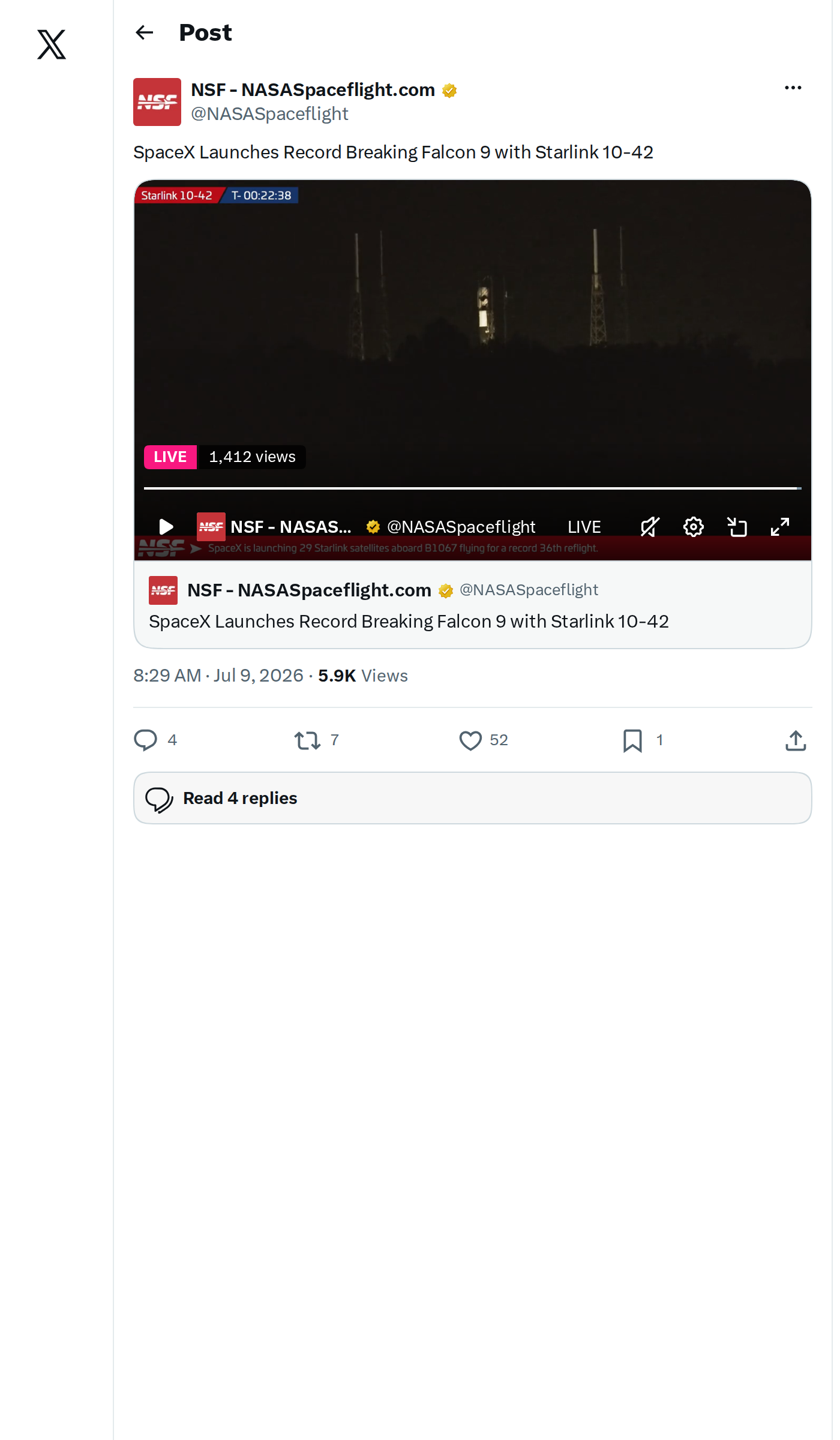
SpaceX pushed the boundaries of rocket reusability on July 9, 2026, when a Falcon 9 first stage completed its 36th flight — setting a new record for the workhorse booster. The mission, designated Starlink 10-42, lifted off from Cape Canaveral and successfully deployed another batch of Starlink V2 Mini Optimized satellites, continuing SpaceX's relentless pace of constellation expansion.

The Record Flight
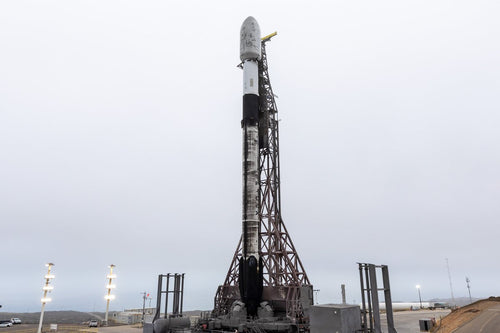
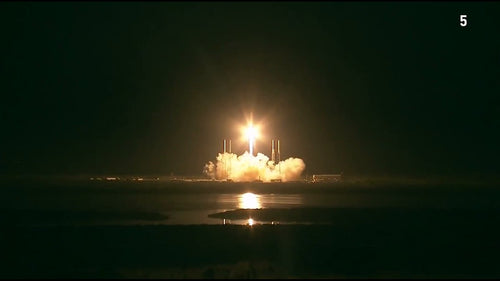
Booster B1067 has now flown more times than any other Falcon 9 first stage in SpaceX's fleet. The rocket lifted off from Space Launch Complex 40 (SLC-40) at Cape Canaveral Space Force Station, Florida, at 5:25 a.m. EDT (0925 UTC). After stage separation, B1067 executed a precision landing on the drone ship A Shortfall of Gravitas, stationed in the Atlantic Ocean — completing the recovery that makes the record possible in the first place.
The significance here extends beyond a single number. Each additional flight on a proven booster represents a direct reduction in launch cost and turnaround time. SpaceX has been methodically demonstrating that orbital-class rockets can behave more like aircraft than expendable hardware, and B1067's 36th flight is the clearest proof point yet.
Mission Payload and Constellation Progress
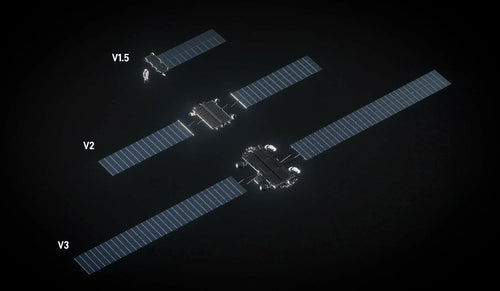
The payload for Starlink 10-42 consisted of 29 Starlink V2 Mini Optimized satellites, according to Spaceflight Now. The V2 Mini Optimized generation carries improved throughput compared to earlier variants, and each batch brings SpaceX closer to full global coverage density. With missions launching at this cadence — multiple times per month — the Starlink constellation is expanding faster than any commercial satellite network in history.

Why Booster Reusability Numbers Matter
The jump from 20 to 36 flights on a single booster may sound incremental, but the engineering and economic implications are substantial. Early in Falcon 9's reuse program, SpaceX refurbished boosters extensively between flights. The current generation requires far less intervention, which is why turnaround times have compressed dramatically. A booster reaching 36 flights without mission failure validates the entire reusability thesis — and provides the data foundation SpaceX needs as it scales Starship, where full and rapid reusability is the core design requirement.
For Starlink subscribers and prospective customers, a more efficient launch cadence means faster constellation densification, which translates to lower latency and higher throughput in congested coverage areas. The record B1067 set today is, in a real sense, infrastructure news as much as it is a rocketry milestone.
SpaceX has not publicly stated a target ceiling for booster flight counts, leaving open the question of just how far B1067 — and the boosters that follow — can go. For now, 36 is the number to beat. For our full SpaceX coverage, including Starship progress and Starlink updates, check the dedicated section.
Sources & reporting notes
The links below identify the material source records used for this report.
- @NASASpaceflight on X (2026-07-09T08:29:20.000Z) — Direct source
- @NASASpaceflight on X (2026-07-09T08:29:57.000Z) — Direct source
Source links are preserved as published or accessed. See our editorial standards and corrections policy.
The BASENOR Editorial Desk covers Tesla, SpaceX, and related technology, curating reporting from primary sources — official accounts, regulatory filings, and software release data. Every article passes source-record and fact-checking review before publication. About the newsroom.
This report was curated by the BASENOR Editorial Desk from the sources listed above. Read our editorial standards or email editorial@basenor.com to report an error.