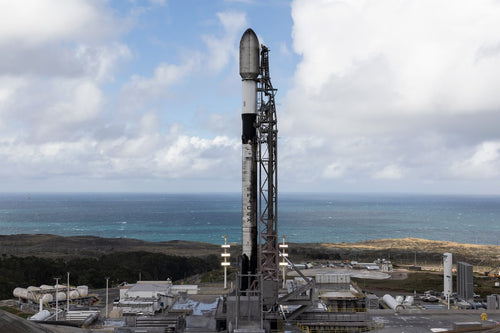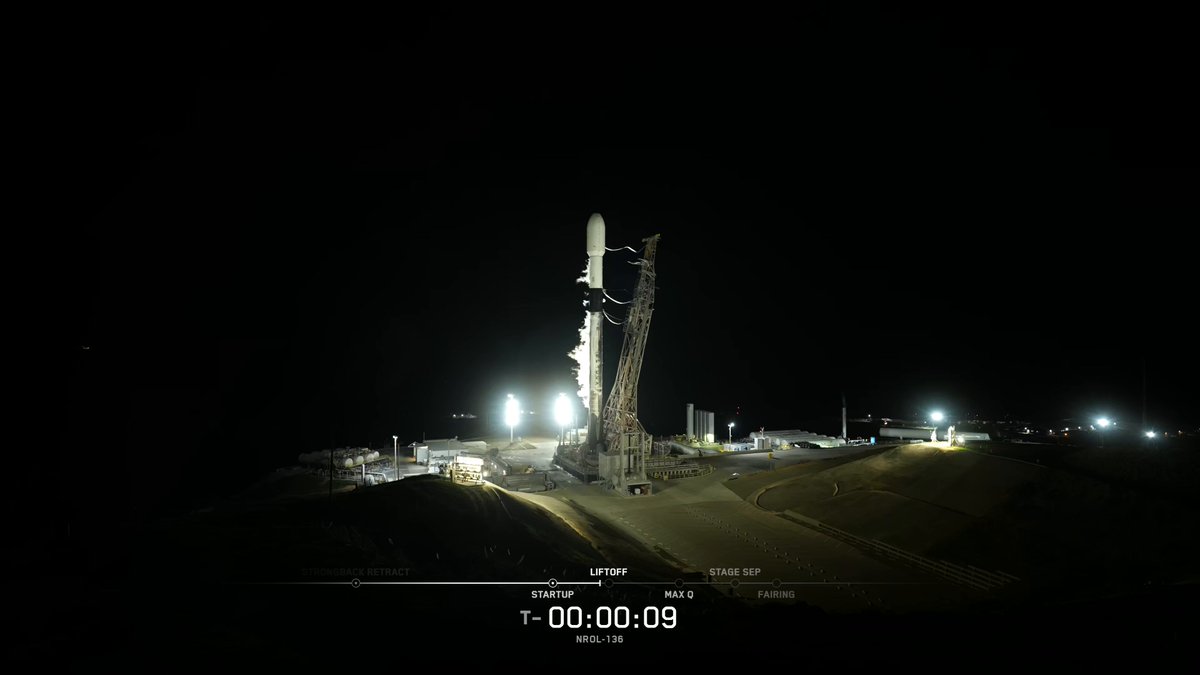
SpaceX launched the National Reconnaissance Office's NROL-136 mission from Space Launch Complex 4E at Vandenberg Space Force Base on Sunday morning, and in doing so set a new benchmark for how quickly the company can cycle its West Coast pad. Falcon 9 lifted off at 4:23 a.m. PT (12:23 UTC) on November 22, 2026, just 32 hours, three minutes, and 21 seconds after the previous mission from the same pad — approximately 23 hours faster than the previous SLC-4E record, according to NASASpaceflight. The first stage returned to Landing Zone 4 for a clean touchdown roughly eight minutes later.

A new Vandenberg cadence
The headline number here is operational, not technical. Falcon 9 has flown with this basic architecture for years, but the turnaround time between two missions from the same launch pad is a direct measure of how quickly SpaceX can refurbish ground systems, reset the transporter-erector, reload propellants, and clear the range for another flight. According to NASASpaceflight, the 32-hour cycle also beat SpaceX's fastest overall turnaround from SLC-40 at Cape Canaveral — the company's busiest pad — by roughly 13 hours. In other words, Vandenberg, long the quieter of SpaceX's two coasts, just posted the fastest two-launch sequence from a single pad in the company's history.

Key figures
| Metric | Value |
|---|---|
| Mission | NROL-136 for the National Reconnaissance Office |
| Launch time | 4:23 a.m. PT / 12:23 UTC, Nov 22, 2026 |
| Pad | SLC-4E, Vandenberg SFB |
| Booster | B1097, 14th flight |
| Landing | LZ-4 at Vandenberg (38th landing at the zone, per NASASpaceflight) |
| SLC-4E turnaround | 32h 03m 21s — ~23h faster than previous pad record |
| vs. SLC-40 best | ~13h faster than SpaceX's previous best from any pad |
What made the quick cycle possible
SpaceX has spent the last several years normalizing booster reuse, but pad reuse at this tempo is a separate engineering problem. Each launch leaves SLC-4E with a plume-scorched flame trench, propellant lines that need to be purged and recertified, and a transporter-erector that has to be returned to horizontal, cleaned, and fitted with the next stack. Hitting a 32-hour window means every one of those steps has to be running in parallel with range safety reviews, weather checks, and payload integration at the nearby hangar.
Booster B1097 contributed its own data point to the reuse story. According to verified reports from Spaceflight Now and KeepTrack, this was the stage's 14th flight — well within the range SpaceX has flown repeatedly this year, and another indication that Block 5 life-leader boosters are holding up through aggressive turnaround schedules.

Why the NRO keeps coming back
The payload itself remains classified, as is standard for NROL designations. What is public is the NRO's broader posture: the agency has been a steady customer for Falcon 9 and Falcon Heavy, and has publicly signaled a shift toward proliferated constellations of smaller reconnaissance satellites rather than a handful of large, exquisite platforms. That architecture favors a launch provider that can push payloads to polar and sun-synchronous orbits on short notice — exactly the capability a sub-33-hour pad turnaround at Vandenberg delivers.
For the rest of SpaceX's manifest, the implication is capacity. SLC-4E is the West Coast workhorse for Starlink's polar shells, NRO missions, and rideshare flights, and the pad has historically operated on a slower cadence than SLC-40. If this week's turnaround is repeatable rather than a one-off, Vandenberg's annual flight ceiling moves meaningfully higher.
What to watch next
Three near-term signals will show whether 32 hours becomes the new baseline or stays an outlier:
- Back-to-back repeats. A single fast cycle can reflect a favorable range schedule. Two or three in a quarter would indicate a process change.
- SLC-40 response. SpaceX's Cape Canaveral team has held the fastest-pad-turnaround title for most of the reuse era. Expect an attempt to take the record back on the East Coast.
- NRO cadence. With a proliferated-architecture customer increasingly dependent on Falcon 9, watch the gap between NROL launches shrink further into 2027.
For now, the record stands at 32 hours, three minutes, and 21 seconds — and B1097 is back on the ground at LZ-4, ready to start the count toward flight 15.
Sources & reporting notes
The links below identify the material source records used for this report.
- @SpaceX on X (2026-11-22T12:09:56.000Z) — Direct source
- @SpaceX on X (2026-11-22T12:24:55.000Z) — Direct source
- @NASASpaceflight on X (2026-11-22T12:31:25.000Z) — Direct source
- @NASASpaceflight on X (2026-11-22T12:34:31.000Z) — Direct source
- @SpaceX on X (2026-11-22T12:35:49.000Z) — Direct source
Source links are preserved as published or accessed. See our editorial standards and corrections policy.
The BASENOR Editorial Desk covers Tesla, SpaceX, and related technology, curating reporting from primary sources — official accounts, regulatory filings, and software release data. Every article passes source-record and fact-checking review before publication. About the newsroom.
This report was curated by the BASENOR Editorial Desk from the sources listed above. Read our editorial standards or email editorial@basenor.com to report an error.