📌 UPDATE — July 30, 2026
SpaceX successfully launched the NROL-95 mission at 07:10 UTC today from Cape Canaveral's SLC-40, deploying the USA-619 advanced INTRUDER signals intelligence satellite into a 63-degree inclination orbit. The Falcon 9 first stage completed a successful return landing at Canaveral Landing Zone 2 shortly after liftoff. Astronomer Jonathan McDowell confirmed the deployment, identifying USA-619 as an advanced INTRUDER-class signals intelligence asset. The mission marks another successful national security launch for SpaceX in partnership with the NRO and U.S. Space Force.

📌 UPDATE — July 30, 2026
NROL-95 is a success. Falcon 9 lifted off from SLC-40 at 7:11 AM UTC on July 30, with booster B1096 completing its seventh flight and sticking a return-to-launch-site landing on LZ-2 roughly nine minutes later. NASASpaceflight confirmed the RTLS landing for B1096-7, marking another smooth mission for SpaceX's workhorse rocket.


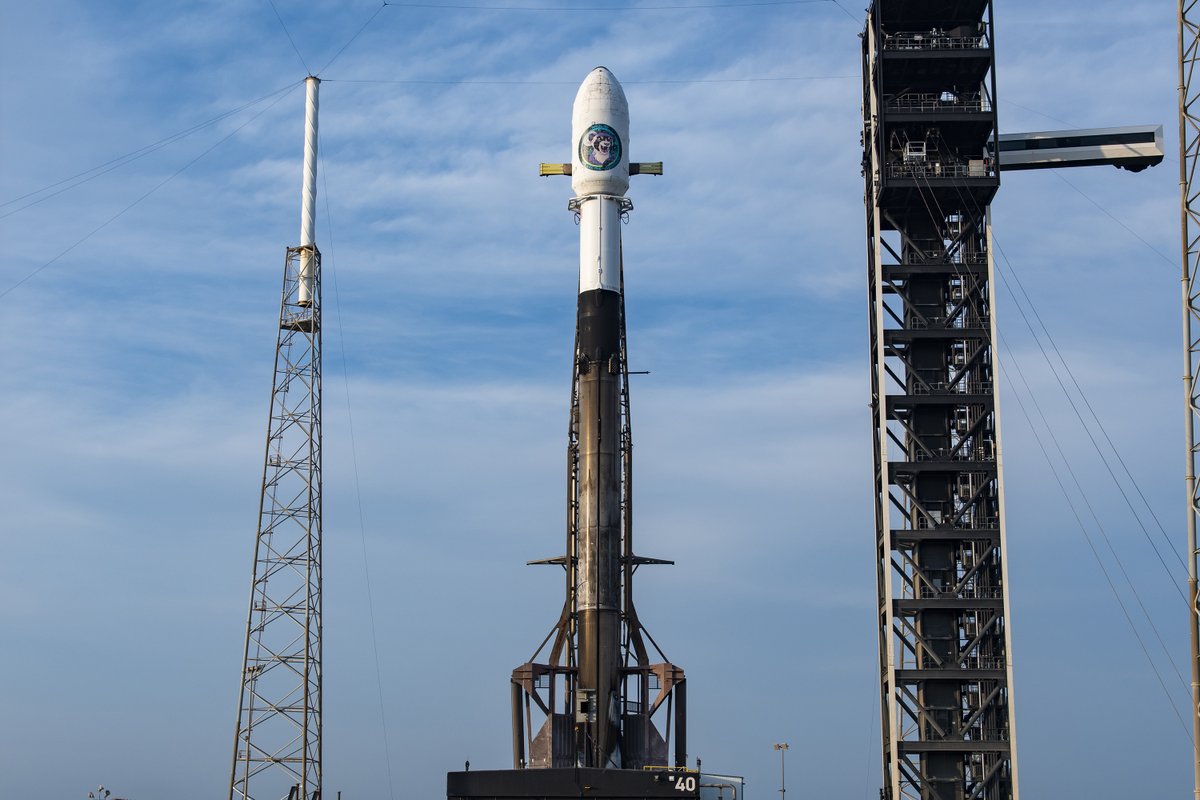
SpaceX's Falcon 9 is standing vertical at Space Launch Complex 40 (SLC-40) at Cape Canaveral Space Force Station, with liftoff targeted for early Thursday morning. The NROL-95 mission carries classified national security payloads for the National Reconnaissance Office (NRO) and U.S. Space Force Space Systems Command — the latest in a growing cadence of government launches SpaceX has absorbed under long-term federal contracts.

Mission Details
Liftoff is scheduled for 3:09 a.m. ET on Thursday, July 30, 2026, with a backup window available Friday, July 31 at 2:55 a.m. ET. The payload is classified, with the NRO describing it only as a national security asset. The mission is being executed in partnership with U.S. Space Force Space Launch Delta 45 and Space Systems Command.
NROL-95 is the NRO's fourth launch of 2026, following NROL-105, NROL-172, and NROL-179 earlier this year. It also marks the third NRO mission SpaceX has flown under the National Security Space Launch (NSSL) Phase 2 contract, a deal awarded to SpaceX in August 2020 that cemented the company as a primary launch provider for U.S. intelligence and defense payloads.
Booster and Hardware
| Detail | Value |
|---|---|
| Rocket | Falcon 9 Block 5 |
| Booster | B1096 (7th flight) |
| Last Flight | May 15, 2026 |
| Booster Landing | Landing Zone 2 (LZ-2), Cape Canaveral |
| Launch Site | SLC-40, Cape Canaveral Space Force Station |
| Fairing Recovery | Planned for reuse |
| Liftoff | July 30, 2026 — 3:09 a.m. ET |
| Backup Window | July 31, 2026 — 2:55 a.m. ET |
Booster B1096 is flying for the seventh time, having completed its previous mission on May 15, 2026. The plan calls for a return-to-launch-site landing at LZ-2 — a relatively quick turnaround profile that SpaceX has refined into a near-routine operation. Fairing recovery is also planned, continuing SpaceX's push to make every reusable component count across its launch manifest.
The Bigger Picture
The NSSL Phase 2 contract, awarded in 2020, split the U.S. government's national security launch business between SpaceX and ULA. Since then, SpaceX has steadily increased its share of high-priority government missions, with the Falcon 9's reliability and rapid reuse cadence making it the default workhorse for classified payloads that can't afford anomalies.
Four NRO launches in a single calendar year reflects both the growing demand for intelligence-gathering assets in orbit and SpaceX's capacity to service that demand at a pace no other provider currently matches. As the NSSL Phase 3 contract competition advances, each successful classified mission adds to SpaceX's operational track record — a factor that weighs heavily in government source selection decisions.
All launch schedules remain subject to weather and range availability. Follow our SpaceX coverage for launch outcome updates.
Sources & reporting notes
The links below identify the material source records used for this report.
- @SpaceX on X (2026-07-28T18:03:01.000Z) — Direct source
Source links are preserved as published or accessed. See our editorial standards and corrections policy.
The BASENOR Editorial Desk covers Tesla, SpaceX, and related technology, curating reporting from primary sources — official accounts, regulatory filings, and software release data. Every article passes source-record and fact-checking review before publication. About the newsroom.
This report was curated by the BASENOR Editorial Desk from the sources listed above. Read our editorial standards or email editorial@basenor.com to report an error.