SpaceX has confirmed it will launch NASA's Nancy Grace Roman Space Telescope aboard a Falcon Heavy rocket, targeting no earlier than August 30, 2026 — roughly eight months ahead of the mission's original schedule. The announcement positions Falcon Heavy as the backbone of one of NASA's most ambitious astrophysics programs in decades, and signals just how central SpaceX has become to flagship scientific infrastructure.

What the Roman Space Telescope Actually Is
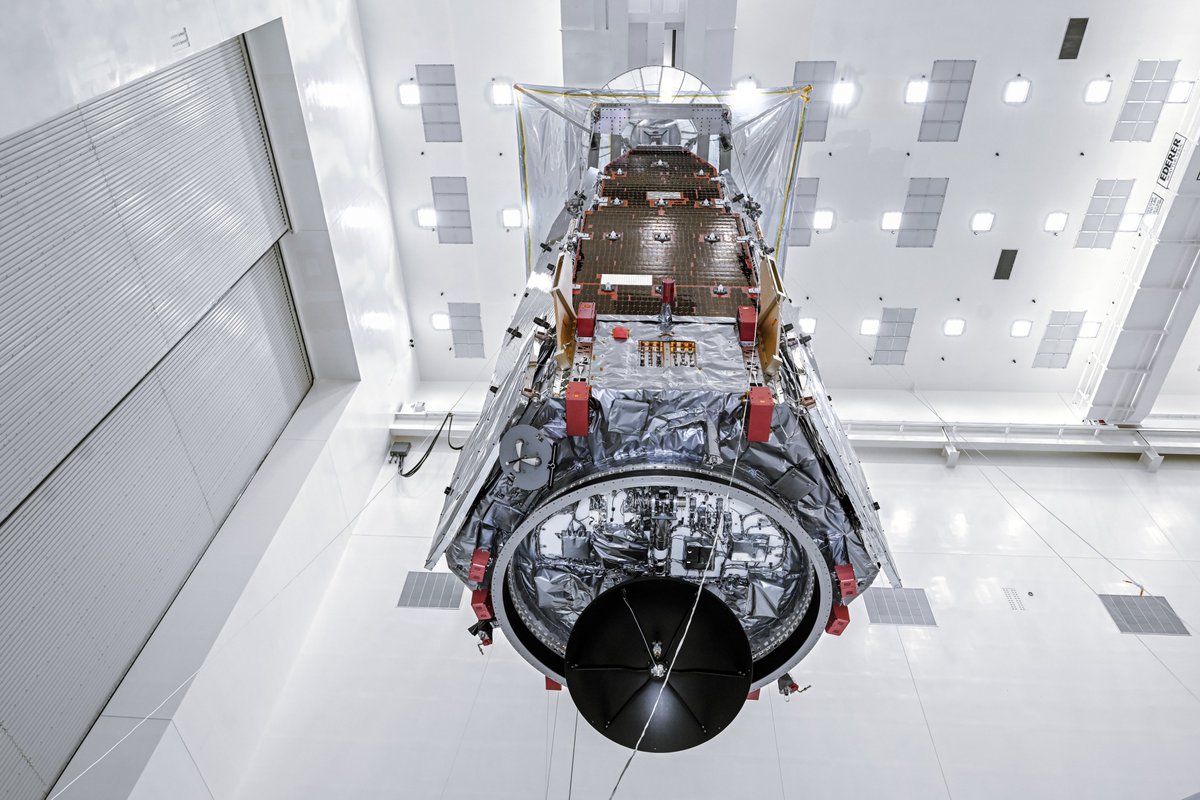
Roman is not a modest science mission. Named after NASA's first Chief of Astronomy, the telescope carries a 2.4-meter primary mirror — the same diameter as Hubble's — but its Wide Field Instrument packs a 300-megapixel camera with a field of view at least 100 times larger than Hubble's at comparable resolution. That combination makes it uniquely suited for wide-area surveys of dark energy, dark matter, and exoplanet populations that Hubble and James Webb simply weren't designed to tackle at scale.
The spacecraft also carries a Coronagraph Instrument for high-contrast direct imaging of exoplanets — a technology demonstration that could shape how future missions are designed. After launch, Roman will travel to the Sun-Earth L2 Lagrange point, the same gravitational sweet spot that hosts the James Webb Space Telescope. Its primary mission is planned for five years, though according to NASA, onboard propellant is expected to support operations for ten or more years.
Key Mission Figures
| Metric | Detail |
|---|---|
| Launch Vehicle | SpaceX Falcon Heavy |
| Target Launch Date | No earlier than August 30, 2026 |
| Launch Site | LC-39A, Kennedy Space Center, Florida |
| Launch Services Contract | ~$255 million |
| Spacecraft Launch Mass | 10,500 kg (23,100 lb) |
| Destination Orbit | Sun-Earth L2 Lagrange point |
| Primary Mirror Diameter | 2.4 meters (7.9 feet) |
| Camera Resolution | 300 megapixels |
| Planned Mission Duration | 5 years primary / 10+ years propellant supply |
Where Things Stand Right Now
Roman arrived at Kennedy Space Center on June 21, 2026, for final pre-launch preparations. According to NASA, engineers at KSC successfully rotated the spacecraft to a vertical position in the Payload Hazardous Servicing Facility as of July 6, where it is undergoing inspections, functional testing, and integration work ahead of encapsulation. The accelerated schedule — roughly eight months ahead of the original plan — reflects both the readiness of the spacecraft and the operational tempo SpaceX has brought to launch services.
Why Falcon Heavy, and Why It Matters
At 10,500 kg fully fueled, Roman is a substantial payload by any measure. Falcon Heavy's roughly 64,000 kg to low Earth orbit and 26,700 kg to geostationary transfer orbit give it significant margin for a mission of this mass heading to L2 — a trajectory that demands more energy than a standard GTO insertion. The choice also reflects a broader shift in how NASA procures launch services: competitive fixed-price contracts rather than cost-plus arrangements, with SpaceX winning the $255 million deal against a field that once would have defaulted to a legacy provider.
This mission follows Falcon Heavy's track record on high-stakes payloads, including the PSYCHE asteroid mission and several national security launches. For SpaceX, Roman adds a flagship astrophysics observatory to that portfolio — a category previously dominated by expendable rockets from other manufacturers.
With the launch window opening August 30 and the telescope already vertical at KSC, the countdown to one of the most scientifically significant launches of the decade is now measured in weeks, not years. How Roman performs at L2 will shape astrophysics research for a generation — and Falcon Heavy will be the rocket that put it there. Follow our SpaceX coverage for updates as the launch date approaches.

Sarah focuses on Tesla Energy, SpaceX missions, and the broader Musk AI portfolio. Former data analyst in clean energy. Based in San Francisco.
Sources verified at publish time. Spotted an inaccuracy? Email editorial@basenor.com.