📌 UPDATE — June 9, 2026
Elon Musk has officially teased SpaceX AI Satellites in a post on X, linking to what appears to be a promotional or reveal video. The announcement signals that the Bastrop facility's AI satellite component is moving beyond the planning stage, with artificial intelligence being directly integrated into next-generation SpaceX satellite hardware. This could mean onboard autonomous decision-making, real-time data processing in orbit, and reduced reliance on ground-based control — a significant leap beyond current Starlink capabilities. No further technical specifications have been officially disclosed yet. 🔍

@elonmusk · June 9, 2026 · 701K views
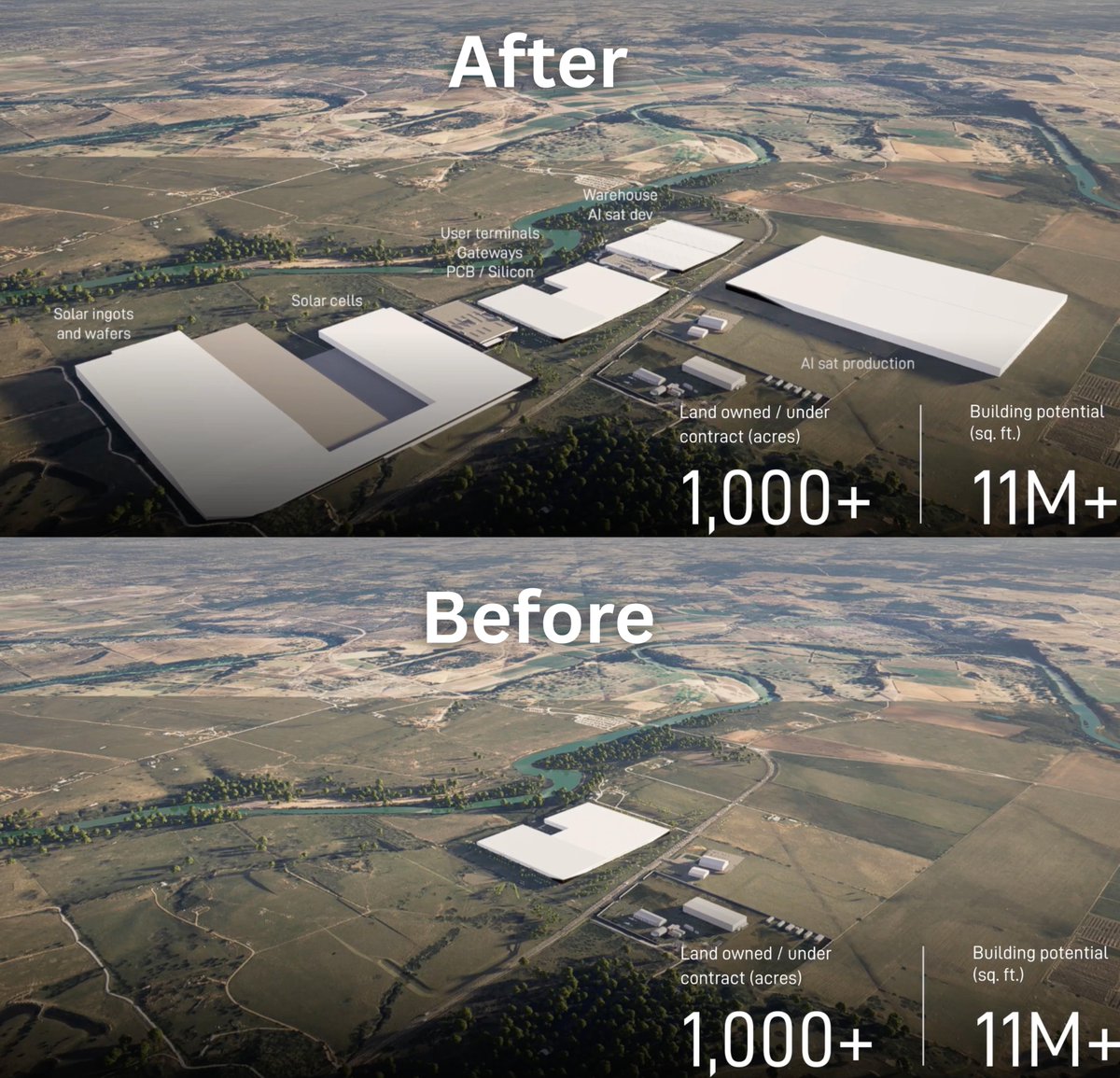
SpaceX is quietly transforming a small Texas city into one of the most consequential advanced manufacturing hubs in North America. The company is building a solar cell and wafer production facility in Bastrop, Texas, that is already under construction — and the scale of the investment goes well beyond what most headlines have captured.

What SpaceX Is Actually Building
The centerpiece of the Bastrop expansion is a solar cell factory with a planned annual production capacity of 10 gigawatts — split across two production floors, each rated at 5 GW. According to SpaceX Director of Solar Production Noah Cowles, the company is building "one of the world's most advanced solar cell factories in Bastrop, TX." Bastrop County officials have confirmed permits for a 1.1 million square foot facility, with potential to expand to roughly 1.6 million square feet.
These aren't conventional solar panels destined for rooftops. The cells are aerospace-grade, purpose-built to power AI data centers in orbit — part of an initiative SpaceX calls Terafab — as well as next-generation Starlink satellite systems. The vision is to convert satellites into computing hubs, with solar power generated in space feeding on-orbit AI workloads.
Construction on the solar factory began in late March 2026, with equipment installation accelerating through April and May. A separate semiconductor packaging operation at the same Bastrop site — which packages radio frequency chips for Starlink user terminals — began equipment installation in April and is targeting production by the end of 2026.
The Semiconductor Side: Terafab and a $55 Billion Bet
The solar factory is only part of the story. SpaceX has filed paperwork for a semiconductor fabrication facility, internally referred to as Terafab, in rural Texas, with a projected investment of approximately $55 billion. A $280 million expansion of the existing Bastrop facility is already underway, backed by a $17.3 million grant from the Texas Semiconductor Innovation Fund. That expansion will add one million square feet over three years for semiconductor R&D and advanced packaging operations.
When complete, the expanded Bastrop campus is projected to become the largest printed circuit board and panel-level packaging facility in North America — a title that underscores just how seriously SpaceX is treating domestic semiconductor self-sufficiency.
Jobs and Scale
| Metric | Figure |
|---|---|
| Solar cell annual capacity | 10 GW |
| Facility footprint (permitted) | 1.1M sq ft (up to 1.6M) |
| Semiconductor expansion investment | $280M+ |
| Texas state grant received | $17.3M |
| Terafab projected investment | ~$55B |
| Current Bastrop employees | 1,590 |
| Solar factory construction start | Late March 2026 |
SpaceX currently employs 1,590 workers at its Bastrop facility, and the combined expansion is expected to create thousands of additional jobs in the region. Elon Musk has stated a broader goal for both Tesla and SpaceX to each reach 100 GW per year of solar manufacturing capacity in the US within three years — a target that would require Bastrop to be just the beginning of a much larger domestic buildout.
Why Bastrop?
SpaceX already had an established footprint in Bastrop before these announcements, which makes the city a natural anchor for vertical integration. By co-locating solar production, semiconductor packaging, and R&D under one regional umbrella, SpaceX gains supply chain control over the core components that power both its Starlink constellation and its emerging space-based computing ambitions. Texas's business climate — including state grant support — clearly played a role as well.
The bigger picture here is vertical integration at a scale rarely attempted in the aerospace industry. If Terafab reaches its projected investment levels and the solar factory hits 10 GW annually, Bastrop won't just be a SpaceX campus — it will be the supply chain backbone for space-based AI infrastructure. That's a different kind of facility than anything currently operating in North America, and the construction timeline suggests it's moving faster than most observers expected. For our SpaceX coverage, this is one of the most consequential ground-level developments in years.
Sources & reporting notes
The links below identify the material source records used for this report.
- @SawyerMerritt on X (2026-06-09T00:18:51.000Z) — Direct source
- @elonmusk on X (2026-06-09T03:25:26.000Z) — Direct source
Source links are preserved as published or accessed. See our editorial standards and corrections policy.
The BASENOR Editorial Desk covers Tesla, SpaceX, and related technology, curating reporting from primary sources — official accounts, regulatory filings, and software release data. Every article passes source-record and fact-checking review before publication. About the newsroom.
This report was curated by the BASENOR Editorial Desk from the sources listed above. Read our editorial standards or email editorial@basenor.com to report an error.