📌 UPDATE — July 16, 2026
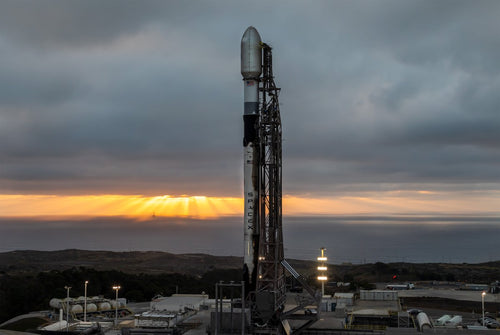
Following the successful Booster 20 static fire, SpaceX's Starship Flight 13 is now confirmed on track for a Thursday launch, according to NASASpaceflight. This mission could mark a historic milestone as the final suborbital test flight for Starship, paving the way for the program's transition to full orbital attempts. If successful, it would represent the culmination of the suborbital test campaign that began with the earliest Starship integrated flight tests.

📌 UPDATE — July 15, 2026
Flight 13 preparations are accelerating: the FAA has now posted NOTAMs for US airspace, a key regulatory step that signals a launch attempt is imminent. According to NASASpaceflight, everything continues to align for a Thursday launch. The next major milestone is the rollout of Ship 40, with a road closure window opening at 4 PM local time at Starbase. Once Ship 40 rolls out and is stacked atop Booster 20, the integrated vehicle will be ready for final pre-launch checkouts.

📡 Via @NASASpaceflight · July 15, 2026
📌 UPDATE — July 15, 2026
Starship Flight 13 now has a firm NET launch target of July 16 at 5:45 PM CT — less than 36 hours away as of this update. Spaceflight journalist Joe Tegtmeyer is already en route to Starbase, noting the milestone has "snuck up on many." If the flight succeeds as planned, it is expected to be the last test flight without a booster catch attempt, setting the stage for a landmark mechanical catch on Flight 14. The window has shifted one to two days later than the July 14–15 target reported in our original article.

📌 UPDATE — July 14, 2026
The official Starbase website has issued a Beach Closure Order for July 16 or July 17, 2026, with closures running from 12:00 PM to 8:30 PM on both days. This is a strong official indicator that Starship Flight 13 is targeting one of those two days — slightly later than the previously reported July 14–15 window. Beach closure orders are a standard pre-launch regulatory step and represent one of the clearest public signals that a launch attempt is imminent.
@LabPadre · July 14, 2026
"The Starbase website has posted the Flight-13 Beach Closure Order for either July 16 or July 17, between 12pm and 8.30pm on both days."
📌 UPDATE — July 12, 2026
Elon Musk confirmed on X that the next Starship launch is targeting Thursday, and Joe Tegtmeyer has pinned down the specifics: Starship Flight 13 is now targeting NET Thursday, July 16th at 5:45 PM CDT. That's a slight slip from the previously reported July 14–15 window. Notably, SpaceX's official website has quietly revealed new and significant mission objectives for Flight 13 beyond what was previously known — details are still emerging. 🔍


📌 UPDATE — July 12, 2026
SpaceX has officially announced that Starship Flight 13, now targeting NET July 16 (slipped from the previously reported July 14–15 window), will carry 20 V3 Starlink satellites — marking the first-ever deployment of the next-generation constellation from Starship. Six of those satellites have been specially modified with an onboard camera suite to scan Starship's heat shield and transmit imagery during flight, providing engineers with unprecedented in-flight thermal protection data. SpaceX says V3 Starlink is designed to greatly expand network capacity and user speeds compared to current hardware.

📡 Source: @SawyerMerritt · @JoeTegtmeyer — July 11, 2026
📌 UPDATE — July 11, 2026
SpaceX has officially confirmed Starship Flight 13 is targeting launch as early as Thursday, July 16, 2026 at 6:45 PM ET — one day later than the July 14–15 window previously discussed. This will be the second V3 test flight, with Booster 20 and Ship 40 aiming to complete similar objectives to Flight 12, which debuted the new Raptor 3-powered vehicle stack. The announcement came directly from SpaceX's official account on July 11, with space reporters confirming the NET date within minutes.

📣 @SpaceX via X — July 11, 2026
SpaceX completed a full-duration, 33-engine static fire of its Super Heavy V3 booster on July 10, 2026 — the last major ground test standing between Booster 20 and its role in Starship Flight 13. With an FAA launch window opening as early as July 14, the program is moving fast. Here's what you need to know.

What exactly happened during this static fire?
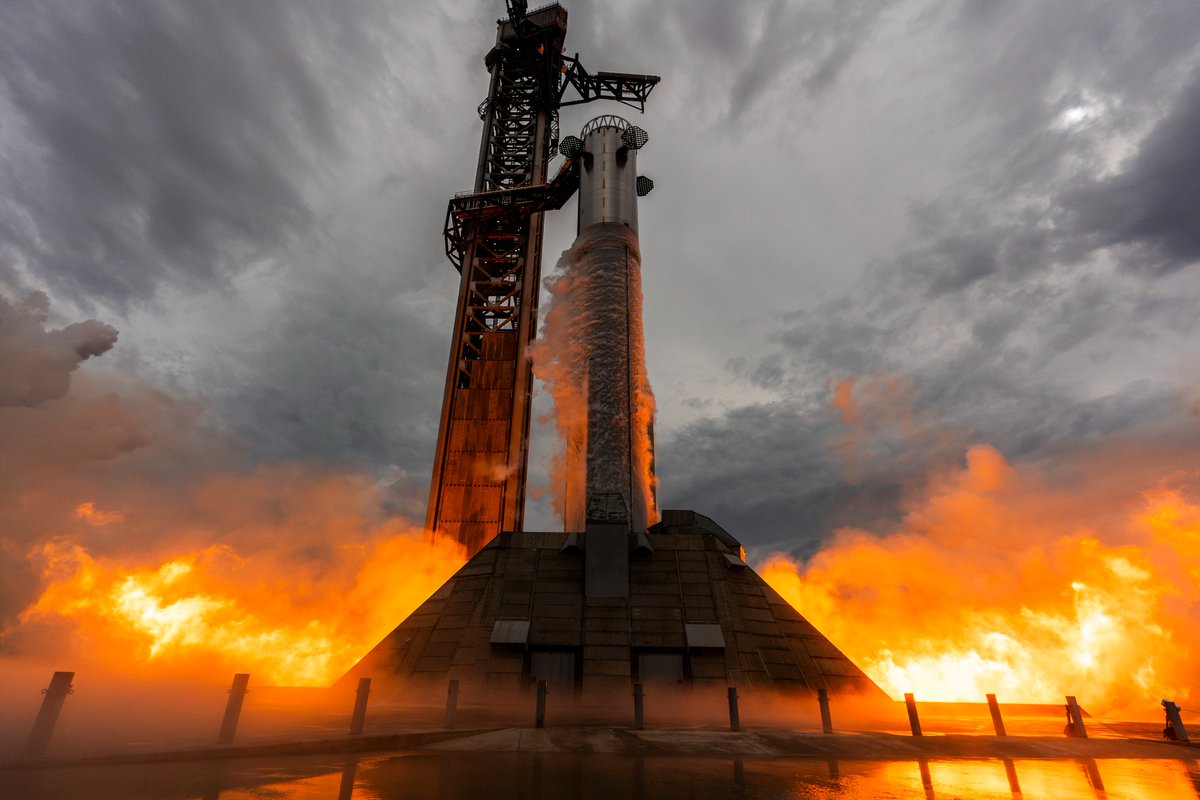
All 33 upgraded Raptor 3 engines on Super Heavy Booster 20 ignited simultaneously and burned for approximately 25 seconds at Starbase in Texas. SpaceX described it as a full-duration test, meaning the engines ran for the complete planned interval — not just a brief ignition check. That distinction matters: a truncated fire would have required investigation and a retest before any launch attempt could proceed.
What is the V3 Super Heavy, and how does it differ from earlier boosters?
The V3 designation refers to the third major hardware generation of the Super Heavy booster. It is equipped with 33 Raptor 3 engines, which SpaceX has described as a significant thrust and reliability upgrade over the Raptor 2 units used on earlier vehicles. Booster 19 — the V3 booster used for Flight 12 — conducted its own full-duration static fire on May 7, 2026, which according to reporting at the time was the first successful full-up static fire for any V3 Super Heavy. Booster 20 is the second V3 booster to reach this milestone.
What about the Starship upper stage — is it also ready?
Yes. Ship 40, the upper stage that will be paired with Booster 20 for Flight 13, completed a static fire of all six of its own Raptor engines in early July 2026, according to pre-flight reporting. Both halves of the integrated vehicle have now passed their pre-flight engine tests, which is the standard gate SpaceX requires before stacking and rolling out to the launch pad.
When could Flight 13 actually launch?
According to an FAA notice cited in pre-launch reporting, SpaceX is targeting as early as July 14 or July 15, 2026. That window is subject to regulatory sign-off, weather, and any late technical findings — all standard caveats for a Starship mission. The pace from static fire to launch attempt has been compressing with each flight, and the gap between today's test and the opening window is less than a week.
Why does a static fire matter so much for a vehicle that has already flown?
Each Super Heavy booster is a new vehicle, not a reused one — at least at this stage of the program. Booster 20 has never flown, so this static fire is its first real proof that all 33 engines work together as a system under flight-like conditions. Any anomaly — a single engine that fails to ignite, an unexpected pressure reading, a turbopump issue — would surface here rather than at T-0. For a rocket generating roughly 16 million pounds of thrust at liftoff, that ground-level verification step is non-negotiable.
What does a successful Flight 13 mean for the broader Starship program?
Each flight test has expanded the envelope. Flight 12 demonstrated booster catch attempts and upper-stage reentry control. Flight 13 is expected to push further on reusability and mission profile objectives, though SpaceX has not published a detailed Flight 13 manifest publicly. The cadence itself is the signal: two V3 boosters static-fired within two months, with a launch window days away, suggests the program has moved decisively past the early infrastructure-building phase and into operational rhythm. For those following our SpaceX coverage, this is the fastest pre-launch pace the Starship program has shown to date.
🚀 Following the Starship program? See every test flight, official outcome and the next launch window in our SpaceX Starship Tracker.
Sources & reporting notes
The links below identify the material source records used for this report.
- @SpaceX on X (2026-07-10T23:07:57.000Z) — Direct source
- @SawyerMerritt on X (2026-07-11T22:48:05.000Z) — Direct source
- @JoeTegtmeyer on X (2026-07-11T22:45:26.000Z) — Direct source
- @NASASpaceflight on X (2026-07-11T22:45:26.000Z) — Direct source
- @SpaceX on X (2026-07-11T22:44:24.000Z) — Direct source
- @SawyerMerritt on X (2026-07-11T23:01:04.000Z) — Direct source
- @JoeTegtmeyer on X (2026-07-11T23:00:23.000Z) — Direct source
- @elonmusk on X (2026-07-12T00:23:29.000Z) — Direct source
- @JoeTegtmeyer on X (2026-07-12T00:53:30.000Z) — Direct source
- @LabPadre on X (2026-07-14T19:00:29.000Z) — Direct source
- @JoeTegtmeyer on X (2026-07-15T12:05:16.000Z) — Direct source
- @NASASpaceflight on X (2026-07-15T16:09:49.000Z) — Direct source
- @NASASpaceflight on X (2026-07-16T02:48:06.000Z) — Direct source
Source links are preserved as published or accessed. See our editorial standards and corrections policy.
The BASENOR Editorial Desk covers Tesla, SpaceX, and related technology, curating reporting from primary sources — official accounts, regulatory filings, and software release data. Every article passes source-record and fact-checking review before publication. About the newsroom.
This report was curated by the BASENOR Editorial Desk from the sources listed above. Read our editorial standards or email editorial@basenor.com to report an error.