📌 UPDATE — July 21, 2026
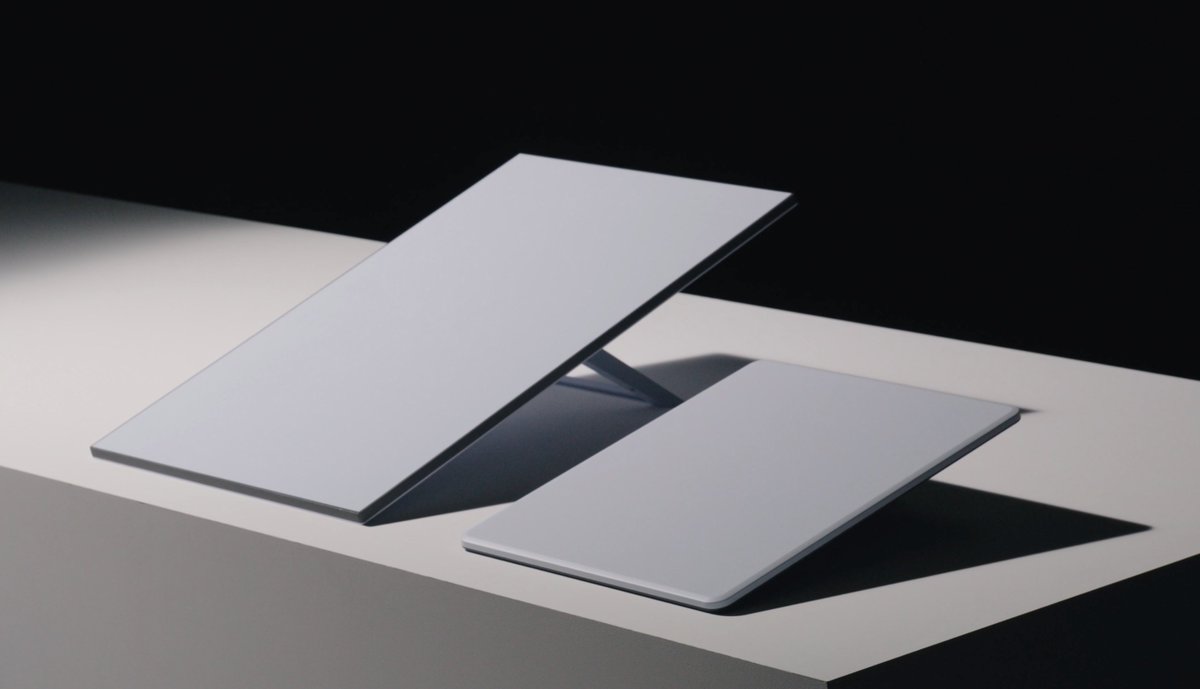
Starlink V5 terminals are now actively shipping to customers, with real-world comparisons confirming the hardware improvements. Side-by-side photos shared by @SawyerMerritt show the V5 is 48% smaller by area and 62% lighter than the V4 dish — a more precise figure than the "35% smaller" spec cited at launch. Performance and 50% power efficiency gains remain consistent with SpaceX's original claims.

| Metric | V4 | V5 |
|---|---|---|
| Size (vs V4) | Baseline | −48% by area |
| Weight | Baseline | −62% (2.4 lb) |
| Power Efficiency | Baseline | +50% |
SpaceX has officially unveiled its next-generation Starlink V5 terminal, a substantially smaller, lighter, and more power-efficient dish that is now available to order for residential customers in select areas of the United States. The reveal, first surfaced on July 14, 2026 by Sawyer Merritt and quickly corroborated by product page updates on Starlink.com, marks the most significant hardware refresh in the consumer Starlink line since the V4 launch.
For Tesla owners running Starlink at home, in RVs, or at off-grid properties where they charge their vehicles, the V5 delivers meaningful gains on power draw and physical footprint — two areas that have long been friction points for solar-and-battery setups.

What SpaceX Actually Changed
The V5 is not an incremental refresh. Compared to the V4 dish it replaces, nearly every physical spec has been reworked. According to specifications now published on Starlink.com, the new dish measures 12.05 by 15.12 inches and weighs just 2.4 pounds — a dramatic reduction from the V4's 6.5-pound frame. Average power consumption drops from 75-100W on the V4 to 35-50W on the V5, a roughly 50% improvement that materially changes what a Starlink setup demands from a solar generator, Powerwall, or vehicle inverter.
Speeds are officially rated at up to 375+ Mbps. That is a modest step down from the V4's advertised 400+ Mbps ceiling on paper, but SpaceX appears to be trading peak throughput for a much broader improvement across power, size, and installation flexibility — the trade most residential customers will happily take.
Key Figures
| Spec | Starlink V4 | Starlink V5 |
|---|---|---|
| Peak Speed | 400+ Mbps | 375+ Mbps |
| Dish Weight | 6.5 lb | 2.4 lb |
| Avg Power Draw | 75-100 W | 35-50 W |
| Dish Size | Baseline | 35% smaller (12.05" x 15.12") |
| Wind Rating | 96 kph (60 mph) | 265 kph (165 mph) |
| In-Motion Use | No | No |
The jump in wind resistance — from 60 mph to 165 mph, according to Starlink's product page — is arguably the least-discussed but most consequential upgrade. That takes the V5 from “survives a stiff breeze” to “rated for hurricane-force winds,” opening up coastal and storm-prone deployments that were previously borderline.

What's In the Box, and What's Not
According to the updated Starlink product listing, the V5 Kit ships with the dish, a Kickstand, a Router Mini with stand, a Pipe Adapter for roof installation, a 15-meter Starlink Cable, a 1.5-meter AC Cable, and a 2-meter Ethernet Cable. The bundled Router Mini is a smaller networking unit than the router shipped with prior generations — consistent with the overall size-and-power reduction theme.
Two important caveats: the V5 is not intended for in-motion use, so RV owners and overlanders looking for a mobile-rated dish will still need the Roam or Mini product lines. And as of publication, no official pricing for the V5 hardware has been announced — Starlink Residential service plans remain listed at $55 per month, but the terminal cost itself is not yet public on the order page.

Why the Power Numbers Matter
A 50% reduction in average power draw is the headline that will interest Tesla owners the most. The V4's 75-100W continuous load meant that running Starlink off a Powerwall during a grid outage — or off a portable power station in a remote location — consumed a meaningful chunk of stored energy. A V5 pulling 35-50W changes the math on multi-day outage planning, and it also means a solar-plus-battery cabin can now run Starlink 24/7 with a materially smaller PV array.
The lower thermal load also implies a cooler-running unit, which historically has been one of the main causes of throttling on Starlink dishes deployed in hot climates. SpaceX has not published detailed thermal specs yet, but the physics of a lower-wattage device in the same operating envelope suggests fewer heat-related speed drops in Arizona, Texas, and Florida deployments.
Availability and Rollout
The V5 is live to order today for residential customers in select areas of the United States, according to SpaceX. The company notes on the product page that availability will expand “as production ramps.” International rollout has not been scheduled publicly. Whole Mars Catalog confirmed the order flow is functional as of the announcement.
For existing V4 customers, SpaceX has not announced a trade-in or upgrade program. The V4 continues to be sold in areas where V5 inventory is not yet available. Given the pattern from previous generation launches, expect V5 availability to widen through Q3 2026 as the manufacturing line scales.
What to Watch Next
Three unresolved questions will shape how the V5 lands: hardware pricing (still unpublished at launch), whether SpaceX offers any upgrade path for V4 owners, and how quickly the selective US rollout broadens into full national and then international availability. The gap between the announcement and full-market availability historically runs a few months for Starlink hardware launches — the V5 will be the test of whether SpaceX can accelerate that curve now that Starship-launched satellite capacity is easing supply constraints elsewhere in the network.
Sources & reporting notes
The links below identify the material source records used for this report.
- @SawyerMerritt on X (2026-07-14T22:00:43.000Z) — Direct source
- @wholemars on X (2026-07-14T22:09:38.000Z) — Direct source
- @SawyerMerritt on X (2026-07-14T22:05:36.000Z) — Direct source
Source links are preserved as published or accessed. See our editorial standards and corrections policy.
The BASENOR Editorial Desk covers Tesla, SpaceX, and related technology, curating reporting from primary sources — official accounts, regulatory filings, and software release data. Every article passes source-record and fact-checking review before publication. About the newsroom.
This report was curated by the BASENOR Editorial Desk from the sources listed above. Read our editorial standards or email editorial@basenor.com to report an error.