Starlink's Direct-to-Cell satellite service is now live in Mongolia, marking the country's first access to satellite-backed mobile connectivity that requires no dish, no dongle, and no new hardware. The launch, confirmed by Starlink on November 18, 2026, is a partnership with Mobicom — Mongolia's largest mobile carrier — and targets the vast stretches of the country where traditional cell towers simply don't reach.

What the Service Actually Does
Starlink's Direct-to-Cell (D2C) technology works by using satellites in low Earth orbit — orbiting at roughly 540–570 km altitude — that function as cell towers in space. A compatible smartphone doesn't need any modification; when it loses terrestrial signal, it can automatically hand off to the Starlink satellite network and continue sending and receiving text messages and select app-based messages.
The key word is text. This is not a broadband replacement. D2C at launch is engineered for low-bandwidth communication: SMS and messaging apps. Voice calls and broader data capabilities are on the roadmap, according to background research, but are not part of the initial offering. Users also need a clear view of the sky — the service may not function indoors or in areas close to border regions.
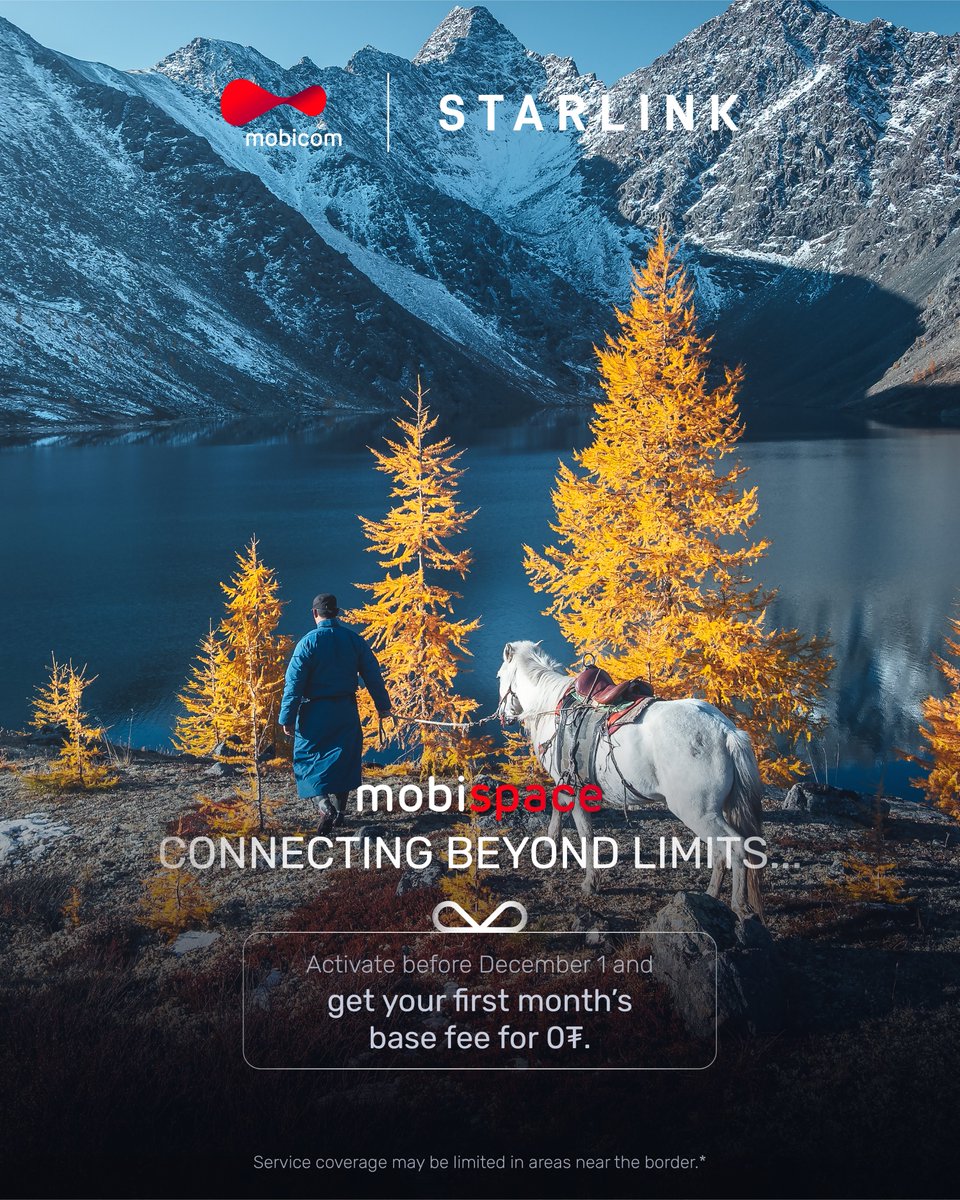
Mobicom is branding the service internally as mobispace, which was unveiled at a company event called mobiCONNECT on November 16, two days before Starlink's public confirmation.
Who This Is Built For
Mongolia is a logical early market for this technology. The country spans 1.5 million square kilometers with a population of roughly 3.4 million, and a significant portion of that population — herders, miners, workers in remote extractive industries — operates in areas where building cell infrastructure is economically unviable. For those users, even the ability to send a text message from a remote location is a meaningful safety and connectivity upgrade.
The service doesn't require a Starlink dish subscription or any additional hardware purchase. If a phone is on Mobicom's compatibility list and has data roaming enabled, it's eligible.
How to Activate
For Mobicom subscribers looking to get started, the activation path is straightforward. Users can enable mobispace through the Mobicom app or by texting space to 592. Data roaming must be switched on, and phone compatibility should be verified against Mobicom's published list before signing up.
There's also a limited promotional window worth noting: customers who activate before December 1, 2026, receive their first month of service at no charge. The trial signup period runs through November 30, with activations remaining valid through December 30, 2026. Ongoing pricing beyond the promotional period has not been officially announced.
The Bigger Picture for Starlink D2C
Mongolia joins a growing list of markets where Starlink's Direct-to-Cell program is operational. As of mid-October 2026, SpaceX had more than 10,000 Starlink satellites in orbit — a fleet scale that makes global D2C coverage increasingly viable. The Mongolia launch follows the carrier-partnership model SpaceX has pursued in other markets, where a local mobile operator handles the customer relationship and billing while Starlink provides the satellite backbone.
The model is worth watching. Carrier partnerships lower the barrier to entry for consumers — there's no separate Starlink account to manage — while giving SpaceX distribution reach it couldn't achieve by selling direct in every country. Whether that approach accelerates D2C adoption in other underserved markets, particularly across Central Asia and sub-Saharan Africa, is the question the industry will be tracking over the next 12 months.
For now, Mongolian herders checking in from the steppe via satellite text message is no longer a hypothetical. It's a product you can sign up for today. For more on SpaceX's expanding satellite network, see our SpaceX coverage.
Sources & reporting notes
The links below identify the material source records used for this report.
- @Starlink on X (2026-11-18T19:13:59.000Z) — Direct source
Source links are preserved as published or accessed. See our editorial standards and corrections policy.
The BASENOR Editorial Desk covers Tesla, SpaceX, and related technology, curating reporting from primary sources — official accounts, regulatory filings, and software release data. Every article passes source-record and fact-checking review before publication. About the newsroom.
This report was curated by the BASENOR Editorial Desk from the sources listed above. Read our editorial standards or email editorial@basenor.com to report an error.