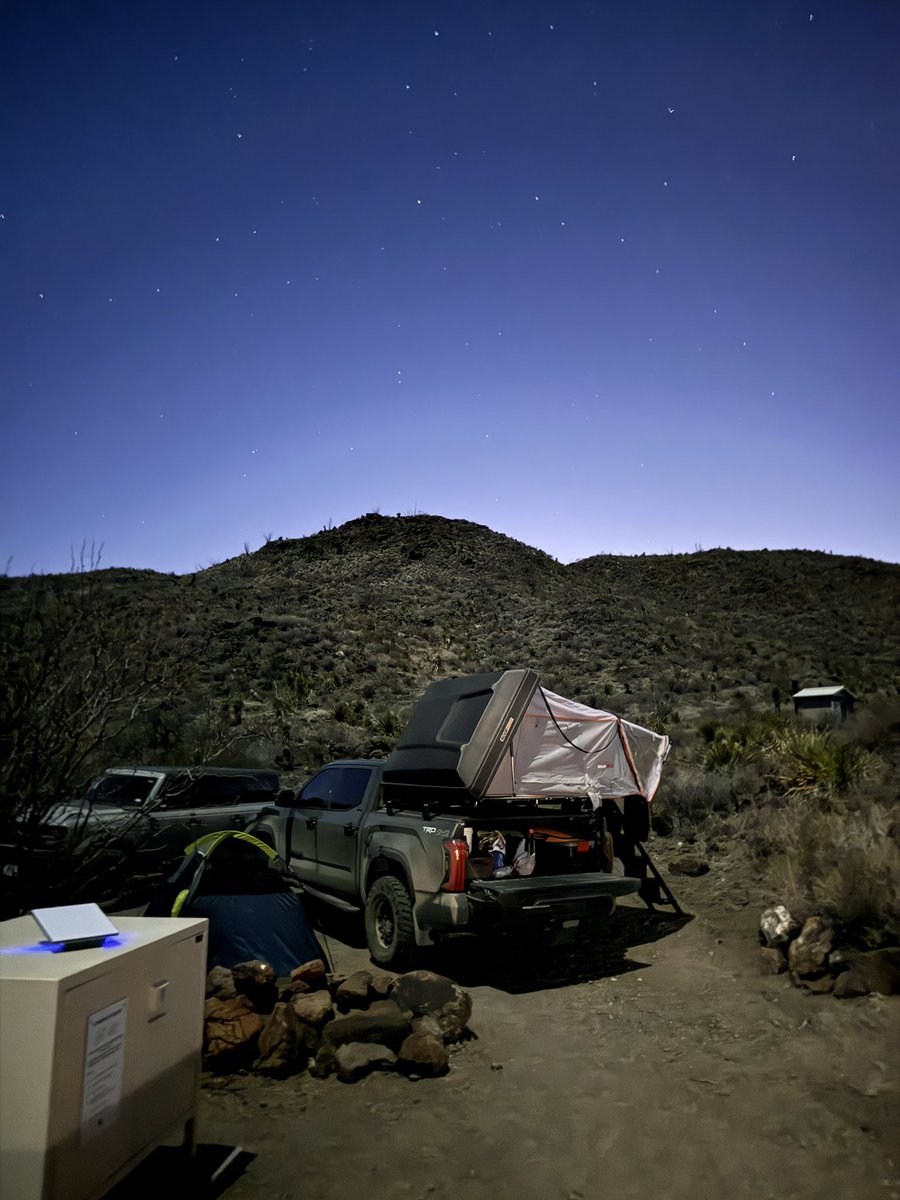
The News: Starlink is reinforcing its core promise — high-speed internet anywhere on Earth, no matter how remote.
Why It Matters: With over 9 million active users and a V3 satellite generation on the horizon, Starlink's remote connectivity story is getting significantly stronger in 2026.
Source: @Starlink on X

It's a simple message, but the numbers behind it are anything but. Starlink's latest reminder that it keeps users connected "in even the most remote locations" is backed by a satellite constellation that now spans over 7,000 satellites, a user base exceeding 9 million active subscribers, and a next-generation hardware upgrade that promises to redefine what "remote internet" means entirely.
For Tesla owners who travel off the beaten path — whether overlanding in a Cybertruck, camping in a national forest, or working from a rural property — Starlink's trajectory in 2026 is directly relevant to how you stay connected when cellular towers are nowhere in sight.
📊 Key Figures
| Metric | Value | Context |
|---|---|---|
| Active Users | 9M+ | 155+ countries |
| Satellites Deployed | 7,000+ | ~9,500 targeted by 2026 |
| US Median Download Speed | ~200 Mbps | Peak demand, July 2025 |
| Typical Rural Speeds | 50–150 Mbps | Most rural US users |
| Latency | 20–40 ms | Comparable to fiber |
| Starlink Mobile Users | 10M active/mo | 16M unique users reached |
| V3 Satellite Capacity | 1+ Tbps each | 10x current gen capacity |
| Residential Plan Start Price | $50/mo | $39/mo promo through Mar 31 |
🌐 Where Starlink Stands Today
The headline numbers are impressive on their own. But what makes Starlink's remote connectivity story compelling in 2026 is the combination of scale and performance that would have seemed implausible five years ago. Latency in the 20–40 millisecond range is not just "usable" — it's genuinely comparable to what fiber customers experience in cities. For a signal bouncing off a satellite in low Earth orbit, that's a remarkable engineering achievement.
Rural users in the United States are seeing median speeds between 50–150 Mbps, with peak demand times pushing close to 200 Mbps. In high-latitude regions like Alaska — historically among the hardest places on Earth to serve with reliable broadband — median peak-hour download speeds have nearly doubled following targeted polar orbit satellite deployments. SpaceX has over 400 additional polar orbit satellites planned by end of 2025 to continue that improvement.
📱 Starlink Mobile: No Dish Required
Perhaps the most significant development for on-the-go users is Starlink Mobile (formerly Direct to Cell). The service allows standard smartphones to connect directly to Starlink satellites — no dish, no special hardware. Commercial rollout for basic connectivity began in mid-2025, and as of March 2026, the first-generation system has already reached 16 million unique users, with 10 million active monthly users through partner carriers globally.
SpaceX anticipates exceeding 25 million active Starlink Mobile users by end of 2026. The next-generation V2 system, confirmed for a mid-2027 debut via Starship, is targeting what SpaceX describes as "5G speeds from space" — peak speeds up to 150 Mbps per user, with 100 times the data density of current V1 satellites.
🛰️ What V3 Satellites Mean for Everyone
The most consequential near-term development is the third-generation (V3) satellite launch, targeted for the first half of 2026 via Starship. Each V3 satellite is designed to deliver over 1 Terabit per second of downlink capacity — more than 10 times what current second-generation satellites provide. A single Starship launch carrying V3 satellites adds 60 Tbps of capacity to the network.
To put that in perspective: the entire current Starlink constellation's capacity could theoretically be matched by a handful of V3 launches. This isn't an incremental upgrade — it's a generational leap that will directly translate to faster speeds and more consistent performance in the remote locations Starlink is highlighting today.
🔭 The BASENOR Take
| Timeline | V3 launch H1 2026 · Mobile V2 mid-2027 |
| Impact Level | 🔴 High — reshapes remote connectivity globally |
| Confidence | High — based on verified deployment data and SpaceX filings |
Starlink's tweet is brief, but the story it represents is one of the most consequential infrastructure builds of the decade. The service has moved well past the "promising but patchy" phase into something that genuinely competes with — and in many rural areas, beats — traditional broadband.
For the Tesla community specifically, Starlink's expansion matters in several concrete ways. Cybertruck owners exploring remote terrain increasingly rely on satellite connectivity for navigation, emergency communication, and over-the-air software updates when cellular coverage drops out. The Roam plan at $50/month for 100GB (or $165/month unlimited) is a realistic option for serious off-grid travelers. The Starlink Mini portable dish at $249 is compact enough to pack alongside camping gear.
The bigger picture is that SpaceX is building the connectivity backbone that makes truly remote living and working viable at scale. With V3 satellites launching this year and Starlink Mobile V2 targeting 5G-class speeds from orbit by 2027, the gap between "connected" and "off-grid" is narrowing faster than most people realize. For our SpaceX coverage, this is a story we'll keep tracking closely as V3 launches approach.
🚀 Following the Starship program? See every test flight, official outcome and the next launch window in our SpaceX Starship Tracker.
Sources & reporting notes
The links below identify the material source records used for this report.
- @Starlink on X (2026-03-08T21:39:54.000Z) — Direct source
Source links are preserved as published or accessed. See our editorial standards and corrections policy.
The BASENOR Editorial Desk covers Tesla, SpaceX, and related technology, curating reporting from primary sources — official accounts, regulatory filings, and software release data. Every article passes source-record and fact-checking review before publication. About the newsroom.
This report was curated by the BASENOR Editorial Desk from the sources listed above. Read our editorial standards or email editorial@basenor.com to report an error.