📌 UPDATE — August 8, 2026
United Airlines is now reporting a striking new data point: Wi-Fi satisfaction scores on Starlink-equipped aircraft are more than double those on the rest of its fleet. The airline says it is hearing directly from consultants who are deliberately booking Starlink flights so they can bill productive hours while traveling to and from client sites — adding a concrete professional-productivity angle to the passenger behavior trend described below. The figures underscore that Starlink's aviation impact is showing up not just in anecdotal booking quirks but in measurable carrier metrics.

Via @SawyerMerritt · Aug 8, 2026
📌 UPDATE — August 6, 2026
CNBC's Andrew Ross Sorkin added his voice to the growing chorus of Starlink Aviation believers, calling his United Airlines experience "amazing" and predicting it will become a major competitive differentiator. Sorkin argued that on a route like New York to LA, passengers with a choice between Starlink and non-Starlink flights would consistently pick Starlink — reinforcing what airlines are already seeing in booking behavior. The endorsement from a prominent financial media figure underscores that Starlink's in-flight appeal is crossing over from tech enthusiasts into mainstream business travelers. The comment was shared by @SawyerMerritt on X and has drawn significant engagement.
"Amazing. I wonder what it's going to mean for other airlines. If you were traveling from NY to LA for the next couple years, if you had a choice between Starlink and no Starlink, you'd choose Starlink." — Andrew Ross Sorkin
In-flight Wi-Fi has always been a nice-to-have. Starlink has turned it into a booking decision. Speaking during SpaceX's earnings call on August 5, 2026, SpaceX President Gwynne Shotwell revealed that at least one airline customer reported passengers deliberately choosing shorter connecting flights over direct routes — purely to guarantee they'd be on a Starlink-activated aircraft. The airline, Shotwell said, had never seen that kind of behavior before.

Why This Is a Bigger Deal Than It Sounds
Airline passengers are famously price-sensitive and convenience-driven. The entire logic of the hub-and-spoke system is built on the assumption that travelers will tolerate a connection if it saves money — not add one voluntarily. What Shotwell described inverts that calculus entirely. Passengers are accepting longer total travel times and the added friction of a layover specifically to access better connectivity. That's not a preference — it's a revealed priority.
For the airline industry, this is a competitive signal that's hard to ignore. If a meaningful share of passengers are routing around your direct flights because your aircraft don't have Starlink, that's a yield problem. Carriers that haven't committed to a rollout timeline are watching their competitors turn Wi-Fi into a loyalty driver.
Where the Rollout Stands
The scale of Starlink's aviation expansion explains why passengers now have enough choice to make this kind of trade-off. According to data tracked by SeatWiFi, more than 1,100 commercial aircraft worldwide had Starlink installed as of June 2026. Across more than 46 airlines, over 7,500 aircraft are either already equipped or under contract, according to industry tracking data.
The carrier-level commitments are substantial. United Airlines expects to have nearly 1,000 aircraft equipped with free Starlink by the end of 2026 — more than 400 were already done as of late June. Southwest became the first low-cost carrier to operate Starlink flights in June 2026, with plans to equip over 300 aircraft by year-end. Emirates is rolling out across its entire A380 fleet, targeting all 232 in-service aircraft by mid-2027. Qatar Airways has already completed installation across its full A350 and 777 fleets. American Airlines announced in May 2026 that it would install Starlink on more than 500 narrowbody planes, with rollout beginning in early 2027.
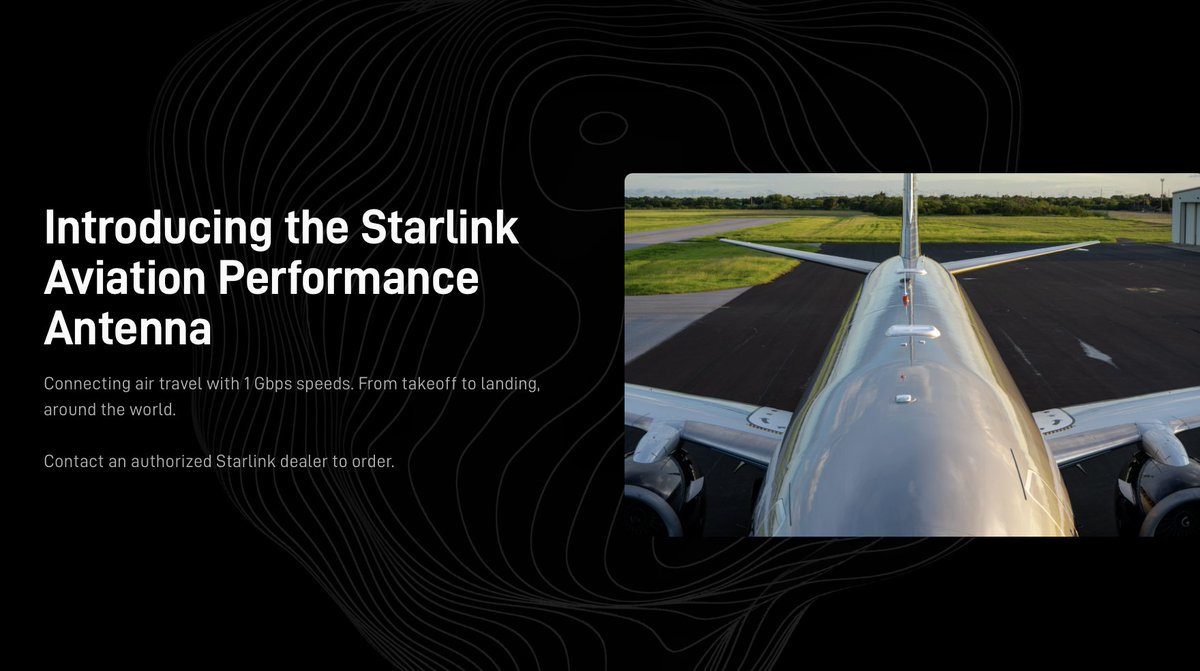
The performance gap versus legacy in-flight Wi-Fi systems is part of what's driving the demand. Starlink aviation delivers average download speeds around 152 Mbps, with the Performance antenna capable of up to 1 Gbps — versus the sluggish, congested connections passengers have tolerated for years on older satellite systems.
The Business Model Taking Shape
Most airlines are offering Starlink as a complimentary service, which itself reflects a strategic choice: they're treating connectivity as a differentiator rather than a revenue line. United, Southwest, and Qatar Airways all provide it at no extra charge. airBaltic was the first European carrier to offer it free across its entire fleet.
Copa Airlines broke from that pattern in July 2026, becoming the first carrier to charge economy passengers for access while offering it free to business class and elite status members. Whether that model spreads or stalls will be worth watching — especially now that Shotwell's data point suggests passengers are willing to restructure their itineraries to get the service.
The economics on the airline side aren't trivial. Installation runs approximately $200,000 per aircraft, with monthly service fees between $4,000 and $20,000 depending on the tier. For a fleet of 300 planes, that's a nine-figure capital commitment before the first passenger logs on. The fact that carriers are making that bet — and that passengers are already routing around aircraft that haven't made it — suggests the return is showing up somewhere in the data.
What Shotwell described on that earnings call is the kind of organic behavioral shift that product teams spend years trying to engineer. Starlink didn't need a loyalty program or a marketing campaign — passengers just started voting with their itineraries. The question now is how quickly the airlines still sitting on the sidelines do the math.
For more on SpaceX and Starlink developments, see our SpaceX coverage.
Sources & reporting notes
The links below identify the material source records used for this report.
- @SawyerMerritt on X (2026-08-06T16:35:17.000Z) — Direct source
Source links are preserved as published or accessed. See our editorial standards and corrections policy.
The BASENOR Editorial Desk covers Tesla, SpaceX, and related technology, curating reporting from primary sources — official accounts, regulatory filings, and software release data. Every article passes source-record and fact-checking review before publication. About the newsroom.
This report was curated by the BASENOR Editorial Desk from the sources listed above. Read our editorial standards or email editorial@basenor.com to report an error.