

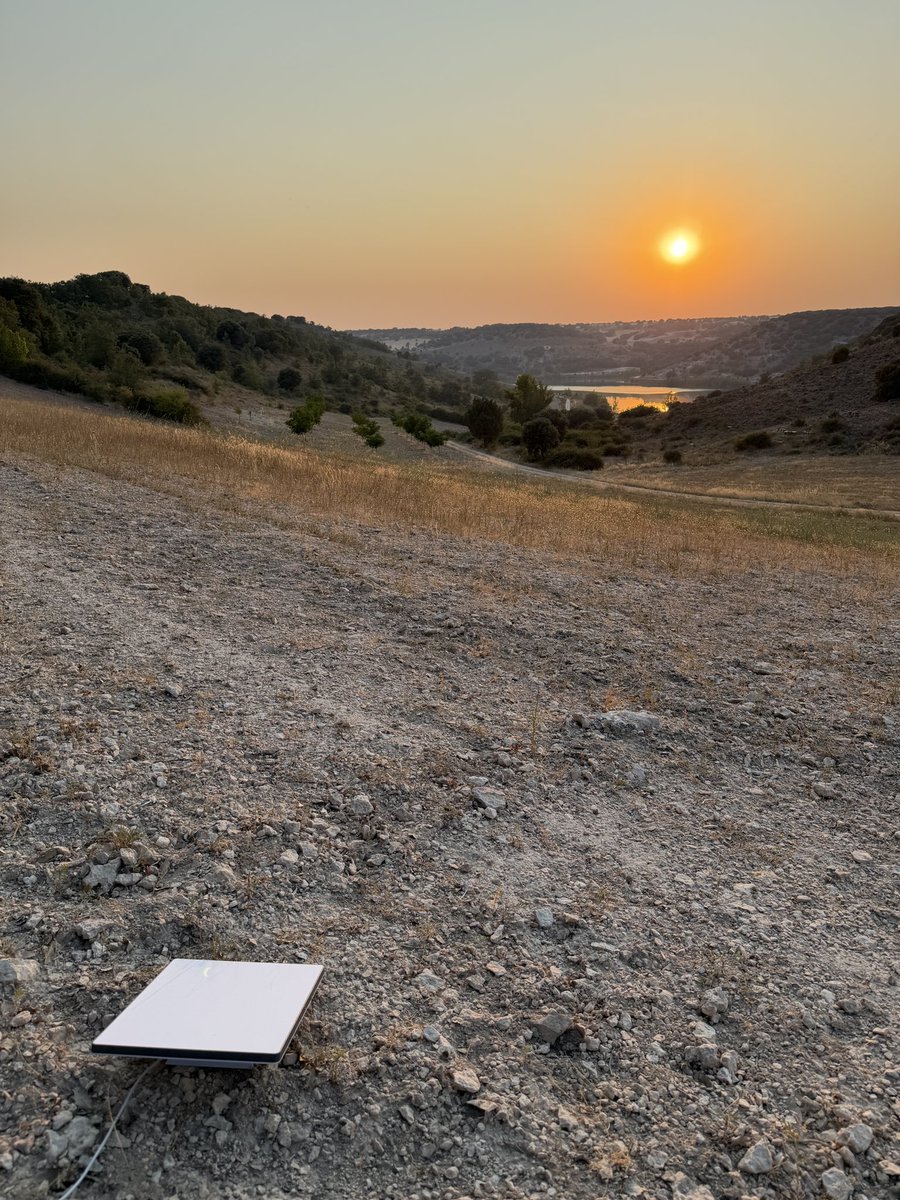
When a total solar eclipse swept across Europe on August 12, 2026, the question wasn't just whether skies would clear — it was whether the infrastructure to share the moment would hold up. For broadcasters and scientists working in remote corridors along the eclipse path, Starlink answered that question definitively.


What Actually Happened
The most striking deployment was by Iberia, which used Starlink connectivity to livestream the August 12 total solar eclipse from an Airbus A321XLR cruising at 33,000 feet over Spain. Streaming live video from a commercial aircraft in motion — positioned to track the eclipse path — is a materially different challenge than a ground-based remote broadcast. Latency, handoff between satellites, and sustained bandwidth all become harder problems at altitude and speed. The fact that it worked well enough for a live public broadcast is the detail worth noting.
NASA also hosted a parallel livestream of the August 12 event, pulling live feeds from cameras distributed across the eclipse path and distributing them simultaneously across YouTube, Twitch, NASA+, Facebook, Instagram, and Amazon Prime. The multi-platform distribution model depends on reliable uplinks from remote ground positions — exactly the scenario where terrestrial cellular and fixed broadband infrastructure tends to fail under the surge of eclipse chasers descending on rural viewing sites.
Why This Matters Beyond the Eclipse
Solar eclipses are a useful stress test for remote connectivity infrastructure precisely because they are predictable, high-demand, and geographically concentrated. The eclipse path is narrow — often cutting through terrain that has little permanent broadband infrastructure — and it attracts dense crowds of media, scientists, and enthusiasts simultaneously. Traditional wireless networks buckle under that kind of localized demand spike.
This isn't Starlink's first eclipse deployment. During the April 8, 2024 total solar eclipse over North America, E.W. Scripps Company stations pre-positioned Starlink terminals paired with TVU Networks IP transmitters at major viewing locations, explicitly to route around expected cellular congestion. Starlink satellites also captured footage of that eclipse from orbit. The 2026 deployment builds on that playbook — but the Iberia in-flight stream represents a meaningful step up in complexity.
The broader implication is straightforward: live broadcasting from locations that lack fixed infrastructure is no longer a logistical gamble. Whether it's a scientific expedition, a disaster response operation, or a commercial airline trying to offer passengers a once-in-a-decade view, Starlink's low-earth orbit constellation provides a connectivity floor that didn't exist five years ago.
For SpaceX, the eclipse coverage is useful marketing — but it's also a genuine proof point. The commercial aviation segment, in particular, represents a significant revenue opportunity, and a successful live-stream from a moving A321XLR is the kind of reference case that airline procurement teams pay attention to. For more on Starlink's expanding role in aerospace and beyond, see our SpaceX coverage.
Sources & reporting notes
The links below identify the material source records used for this report.
- @Starlink on X (2026-08-21T22:23:29.000Z) — Direct source
Source links are preserved as published or accessed. See our editorial standards and corrections policy.
The BASENOR Editorial Desk covers Tesla, SpaceX, and related technology, curating reporting from primary sources — official accounts, regulatory filings, and software release data. Every article passes source-record and fact-checking review before publication. About the newsroom.
This report was curated by the BASENOR Editorial Desk from the sources listed above. Read our editorial standards or email editorial@basenor.com to report an error.






