SpaceX's 13th Starship test flight touched another milestone on July 24, 2026, when Super Heavy Booster 20 completed its descent and splashed down in the Gulf of Mexico — while the Starship upper stage deployed 20 operational Starlink V3 satellites before its own controlled splashdown in the Indian Ocean. The mission wasn't flawless, but the data gathered pushes the program meaningfully forward.

What Happened on Flight 13
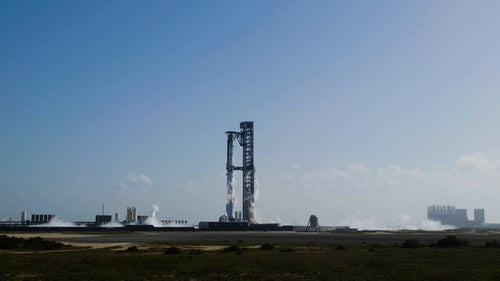
The vehicle lifted off from Starbase, Texas at 5:51 p.m. EDT on July 24. This was the second test flight of the third-generation (V3) Super Heavy-Starship stack — a configuration SpaceX is iterating on rapidly. The mission had already seen two aborted attempts: a July 16 scrub after four Raptor engines failed to ignite during startup, and a July 23 weather delay.
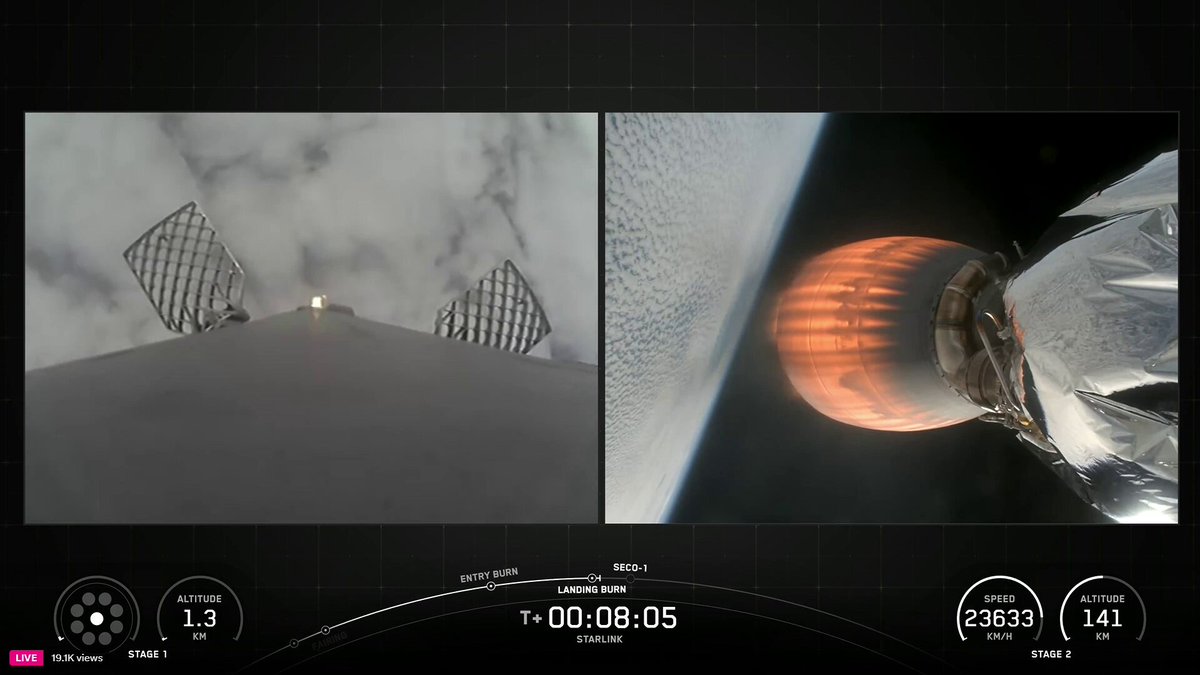
According to Spaceflight Now, the booster's landing burn ran into trouble when only 10 of 13 planned engines restarted, and by the moment of splashdown, just five appeared to be firing. The result was a harder-than-intended water impact in the Gulf of Mexico. SpaceX had deliberately chosen a Gulf splashdown for early V3 booster flights as a safety precaution — keeping the more complex mechanic catch attempts for later, once the new hardware has proven itself.
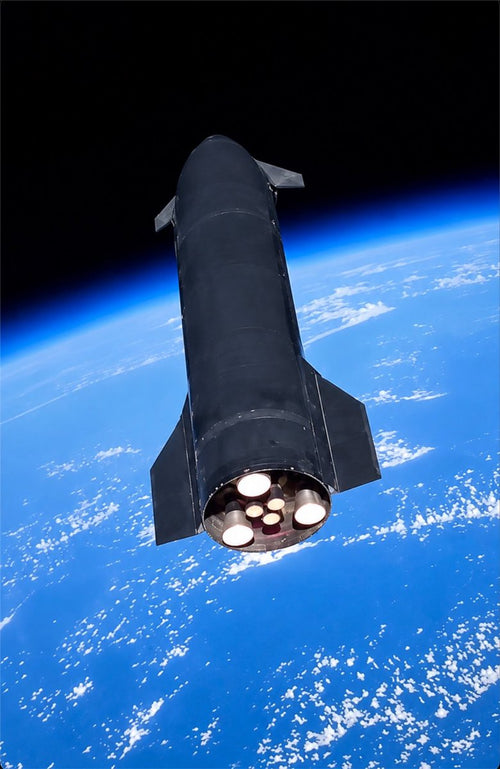
The Starship upper stage had a cleaner run. It completed its suborbital hop, successfully restarted a Raptor engine in space for 14 seconds — the longest in-space Raptor test fire to date — and executed a controlled soft splashdown in the Indian Ocean.
The Starlink V3 Deployment
The payload story is arguably the most significant part of Flight 13. Starship carried 20 Starlink V3 satellites, marking the first time actual operational V3 hardware has been deployed from the vehicle. According to reporting from Spaceflight Now, all 20 satellites successfully linked to the existing Starlink constellation via inter-satellite laser terminals before re-entry — a clean handoff that validates Starship as a viable operational launch platform, not just a test article.
That distinction matters. Previous Starship flights demonstrated the vehicle's ability to survive ascent and descent. Flight 13 demonstrated it can carry and deploy production hardware that immediately integrates into a live commercial network. For SpaceX's broader business case — using Starship to dramatically cut the per-kilogram cost of launching Starlink's next generation — this is the proof point the program needed.
Reading the Booster Data
The engine shortfall on Booster 20's landing burn will draw scrutiny, but context is worth keeping. SpaceX's development philosophy treats anomalies as data, not failures. The fact that the booster reached splashdown at all — after three engine-related issues across the two scrubs and the flight itself — gives engineers a concrete dataset on V3 Raptor behavior under the specific thermal and pressure conditions of a full-duration flight. A hard splashdown in controlled Gulf waters is recoverable information. A pad abort or mid-flight anomaly is not.
The V3 booster is a substantially different machine from the hardware that demonstrated mechanic catches in earlier flights. SpaceX has publicly indicated that Gulf splashdowns are a deliberate stepping stone for this generation, with the expectation of returning to tower catches once the V3 stack has accumulated more flight history. Flight 13's booster data — including exactly which engines failed to restart and when — feeds directly into that timeline.
What Comes Next
The in-space Raptor restart record (14 seconds) and the successful V3 Starlink deployment set two new high-water marks for the program in a single flight. The immediate question for the next mission is whether SpaceX can resolve the engine restart reliability issues on the booster side. If the five-engine splashdown was caused by a specific hardware or software fault rather than a systemic V3 design issue, a fix could come quickly.
For the broader Starship roadmap — which includes NASA's Human Landing System for Artemis and SpaceX's own point-to-point ambitions — consistent booster recovery is the critical remaining variable. The upper stage is performing. The payload integration is performing. The booster's landing sequence is the open item, and Flight 13 gave the team exactly the kind of high-fidelity failure data needed to close it. Follow our SpaceX coverage for updates as the next flight takes shape.
🚀 Following the Starship program? See every test flight, official outcome and the next launch window in our SpaceX Starship Tracker.
Sources & reporting notes
The links below identify the material source records used for this report.
- @NASASpaceflight on X (2026-07-25T16:01:09.000Z) — Direct source
Source links are preserved as published or accessed. See our editorial standards and corrections policy.
The BASENOR Editorial Desk covers Tesla, SpaceX, and related technology, curating reporting from primary sources — official accounts, regulatory filings, and software release data. Every article passes source-record and fact-checking review before publication. About the newsroom.
This report was curated by the BASENOR Editorial Desk from the sources listed above. Read our editorial standards or email editorial@basenor.com to report an error.