30-Second Brief
The News: Elon Musk posted that Tesla's internal battery cell production is "getting good," signaling meaningful progress in the company's push to manufacture its own cells at scale.
Why It Matters: Tesla's ability to produce cheaper, better 4680 cells in-house directly affects vehicle range, pricing, and long-term competitiveness — which touches every Tesla owner's wallet.
Source: @elonmusk on X

Why This Tweet Is a Bigger Deal Than It Looks
Four words. 406,000 views. When Elon Musk says Tesla battery cell production is "getting good," he's not filling space — he's signaling a turning point in what has been one of the most difficult engineering challenges Tesla has ever taken on.
The 4680 cell program launched with enormous ambition: a larger-format cylindrical cell with a dry electrode manufacturing process that promised to slash costs and unlock new energy density. The reality was years of slower-than-expected ramp, manufacturing headaches, and a heavy reliance on external suppliers like Panasonic and LG Energy Solution to keep vehicles rolling off the line. That context is exactly why Musk's brief statement carries weight right now.
📊 Key Figures
| Milestone | Figure | Context |
|---|---|---|
| 4680 cells produced | 100 million+ | Milestone hit Sep 2024 |
| Giga Texas 4680 capacity | 6+ GWh/yr | Enough for 1,000+ Cybertrucks/week |
| Internal cathode facility | ~10 GWh | Early ramp phase |
| LFP factory (Giga Nevada) | ~7 GWh target | Early ramp started early 2026 |
| Lithium refinery (Robstown, TX) | 30 GWh/yr target | Operational since Jan 2026; first in North America |
| Dry electrode cost reduction | 30%+ projected | vs. wet electrode process |
The Dry Electrode Breakthrough — Why It Took So Long
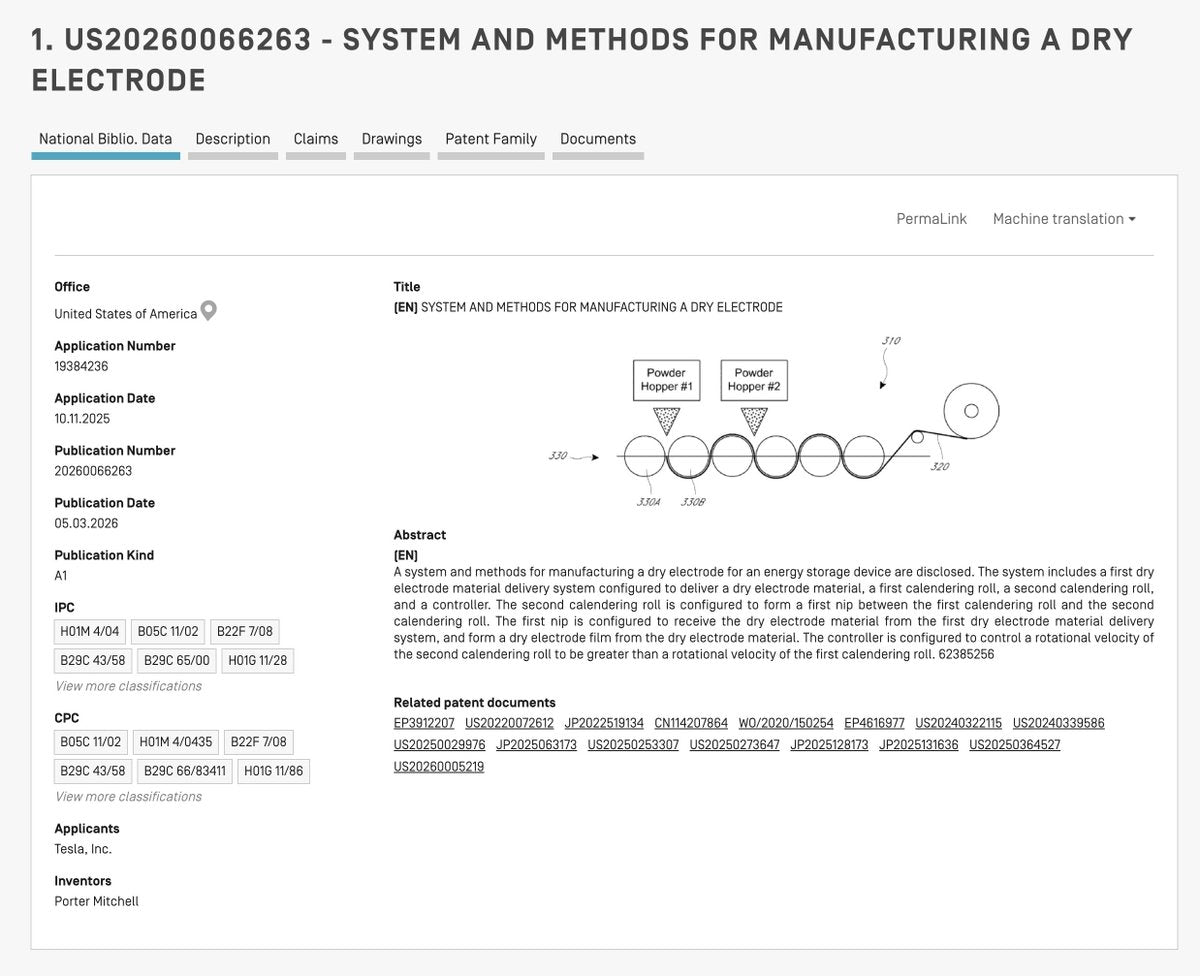
The dry electrode process is the core of Tesla's 4680 cost thesis. Traditional battery manufacturing uses a wet slurry process to coat electrodes — it works, but it requires enormous drying ovens, solvents, and energy. Tesla's dry process eliminates most of that, but industrializing it at scale proved extraordinarily difficult.
As confirmed during Tesla's Q4 2025 earnings call on January 28, 2026, the company is now producing both the anode and cathode using the dry electrode process. That's the full picture — not just one side of the cell. Combined with the 4680's structural battery pack design (where cells double as part of the vehicle's chassis), this is a manufacturing approach that no competitor has replicated at scale.
The payoff: Tesla's in-house 4680 cells became its lowest-cost cell per kWh by the end of 2024, beating out what Panasonic and LG Energy Solution were charging. The dry electrode process is expected to push that cost advantage another 30% further.
Model Y Is Already Getting These Cells — Right Now
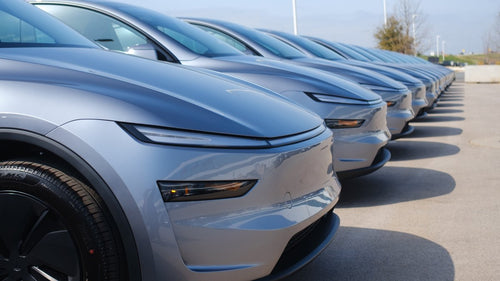
This isn't purely a future story. As of January 28, 2026, Tesla recommenced building Model Y battery packs with internally produced 4680 cells. The move is partly strategic — reducing dependence on external suppliers and hedging against tariff exposure — but it's also a sign of genuine confidence in the cell's reliability and yield rates.
If you're taking delivery of a new Model Y in 2026, there's a real chance your pack contains Tesla-made cells. That's a meaningful shift from where the program stood 18 months ago.
Four New 4680 Variants Are Coming — Including One for the Robotaxi
Tesla has four new 4680 versions in development under the internal "4680D project," all featuring dry cathodes. According to verified reporting, the variants are designated NC05, NC20, NC30, and NC50:
- NC05 — Slated for the upcoming Robotaxi (Cybercab)
- NC20 — Targeted at SUVs and Cybertruck
- NC30 & NC50 — The first Tesla batteries to incorporate silicon-carbon materials in the anode, which typically delivers higher energy density
The silicon-carbon anode variants (NC30/NC50) are particularly significant. Silicon-carbon anodes can store more lithium ions than graphite, which translates directly into range gains without increasing pack size or weight. Tesla has been cautious about silicon in the anode due to expansion/contraction issues during charge cycles — so the fact that these are moving toward production is a sign the materials science problems are being solved.
The Bigger Supply Chain Picture
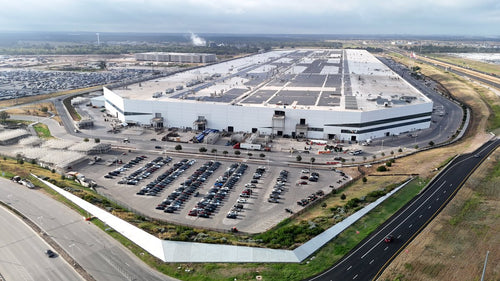
Tesla isn't just improving cell chemistry — it's vertically integrating the entire supply chain. The lithium refinery in Robstown, Texas, which came online in January 2026, is the first spodumene-to-lithium-hydroxide refinery in North America. At a 30 GWh annual target, it's designed to feed Tesla's own cell production rather than rely on processed lithium from overseas suppliers.
Separately, an LFP cell factory at Gigafactory Nevada — built around equipment acquired from CATL — began early ramp production in early 2026, targeting around 7 GWh annually. LFP chemistry is cheaper and more thermally stable, making it well-suited for standard-range vehicles and energy storage products. And Gigafactory Berlin is planned to begin cell manufacturing by 2027, adding European production capacity.
🔭 The BASENOR Take
Timeline: Progress is happening now — Model Y 4680 reintegration is live as of January 2026. New dry-cathode variants are targeted for 2026 production.
Impact Level: 🔴 High — Battery cost is the single biggest lever on Tesla vehicle pricing. Cheaper cells = potential price cuts or margin expansion that funds future products.
Confidence: High. The dry electrode achievement was confirmed on the Q4 2025 earnings call. The 4680D project variants are verified through reporting. Musk's tweet aligns with all of it.
What to watch: Q1 2026 earnings for any update on 4680 production volume, yield rates, or cost-per-kWh figures. Any price adjustment on Model Y or Cybertruck would be a downstream signal that the cell cost savings are flowing through to vehicles.
📰 Deep Dive
Tesla's battery cell journey has been one of the most closely watched manufacturing stories in the auto industry. The 4680 program was announced in 2020 with bold claims about cost and energy density — and for years, the gap between the promise and the production reality was a persistent criticism. External suppliers carried the load while Tesla worked through the engineering. Musk's brief post this morning suggests that gap is finally closing in a meaningful way.
The vertical integration play is worth appreciating in full. Tesla now controls lithium refining (Robstown), cathode production (internal facility), cell manufacturing (Giga Texas, Giga Nevada), and pack assembly — all under one roof, or at least one corporate umbrella. That's a supply chain posture that traditional automakers simply cannot replicate quickly. It also insulates Tesla from the kind of tariff and supply disruption risk that has rattled competitors over the past two years.
For owners, the most direct implication is pricing power. When Tesla's cell costs drop 30% or more from the dry electrode process, the company has a choice: pocket the margin or pass savings to buyers. Historically, Tesla has used cost reductions to lower prices and stimulate demand — which is how the Model 3 and Model Y became the best-selling EVs in the world. If the 4680 program is genuinely "getting good," the next price move on those vehicles could be down, not up.
The silicon-carbon anode variants (NC30 and NC50) are the longer-term story to watch. Range anxiety remains a real barrier for some buyers, and a meaningful range increase — without adding weight or cost — would be a genuine market event. Tesla has been conservative about silicon anodes for good reason, but the fact that two variants are now in the pipeline suggests the durability and cycle-life questions are being answered in the lab. When those cells reach production, the range numbers on Tesla's lineup could look very different.
🚕 Following the Robotaxi rollout? See every operating city, launch date and announced market in our Tesla Robotaxi Tracker.
Related Gear
Gear up your Tesla with tested, custom-fit BASENOR accessories — shop Tesla accessories →
Sources & reporting notes
The links below identify the material source records used for this report.
- @elonmusk on X (2026-03-07T08:23:28.000Z) — Direct source
Source links are preserved as published or accessed. See our editorial standards and corrections policy.
The BASENOR Editorial Desk covers Tesla, SpaceX, and related technology, curating reporting from primary sources — official accounts, regulatory filings, and software release data. Every article passes source-record and fact-checking review before publication. About the newsroom.
This report was curated by the BASENOR Editorial Desk from the sources listed above. Read our editorial standards or email editorial@basenor.com to report an error.