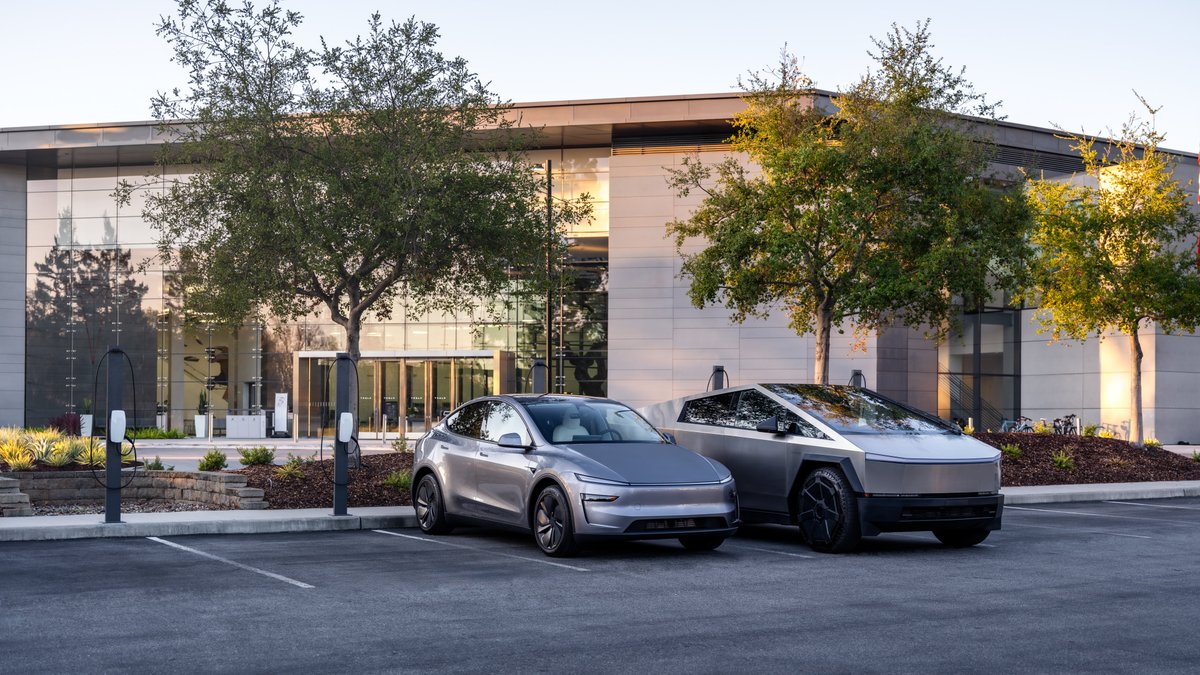
Tesla's commercial charging infrastructure is expanding at a steady clip. Over the past two weeks, the company added 381 Wall Connectors across 64 new business sites in the United States — a rollout that includes some notably large single-property deployments and continues a pattern of aggressive Level 2 placement at apartments, hotels, and mixed-use developments.

The Numbers Behind the Rollout
The headline figures — 381 connectors, 64 sites, roughly two weeks — work out to just under six connectors per site on average. But the distribution is far from even. Two properties account for a disproportionate share of the total:
| Property | Location | Connectors |
|---|---|---|
| 930 West 8th Place | Los Angeles, CA | 61 |
| Modera Saint Paul | Dallas, TX | 48 |
| Remaining 62 sites | Various | 272 |
Those two properties alone account for 109 connectors — nearly 29% of the entire two-week total. Both are large multi-unit residential developments, which points to where Tesla sees the densest near-term demand: apartment and condominium buildings where residents lack a private garage for home charging.
Why Residential Multifamily Is the Target
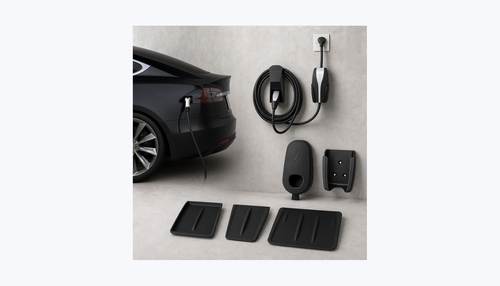
The Wall Connector for Business product is specifically designed for shared commercial environments. According to Tesla's specifications, each Universal Wall Connector delivers up to 11.5 kW of Level 2 AC charging — roughly 44 miles of range added per hour. That's not Supercharger speed, but it doesn't need to be. For a resident who parks overnight, eight hours translates to over 350 miles of range replenishment, more than enough to top off a Model 3 or Model Y from near-empty.
The commercial hardware also includes load balancing, which lets a building share a single electrical circuit across multiple units rather than wiring each stall independently — a significant cost reduction for property developers. Integration with the Tesla app and Fleet platform handles authentication and, where applicable, payment processing, making the system manageable at scale without on-site staff involvement.
Crucially, the Universal Wall Connector supports both NACS and J1772 via a built-in adapter, meaning a property that installs Tesla hardware isn't locking out non-Tesla EV owners. That's a meaningful selling point for building managers trying to future-proof their amenity packages.
The Broader Expansion Trend
This latest two-week sprint follows a similar push reported earlier in July. According to evbase.com, a prior two-week period ending around July 7 added 186 connectors across 33 business properties — a pace that, if the current figures hold, has roughly doubled. That earlier wave included international sites in India, Macao, the Philippines, and Canada, suggesting the program's geographic ambitions extend well beyond the U.S. domestic market.
The pattern across both periods is consistent: hotels, apartment complexes, and mixed-use retail properties are the primary targets. That mirrors where EV drivers most need reliable Level 2 access — not for fast top-ups, but for the kind of overnight or all-day charging that reduces dependency on public DC fast chargers for routine use.
What It Means for the Network
Tesla's Supercharger network gets most of the attention, but the Wall Connector for Business buildout is quietly doing something different: it's embedding Tesla charging hardware into the fabric of where people live and stay. A 61-connector installation at a Los Angeles residential tower isn't a road-trip stop — it's a permanent amenity for potentially hundreds of residents. Scale that across dozens of similar properties every two weeks, and the cumulative effect on day-to-day owner charging convenience is substantial.
For Tesla owners who live in multifamily housing, the practical question is whether their building is on the expansion list. The Tesla app's charging location finder is the fastest way to check — and for owners in property management roles, the Wall Connector for Business program is worth a direct inquiry to Tesla's commercial team.
Related Gear
Gear up your Tesla with tested, custom-fit BASENOR accessories — shop Tesla accessories →
Sources & reporting notes
The links below identify the material source records used for this report.
- @TeslaNewswire on X (2026-07-17T21:08:48.000Z) — Direct source
Source links are preserved as published or accessed. See our editorial standards and corrections policy.
The BASENOR Editorial Desk covers Tesla, SpaceX, and related technology, curating reporting from primary sources — official accounts, regulatory filings, and software release data. Every article passes source-record and fact-checking review before publication. About the newsroom.
This report was curated by the BASENOR Editorial Desk from the sources listed above. Read our editorial standards or email editorial@basenor.com to report an error.