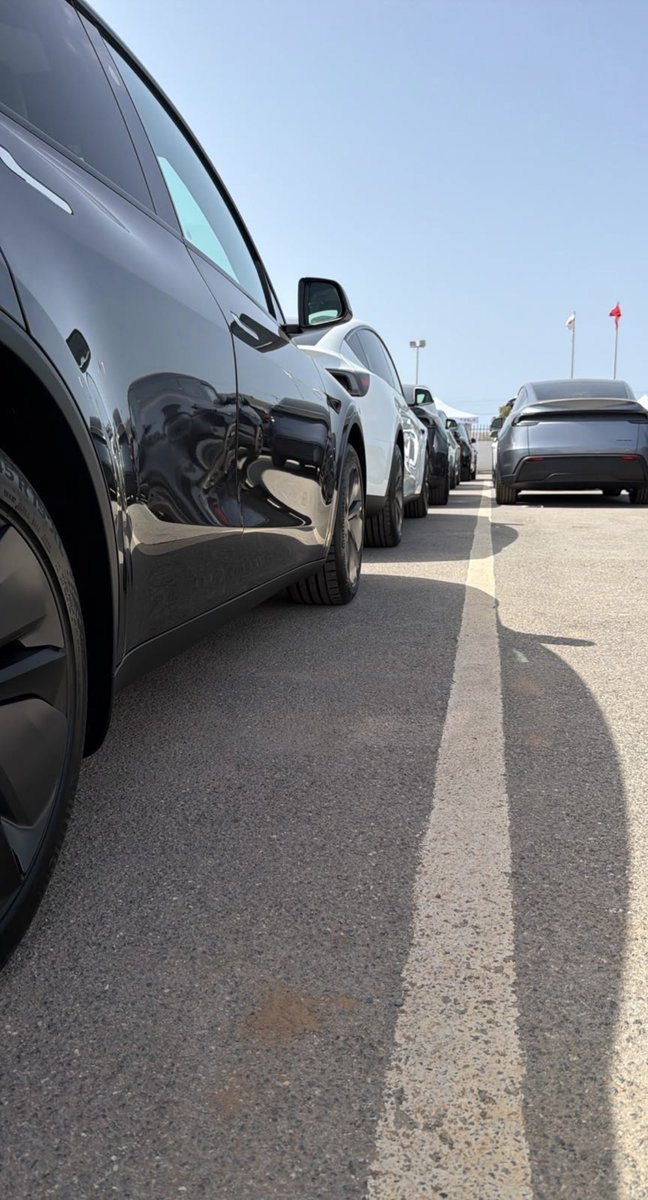
Tesla has officially crossed into Africa. The first batch of Model Y vehicles is now reaching customers in Morocco, completing a rollout that began with a retail launch in Casablanca earlier this year. It's a milestone that's been years in the making — and it comes with a surprisingly robust infrastructure story behind it.

1. Morocco Is Tesla's First African Market — Full Stop
This isn't a soft launch or a gray-market situation. Tesla Morocco, a locally incorporated subsidiary, opened its first retail location at AnfaPlace Mall in Casablanca on February 6, 2026, where Model 3 and Model Y vehicles were put on display. Deliveries of the Model Y are now confirmed as of July 2026, making Morocco the first country on the African continent where Tesla has officially sold and delivered vehicles to customers.
2. The Subsidiary Was Planted Well Before the Fanfare
Tesla Morocco was incorporated on May 27, 2025 — more than eight months before the public retail launch. The local entity was set up with an initial capital of MAD 27.5 million (roughly $2.75 million USD) and is headquartered at the Crystal Tower in Casablanca Marina. That kind of quiet groundwork signals this was a deliberate, planned market entry rather than an opportunistic pivot.
3. Pricing Is Set, and Tax Incentives Make It More Competitive
According to background research, the Model 3 starts at approximately MAD 389,990, while the Model Y opens at around MAD 419,990, with premium all-wheel-drive variants reaching MAD 549,990. Critically, Morocco offers a 100% exemption on VAT and customs duties for electric vehicles — a policy that meaningfully reduces the effective cost for buyers and gives Tesla a structural pricing advantage over combustion alternatives in the market.
4. The Supercharger Network Was Already There
Tesla didn't wait for deliveries to build charging infrastructure. According to background research, approximately 24 Supercharger stations are already operational 24/7 across major Moroccan cities — Casablanca, Rabat, Marrakech, Fès, Agadir, and Tangier. That network has been gradually deployed since 2021, meaning the charging backbone was quietly laid years before the first customer took delivery. For early adopters, range anxiety is a much smaller concern than it typically is in a brand-new market.
5. A $5 Billion Factory Is Part of the Plan
Morocco isn't just a sales destination — it's shaping up to be a manufacturing hub. According to background research, Tesla confirmed plans in October 2025 to build its first African car manufacturing plant in Morocco's Kenitra free zone. The projected $5 billion facility is designed to produce up to 400,000 electric vehicles annually by 2027, including the Model Y and a new compact EV. Construction was slated to begin in September 2025. If those timelines hold, Morocco could become an export base for Tesla's African and potentially European operations.
6. The Sales Model Is Pure Tesla — Online, Direct, No Dealers
True to form, Tesla is not working through local dealerships. Moroccan customers configure and order vehicles directly through Tesla's online configurator, which was activated for the market at launch. It's the same direct-to-consumer model Tesla uses globally, which keeps margins cleaner and the buying experience consistent — though it also means there's no local negotiation or trade-in network to lean on for first-time buyers unfamiliar with the process.
The Morocco launch is more than a flag-planting exercise. With a functioning Supercharger network, a local legal entity, favorable EV tax policy, and a potential gigafactory on the horizon, Tesla has laid unusually deep roots for what is technically its newest market. Whether the rest of Africa follows depends heavily on how this first chapter plays out.
Related Gear
Gear up your Model Y with tested, custom-fit BASENOR accessories — shop Model Y accessories →
Sources & reporting notes
The links below identify the material source records used for this report.
- @TeslaNewswire on X (2026-07-17T20:55:03.000Z) — Direct source
Source links are preserved as published or accessed. See our editorial standards and corrections policy.
The BASENOR Editorial Desk covers Tesla, SpaceX, and related technology, curating reporting from primary sources — official accounts, regulatory filings, and software release data. Every article passes source-record and fact-checking review before publication. About the newsroom.
This report was curated by the BASENOR Editorial Desk from the sources listed above. Read our editorial standards or email editorial@basenor.com to report an error.