30-Second Brief
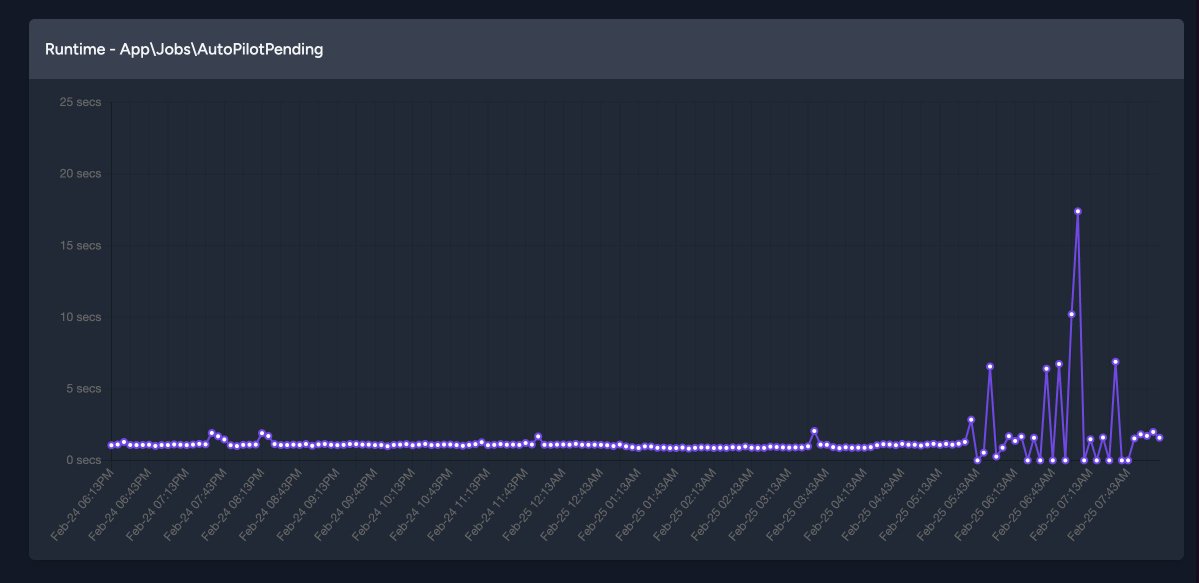
The News: Tesla's infrastructure experienced a confirmed outage from 5:30 AM to 7:50 AM PST on February 25, 2026, disrupting the official Tesla mobile app and third-party services — but vehicle phone keys remained fully operational throughout.
Why It Matters: If you rely on the Tesla app for remote commands (climate pre-conditioning, locking, charging monitoring), you would have been unable to use those features during the window. The good news: access to your vehicle via phone key was never at risk.
Source: @teslascope on X
Tesla App and Infrastructure Outage on February 25: What Went Down, What Didn't, and What Owners Should Know
Tesla's servers went offline for roughly two and a half hours on the morning of February 25, 2026, leaving owners unable to send remote commands through the Tesla mobile app. Teslascope — one of the most reliable independent monitors of Tesla's infrastructure — confirmed the full scope of the incident, including the exact window, what was impacted, and critically, what was not.
Here's a full breakdown of the outage and what it means for your day-to-day ownership experience.
📊 Key Figures
| Metric | Value | Context |
|---|---|---|
| Outage Start | 5:30 AM PST | Early morning — low peak usage window |
| Outage End | 7:50 AM PST | Stabilized before morning commute peak |
| Total Duration | ~2 hours 20 minutes | Classified as transient by Teslascope |
| DownDetector Peak Reports | ~9:08 AM ET (6:08 AM PST) | Hundreds of user reports at peak |
| Services Affected | Tesla app, third-party apps | Remote commands, live data access |
| Services NOT Affected | Phone key, Fleet Telemetry | Drive/charge session data kept streaming |
What Actually Went Down
According to Teslascope, both the official Tesla mobile app and third-party Tesla applications were impacted during the outage window. For owners who woke up early on February 25 and tried to pre-condition their cabin, check their charge status, or unlock their car remotely, those commands would have failed or timed out.
Outage tracking service DownDetector recorded a surge in user reports around 6:08 AM PST — squarely within the confirmed window — with hundreds of Tesla owners reporting connectivity issues and 500 server errors. This aligns precisely with the timeline Teslascope independently confirmed.

The Critical Detail: Phone Keys Were Never at Risk
This is the most important takeaway for owners who may have panicked: you were never locked out of your vehicle.
Tesla's phone key operates via Bluetooth Low Energy (BLE) — a direct, device-to-vehicle connection that does not route through Tesla's cloud servers. Because of this architecture, a server-side outage has zero impact on your ability to unlock, start, or drive your car. Teslascope explicitly confirmed this in their initial statement, which is exactly the kind of clarification that cuts through the noise when outage reports start spreading on social media.
Key cards and key fobs are similarly independent of cloud infrastructure, so any owner carrying a backup had no disruption whatsoever.
Fleet Telemetry and Data Recording: Also Unaffected

For the developer and data-enthusiast community, there's another silver lining worth noting: Fleet Telemetry data recording was not disrupted. Teslascope confirmed this is because Fleet Telemetry operates as an end-to-end connection directly between vehicles and third-party servers — it does not depend on the same Tesla cloud infrastructure that went down. Drive sessions, charge session data, and other streaming telemetry continued uninterrupted throughout the outage.
This distinction matters for fleet operators and developers who depend on continuous vehicle data for monitoring or analytics workflows.
How the Outage Was Caught

Teslascope credited @DriveTeslaca for first flagging the incident. Teslascope noted that while they maintain automated alarms for exactly this type of downtime, a transient outage of this duration doesn't typically disrupt their own service — because core data streaming (drive and charge session recording) continues even when Tesla's primary API endpoints are unavailable.
It's a good illustration of how the Tesla monitoring community self-organizes: independent services, cross-referencing each other's alerts, often surface infrastructure issues faster than any official channel.
🔭 The BASENOR Take
| Timeline | 5:30 AM – 7:50 AM PST, February 25, 2026. Resolved before the primary commute window. |
| Impact Level | LOW–MODERATE — App-only disruption. Vehicle access and data integrity maintained. |
| Confidence | HIGH — Confirmed by Teslascope with specific timestamps, corroborated by DownDetector reports. |
| Status | RESOLVED — Infrastructure stabilized. No ongoing action required. |
This outage is worth contextualizing against the broader pattern of Tesla infrastructure reliability. Notably, Tesla experienced a separate server issue affecting the mobile app earlier in February 2026 — around February 18 — which was also resolved relatively quickly. Two infrastructure events within the same month is a data point worth watching, even if each individual incident was brief.
For the vast majority of owners, this outage was a minor inconvenience at worst — an inability to pre-condition or check charge status for a couple of hours. But for fleet operators, service businesses, or owners with automated routines that depend on remote commands firing reliably at specific times, even a two-hour window of API unavailability can create workflow disruptions.
The more important architectural takeaway is that Tesla's phone key system is deliberately decoupled from its cloud infrastructure — a sensible design decision that means server outages, however disruptive to app functionality, will never leave an owner stranded outside their vehicle. That's the right priority order, and it held up exactly as designed this morning.
📰 Deep Dive
What this incident reveals is a structural split in how Tesla's connected services are architected. Remote commands — climate control, charging management, locking, location — all route through Tesla's central API servers. When those servers go down, so does that layer of functionality. Fleet Telemetry and phone key access, by contrast, bypass that central layer entirely. The former connects directly to third-party servers; the latter uses local Bluetooth. The result is a tiered resilience model where the most critical function (physical access to the vehicle) is the most insulated from cloud dependency.
From a monitoring standpoint, Teslascope's ability to confirm the exact start and end times of the outage — to the minute — reflects how sophisticated independent Tesla infrastructure tracking has become. The Tesla community now has near-real-time visibility into API health, often surfacing issues faster than official channels. The fact that @DriveTeslaca flagged this first, with Teslascope's automated systems providing the corroborating data shortly after, is a testament to how the ecosystem self-monitors.
As Tesla continues to expand its fleet globally and deepen reliance on connected services for features like over-the-air updates, remote diagnostics, and eventually autonomous fleet management, infrastructure reliability will only become more critical. Two outages in a single month — both brief, both resolved — is not yet a red flag, but it is a pattern worth tracking. For now, the system worked as intended: the outage was contained, data was preserved, and owners were never left without access to their vehicles.
Related Gear
Gear up your Tesla with tested, custom-fit BASENOR accessories — shop Tesla accessories →
Sources & reporting notes
The links below identify the material source records used for this report.
- @teslascope on X (2026-02-25T16:17:06.000Z) — Direct source
- @teslascope on X (2026-02-25T16:17:06.000Z) — Direct source
- @teslascope on X (2026-02-25T16:20:45.000Z) — Direct source
Source links are preserved as published or accessed. See our editorial standards and corrections policy.
The BASENOR Editorial Desk covers Tesla, SpaceX, and related technology, curating reporting from primary sources — official accounts, regulatory filings, and software release data. Every article passes source-record and fact-checking review before publication. About the newsroom.
This report was curated by the BASENOR Editorial Desk from the sources listed above. Read our editorial standards or email editorial@basenor.com to report an error.