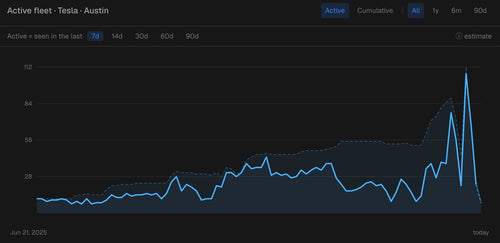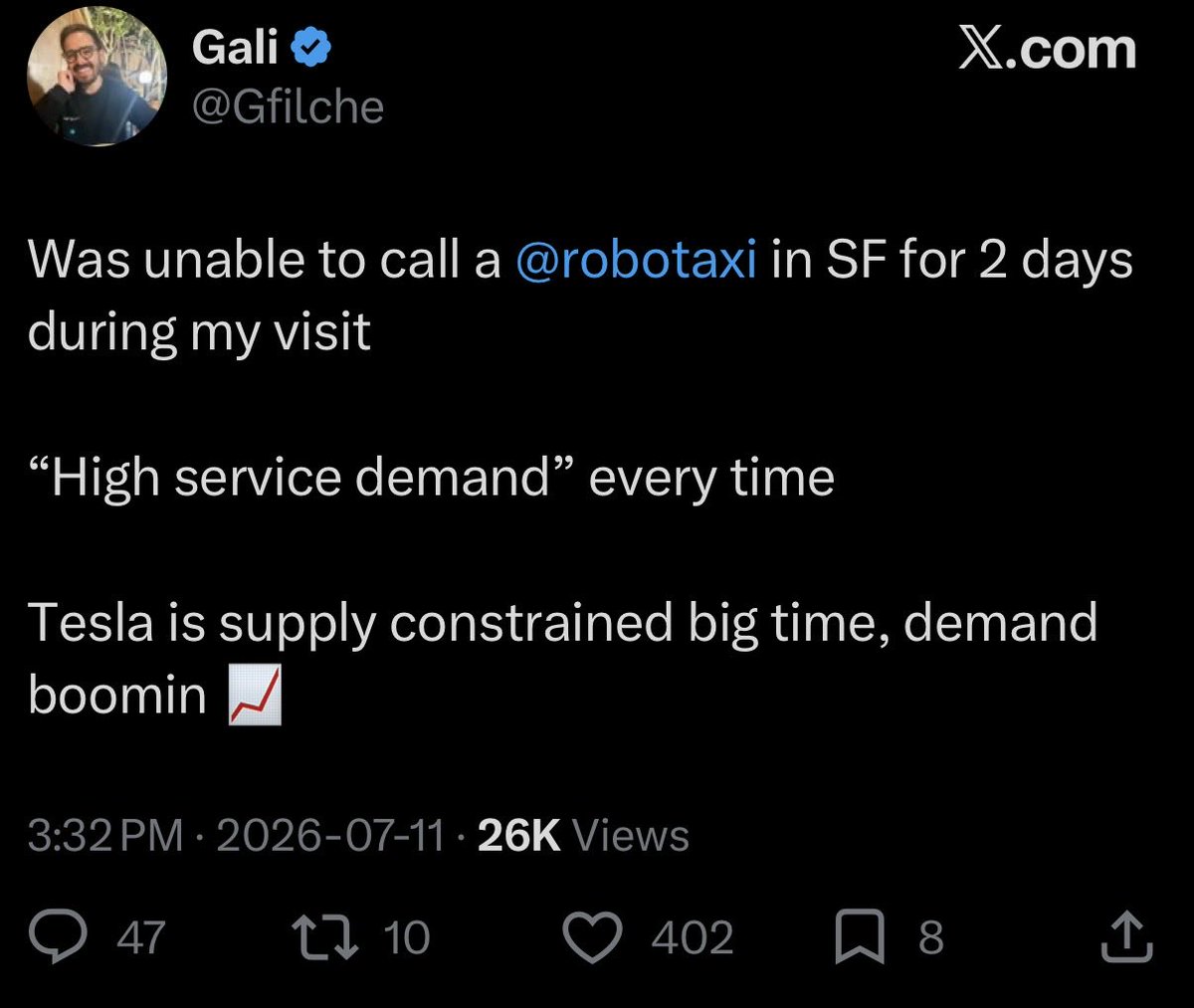
If you've been trying to hail a Tesla robotaxi and coming up empty, you're not alone — but the reason may not be what Tesla boosters are claiming. Electrek's Fred Lambert pushed back on the narrative that ride shortages signal explosive demand, arguing the more likely explanation is simpler: Tesla just isn't running a meaningful fleet yet.

Lambert's point is straightforward: when a service has only a handful of vehicles operating in a limited area, unavailability is the expected outcome — not evidence of demand outstripping supply. Framing scarcity as a demand signal at this stage of Tesla's robotaxi rollout obscures the real challenge, which is scaling a fleet to the point where the service is reliably accessible.
Tesla's robotaxi ambitions have been well-documented, but the gap between vision and operational reality remains wide. Until the fleet reaches a density where wait times and availability reflect genuine market demand rather than sheer vehicle scarcity, ride shortages tell owners very little about how the service will ultimately perform at scale.
🚕 Following the Robotaxi rollout? See every operating city, launch date and announced market in our Tesla Robotaxi Tracker.
Related Gear
Gear up your Tesla with tested, custom-fit BASENOR accessories — shop Tesla accessories →
Sources & reporting notes
The links below identify the material source records used for this report.
- @FredLambert on X (2026-07-12T15:09:49.000Z) — Direct source
Source links are preserved as published or accessed. See our editorial standards and corrections policy.
The BASENOR Editorial Desk covers Tesla, SpaceX, and related technology, curating reporting from primary sources — official accounts, regulatory filings, and software release data. Every article passes source-record and fact-checking review before publication. About the newsroom.
This report was curated by the BASENOR Editorial Desk from the sources listed above. Read our editorial standards or email editorial@basenor.com to report an error.