📌 UPDATE — July 11, 2026
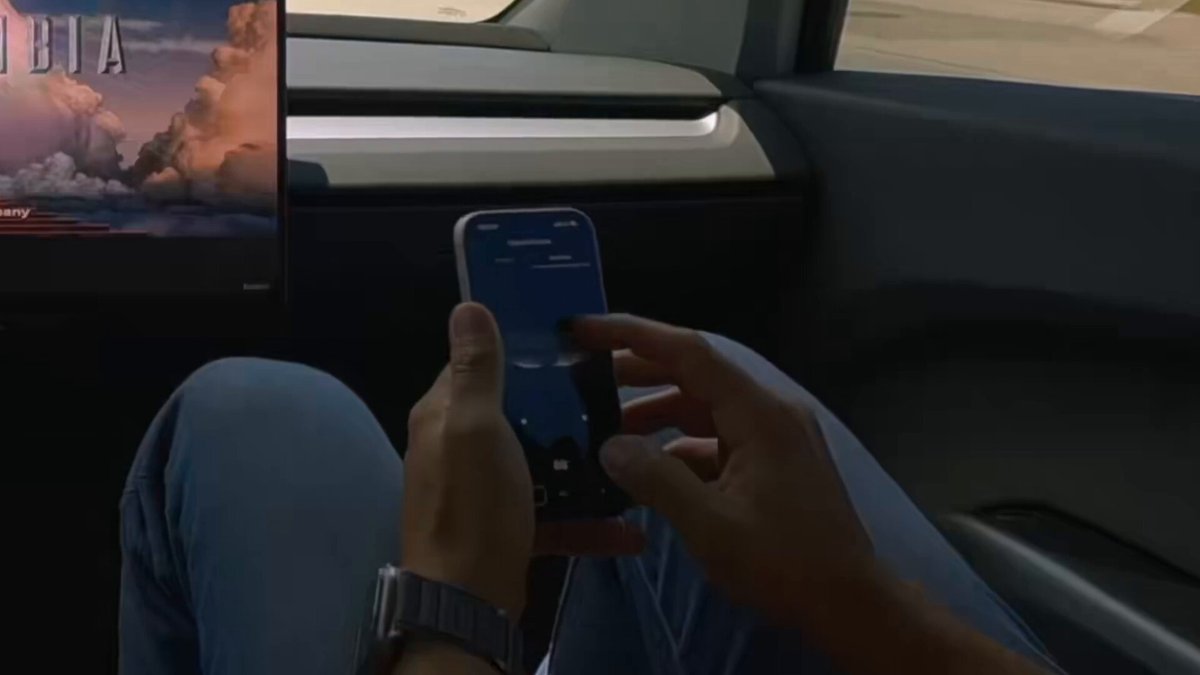
Screenshots from Tesla's Robotaxi app — currently being used by Giga Texas employees — have surfaced, giving us the clearest look yet at the passenger-facing interface. The app confirms three key controls: setting A/C temperature, adjusting vent direction, and viewing trip details including destination. The screenshots were partially sourced from a Tesla video showing Cybercab rides at Giga Texas, which has since been taken down. 🔍 The vent direction control is a previously undocumented feature not mentioned in any prior official materials.

@TeslaNewswire · Jul 11, 2026 — View on X
New details are emerging about what it's actually like to ride in Tesla's Cybercab — and the interior experience looks meaningfully different from any Tesla before it. From a display that dwarfs the Model 3's screen to climate controls you adjust before you even step inside, here's what we know so far.

1. The screen is roughly 21 inches — the largest in any Tesla
For context, the Model 3's center display measures 15.4 inches. The Cybercab's screen comes in at approximately 21 inches, according to @SawyerMerritt — a 36% increase in diagonal size. That's a substantial jump for a vehicle that seats just two passengers, and it makes the Cybercab's interior feel closer to a private lounge than a compact car. According to EPA certification documents, this is confirmed as the largest display Tesla has ever shipped in a production vehicle.

2. Airflow direction is controllable from the app — before you board
This is the detail that stands out most from a passenger experience standpoint. According to @SawyerMerritt, riders will be able to adjust the direction of the Cybercab's airflow vents directly through Tesla's robotaxi app — not just temperature, but where the air is pointed. That means you can dial in your preferences on the way to pickup, not after you've already settled in. It's a small thing that signals how much thought has gone into the no-driver, no-negotiation cabin dynamic.
3. Climate and seat controls live in the Tesla app — no separate download needed
Tesla is routing the entire Cybercab passenger experience through its existing mobile app rather than building a standalone robotaxi application. Climate settings, seat positioning, ride requests, destination input, and real-time vehicle tracking all flow through the same app Tesla owners already use. That's a meaningful UX decision — it removes friction for existing Tesla customers and keeps the ecosystem consolidated. Passengers who've never owned a Tesla will need to download the app, but there's no separate platform to learn.
4. The cabin is purpose-built around the no-steering-wheel reality
Without a steering wheel, pedals, or a driver's seat, the Cybercab's interior layout is fundamentally different from any current Tesla. According to EPA filings, the two-passenger design opens up legroom that wouldn't exist in a traditional vehicle footprint. The oversized display makes sense in this context — there's no instrument cluster competing for attention, and the screen becomes the primary interface for both entertainment and ride management. The smallest Tesla, as @wholemars noted, ends up with the biggest screen.

5. Production is already underway — this isn't vaporware
According to EPA certification documents, Cybercab production began at Gigafactory Texas in February 2026, with volume ramp starting in April. The vehicle was officially introduced into commerce on May 29, 2026. These app-controlled features and display specs aren't renders or promises — they're being built into units rolling off the line right now. The pace at which new details are surfacing suggests a broader public rollout is closer than many expected.
The Cybercab is shaping up as a genuinely different product category — not just a Tesla without a steering wheel, but a vehicle designed from the ground up around the passenger experience. How Tesla handles the app side of that equation, particularly for non-Tesla-owners hailing a Cybercab for the first time, will be one of the more interesting things to watch as commercial availability expands.
🚕 Following the Robotaxi rollout? See every operating city, launch date and announced market in our Tesla Robotaxi Tracker.
Related Gear
Gear up your Tesla with tested, custom-fit BASENOR accessories — shop Tesla accessories →
Sources & reporting notes
The links below identify the material source records used for this report.
- @SawyerMerritt on X (2026-07-11T00:47:49.000Z) — Direct source
- @SawyerMerritt on X (2026-07-11T00:38:13.000Z) — Direct source
- @wholemars on X (2026-07-11T00:58:25.000Z) — Direct source
- @TeslaNewswire on X (2026-07-11T13:27:19.000Z) — Direct source
Source links are preserved as published or accessed. See our editorial standards and corrections policy.
The BASENOR Editorial Desk covers Tesla, SpaceX, and related technology, curating reporting from primary sources — official accounts, regulatory filings, and software release data. Every article passes source-record and fact-checking review before publication. About the newsroom.
This report was curated by the BASENOR Editorial Desk from the sources listed above. Read our editorial standards or email editorial@basenor.com to report an error.