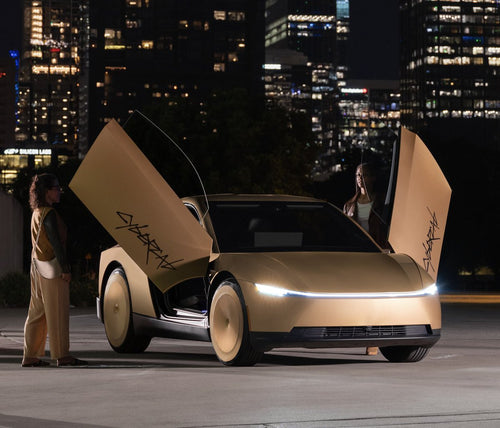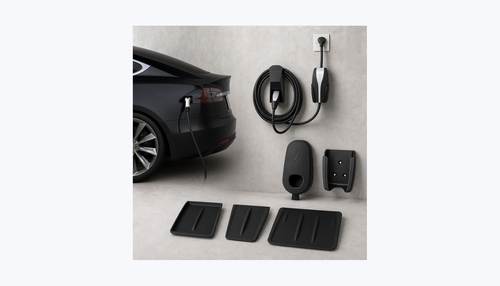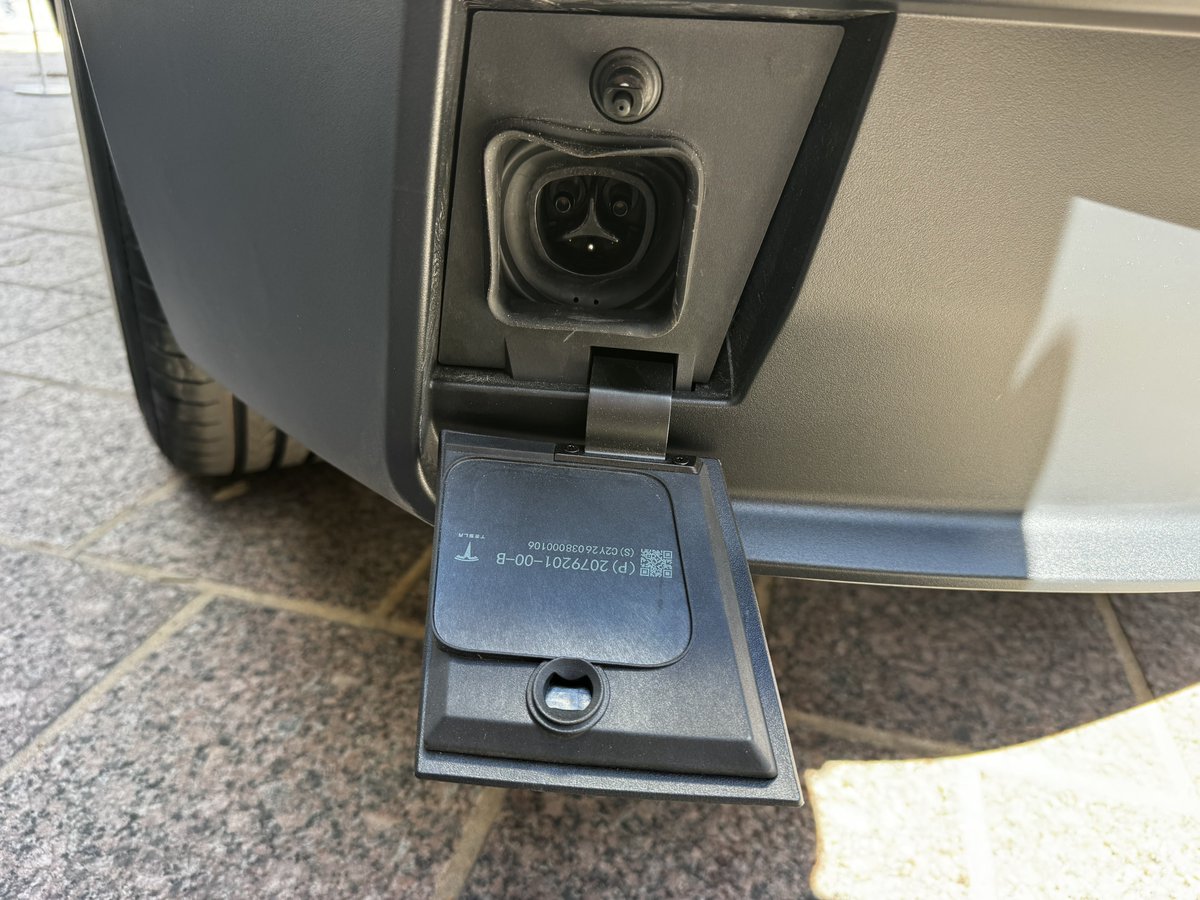
The News: Tesla has revised the Cybercab's physical charge port, removing the plug cover, adding a sealing lip around the connector, and improving the door-release mechanism — changes that signal the design is converging on a production-ready spec.
Why It Matters: These refinements confirm the Cybercab will ship with a conventional wired charging port for the foreseeable future, keeping it compatible with Tesla's Supercharger network while wireless charging infrastructure catches up.
Source: @TeslaNewswire on X

A Small Part, a Big Signal
Charge ports rarely make headlines. But when a vehicle is designed from the ground up to not need one, any change to its physical charging hardware tells you something important about where the program actually stands.
Tesla's Cybercab was conceived as a fully autonomous robotaxi — no steering wheel, no pedals, and ideally, no plug. The long-term vision has always been wireless inductive charging: pull into a bay, position over a pad, and let the vehicle charge itself without any human intervention. That's the only charging model that makes sense for a vehicle that's supposed to operate around the clock with minimal downtime.
But wireless charging infrastructure doesn't exist at scale yet. And in the meantime, Tesla has to build and deploy actual Cybercabs. So the physical charge port — spotted on prototypes and early production units near the rear of the vehicle — isn't a design concession so much as a pragmatic bridge.
The latest revisions to that port suggest Tesla is now treating it as a permanent fixture for the near term, not a temporary placeholder to be quietly removed before launch.
What Changed on the Charge Port
Three specific updates were reported by The Tesla Newswire:
- Plug cover removed: Earlier prototypes featured a cover over the charge port opening. That cover is gone in the updated design. Covers add complexity — they can fail, freeze, or wear out. Removing it simplifies the assembly and reduces a potential failure point in a vehicle that needs to operate reliably in all conditions without a driver present to troubleshoot.
- Sealing lip added around the connector: In place of the cover, Tesla has added a sealing lip around the connector itself. This keeps the port protected from water, dust, and debris when not in use — achieving the same weatherproofing goal with a more durable, lower-maintenance solution.
- Improved door-release mechanism: The mechanism that opens the charge port door has been refined. In a robotaxi context, this matters more than it might on a consumer vehicle — the port will be opened and closed repeatedly by charging equipment or fleet operators, so reliability and ease of actuation are critical.
Taken together, these aren't cosmetic tweaks. They're the kind of detail-level engineering refinements that happen when a team is hardening a design for high-volume manufacturing and real-world operational durability.
The Wireless Charging Context
Tesla's wireless charging ambitions for the Cybercab received a concrete boost in February 2026, when the FCC granted Tesla a waiver to deploy Ultra-Wideband (UWB) radio technology as part of its inductive charging system. UWB is key to the precise vehicle positioning required to align a Cybercab accurately over a charging pad — close enough to transfer power efficiently, automatically, every time.
That approval is a meaningful step. But FCC approval and deployed infrastructure are very different things. Building out a network of wireless charging pads — at scale, across multiple cities, integrated into the robotaxi dispatch and routing system — will take time. The physical Supercharger network, by contrast, already exists and is already capable of fast-charging the Cybercab's battery (expected to be under 50 kWh, with an efficiency rating of approximately 5.5 miles per kWh).
The updated charge port is essentially Tesla acknowledging that reality in hardware form: wireless charging is the destination, but Supercharger compatibility is the vehicle that gets the Cybercab there.
Where Production Stands
The first mass-produced Cybercab units came off the Gigafactory Texas line in February 2026. Production is currently ramping slowly, with Tesla reportedly targeting hundreds of units per week before scaling further. Mass production is expected to accelerate as early as April 2026.
Hardware refinements like these charge port updates typically happen in the weeks and months immediately preceding a production ramp — when engineers are locking down specifications and tooling. The timing is consistent with a vehicle that is approaching, not retreating from, volume production.
📊 Cybercab Production Context
| First production units | February 2026 (Gigafactory Texas) |
| Mass production target | April 2026 (est.) |
| Battery capacity | Under 50 kWh (est.) |
| Efficiency | ~5.5 mi/kWh |
| FCC wireless charging waiver | Granted February 2026 |
| Physical port status | Confirmed on production spec |
🔭 The BASENOR Take
Timeline: March 2026 — active production ramp phase
Impact Level: Medium — confirms production hardware direction, no change to owner experience
Confidence: High — consistent with known production timeline and FCC filing data
The Cybercab's charge port update is easy to dismiss as a minor engineering footnote. It isn't. It's a window into how Tesla is actually thinking about the gap between its wireless charging vision and the operational reality of deploying a robotaxi fleet.
Removing the plug cover and adding a sealing lip is a deliberate trade-off: you give up the cleaner aesthetic of a covered port in exchange for a more robust, lower-maintenance solution that can handle thousands of charge cycles in real-world fleet conditions. That's not the decision of a team that expects wireless charging to arrive quickly. It's the decision of a team building for durability over years, not months.
The improved door-release mechanism tells the same story. In a consumer vehicle, the charge port door opens a few times a week. In a robotaxi operating 20+ hours a day, it could open dozens of times daily. Engineering that mechanism to a higher standard of reliability isn't optional — it's table stakes for fleet viability.
What this update ultimately confirms is that the Cybercab arriving in 2026 will be a Supercharger-compatible vehicle with a refined, production-hardened physical port — and that's not a failure of the wireless charging vision. It's the right call. Wireless charging infrastructure needs time to scale. The Supercharger network is already there. Using it while the wireless ecosystem matures is exactly the kind of pragmatic engineering decision that separates vehicles that ship from vehicles that stay on roadmaps.
🚕 Following the Robotaxi rollout? See every operating city, launch date and announced market in our Tesla Robotaxi Tracker.
Related Gear
Gear up your Tesla with tested, custom-fit BASENOR accessories — shop Tesla accessories →
Sources & reporting notes
The links below identify the material source records used for this report.
- @TeslaNewswire on X (2026-03-14T20:44:40.000Z) — Direct source
Source links are preserved as published or accessed. See our editorial standards and corrections policy.
The BASENOR Editorial Desk covers Tesla, SpaceX, and related technology, curating reporting from primary sources — official accounts, regulatory filings, and software release data. Every article passes source-record and fact-checking review before publication. About the newsroom.
This report was curated by the BASENOR Editorial Desk from the sources listed above. Read our editorial standards or email editorial@basenor.com to report an error.