📌 UPDATE — April 1, 2026
The crash testing phase has culminated in a major milestone: Tesla's Cybercab has officially entered mass production this month at Giga Texas, ahead of the previously anticipated April 2026 timeline. This confirms that the intensive crash testing spotted in recent weeks was among the final validation steps before the production green light. The move signals Tesla's readiness to begin scaling Cybercab output for its autonomous ride-sharing ambitions.
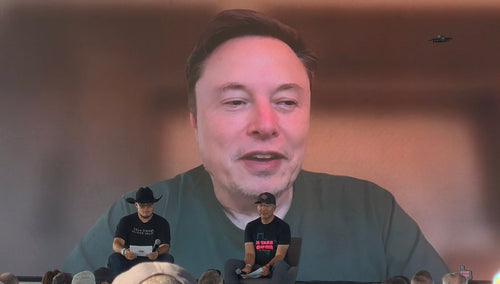
@SawyerMerritt · Apr 1, 2026Mass production of @Tesla's Cybercab officially starts this month! 🤖
 ❤️ 910 🔁 88 👁 21,552
📌 UPDATE — April 1, 2026
As crash testing ramps up at Giga Texas, a new pricing signal has emerged for the Cybercab. Prominent Tesla watcher @wholemars suggests the Cybercab will start at $18,000 in 2015 dollars — roughly equivalent to ~$24,000–$25,000 in today's money when adjusted for inflation. This would position the Cybercab as an aggressively affordable entry point for Tesla's robotaxi network, undercutting virtually every other EV on the market. The timing of this pricing hint, coinciding with intensified crash testing activity, adds further weight to the April 2026 production timeline outlined below. 🔍

📌 UPDATE — March 29, 2026
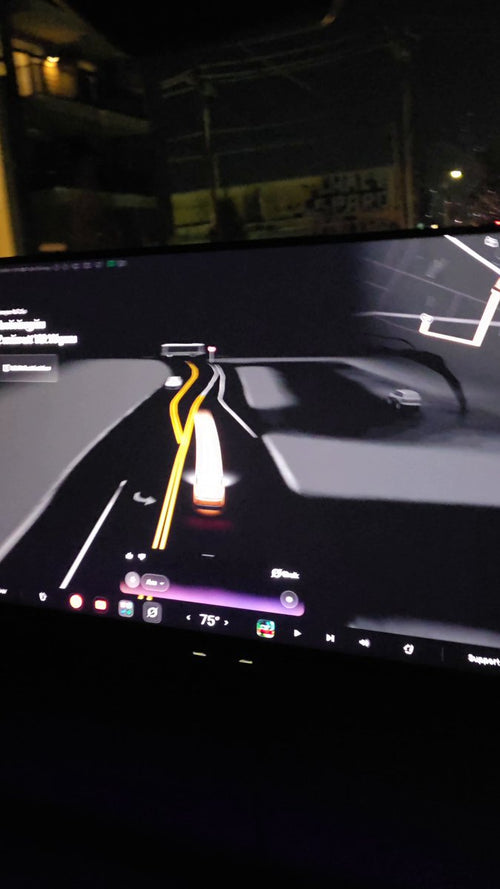
Mass production of the Tesla Cybercab (Robotaxi) may be imminent — as in days away, not months. @TeslaNewswire reports that Tesla is on the verge of mass-producing its two-passenger, steering-wheel-less vehicle, noting that most of the general public has yet to even see a photo of the car. The tweet highlights a surge of "what is this car?" posts on Reddit as Cybercabs appear in the wild, suggesting pre-production units are already moving through logistics and testing pipelines at scale. If accurate, this would represent a dramatic acceleration from the previously reported April 2026 production timeline.
"The general public doesn't realize that Tesla is about to mass-produce a two-passenger car with no steering wheel in a few days." — @TeslaNewswire, March 29, 2026
⚠️ Note: @TeslaNewswire is an independent news account, not an official Tesla source. Treat timing claims as unverified until confirmed by Tesla.
30-Second Brief
The News: Drone footage captured 35 Cybercab units across Giga Texas on March 25, 2026 — 12 of them actively inside the crash testing facility.
Why It Matters: Intensive crash testing at this scale signals Tesla is deep in safety validation, keeping the April 2026 volume production target on track.
Source: @JoeTegtmeyer on X
Tesla Cybercab Crash Testing Intensifies at Giga Texas — April Production Window Closing In
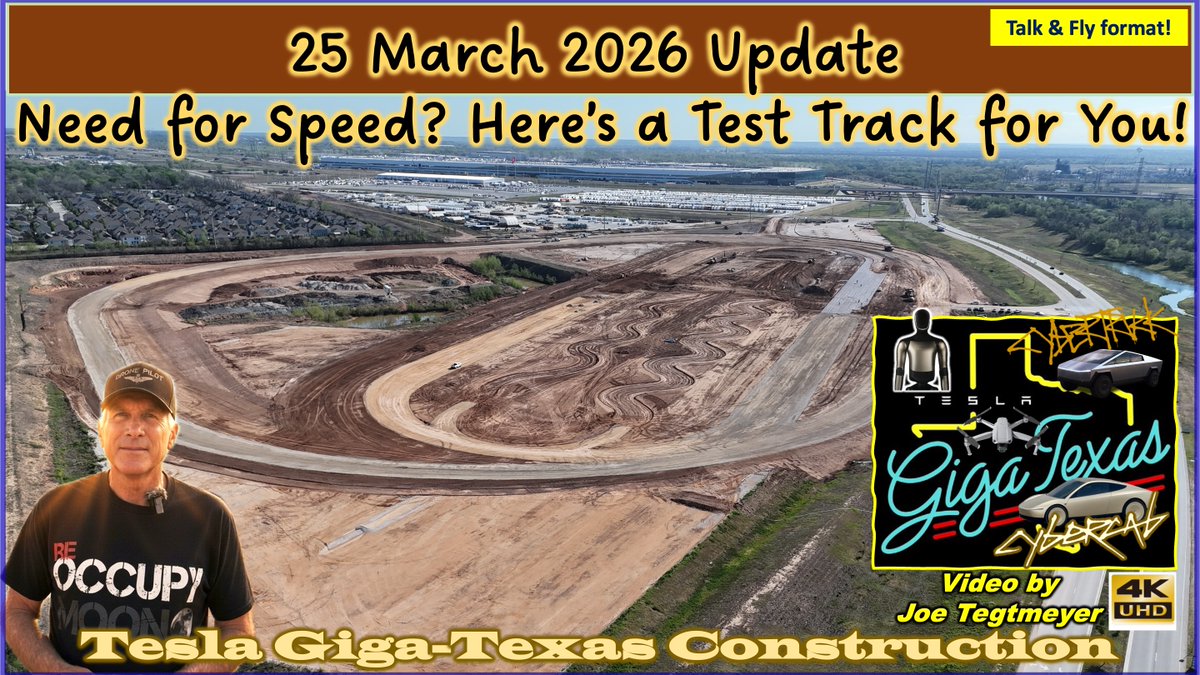
If you needed a signal that Tesla's Cybercab program is moving fast, today delivered one in the clearest possible terms. Drone operator Joe Tegtmeyer swept over Giga Texas on March 25 and counted 35 Cybercab units spread across the factory campus — with 12 of them parked in and around the crash testing facility. That's not prototype dabbling. That's a full-scale safety validation push.

📊 Key Figures
| Metric | Value | Context |
|---|---|---|
| Cybercabs at outbound lot | 12 | Ready for dispatch or testing |
| Cybercabs at factory exit | 11 | Freshly off the line or staging |
| Cybercabs at crash test facility | 12 | Active safety validation |
| Total Cybercabs spotted | 35+ | Single-day campus count |
| First production unit rolled off line | Feb 2026 | ~5 weeks ago |
| Volume production target | April 2026 | Weeks away |
What 12 Cybercabs in a Crash Facility Actually Means
Crash testing isn't a checkbox — it's one of the most resource-intensive phases of vehicle development. Running 12 units simultaneously through a dedicated facility suggests Tesla is executing multiple test scenarios in parallel: frontal impacts, side-pole impacts, rollover sequences, and airbag deployment validation. Prior drone footage from as far back as October 2025 has shown individual Cybercabs with deployed airbags and structural damage consistent with controlled crash events — but today's count represents a notable escalation in volume.
One previously documented test involved a prototype tagged PSFTY-7689, subjected to a side-impact crash. Observers noted the structural shell held up well despite the unit running without doors and sustaining windshield damage — an early indicator that Tesla's unibody approach, which reportedly uses roughly 60% fewer structural components than a Model Y, is performing as engineered under real impact conditions.
The Production Clock Is Running
Tesla's first production Cybercab came off the Giga Texas assembly line in mid-February 2026. Volume production is targeted for April 2026 — meaning the window between that milestone and today's crash testing activity is measured in weeks, not months. Elon Musk has previously described the initial ramp as likely to be "agonizingly slow" before reaching "insanely fast" high-volume output, a pattern consistent with every previous Tesla launch. The long-term production ambition is 2 to 4 million Cybercabs annually across multiple Gigafactories.
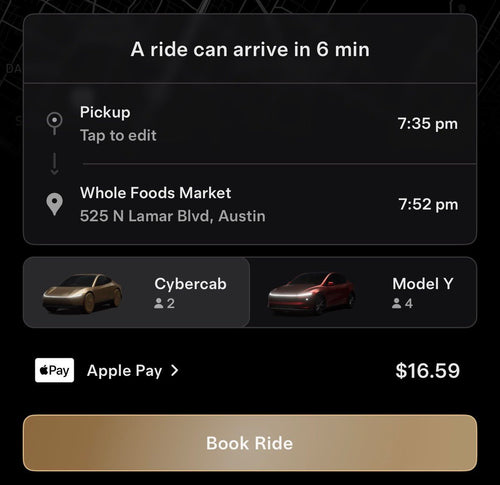
Beyond the factory, Cybercab units have already been observed on public roads in Austin, San Jose, Los Gatos, Chicago, and Washington D.C. — real-world data collection running in parallel with the crash program. Commercial service in Austin within a defined geofenced area is targeted for late 2026, with Texas city expansion anticipated in 2027.
🔭 The BASENOR Take
The sheer number of Cybercabs visible on a single day — across the outbound lot, factory exit, and crash facility simultaneously — tells a consistent story: Tesla is not pacing itself. Running crash tests at this volume this close to a production ramp date is exactly what you'd expect from a program that intends to hit April without slipping. The Cybercab is priced to start under $30,000 and is designed to operate at $0.20 per mile all-in. If the structural testing results hold, Tesla will have a vehicle that is both cheaper to build and engineered to survive real-world impacts — a combination that matters enormously for a vehicle intended to run as a commercial robotaxi. The next milestone to watch: regulatory approval signals and any NHTSA filings tied to the Cybercab's novel no-steering-wheel configuration.
📰 Deep Dive
What makes today's observation significant isn't just the raw count — it's the distribution. Having 12 units at the outbound lot, 11 at the factory exit, and 12 more at the crash facility on the same day indicates that Giga Texas is now producing Cybercabs fast enough to simultaneously feed multiple parallel workflows. That's a very different picture from a program running a handful of hand-built prototypes through sequential tests.
The Cybercab's architecture is purpose-built for this kind of accelerated validation. With approximately 80 large structural components — compared to the roughly 200+ in a conventional vehicle — there are fewer variables to test and fewer failure points to isolate. Tesla's gigacasting approach compresses what would traditionally be multi-part assemblies into single poured sections, which simplifies both the build process and the crash analysis. When a cast section fails in a predictable, controlled way, engineers can iterate faster than with welded multi-part structures.
The vision-only sensor suite also plays into the safety certification picture. Without radar or lidar to certify, Tesla's regulatory surface area for the autonomous stack is narrower — though the no-pedals, no-steering-wheel configuration will require specific NHTSA exemptions that are still working through the regulatory pipeline. How quickly those approvals land will likely determine whether the late 2026 Austin commercial deployment date holds more firmly than the production ramp date.
For Tesla owners watching the Cybercab program, the practical question is whether the robotaxi network becomes a genuine revenue-generating platform before 2027. At $0.20 per mile operational cost against typical ride-hail pricing, the margin profile — if the autonomous stack performs — is compelling. Today's crash testing volume is the unglamorous but essential work that makes that math possible.
🚕 Following the Robotaxi rollout? See every operating city, launch date and announced market in our Tesla Robotaxi Tracker.
Related Gear
Gear up your Tesla with tested, custom-fit BASENOR accessories — shop Tesla accessories →
Sources & reporting notes
The links below identify the material source records used for this report.
- @JoeTegtmeyer on X (2026-03-25T20:46:02.000Z) — Direct source
- @TeslaNewswire on X (2026-03-29T16:31:46.000Z) — Direct source
- @wholemars on X (2026-04-01T01:40:19.000Z) — Direct source
- @SawyerMerritt on X (2026-04-01T06:01:00.000Z) — Direct source
Source links are preserved as published or accessed. See our editorial standards and corrections policy.
The BASENOR Editorial Desk covers Tesla, SpaceX, and related technology, curating reporting from primary sources — official accounts, regulatory filings, and software release data. Every article passes source-record and fact-checking review before publication. About the newsroom.
This report was curated by the BASENOR Editorial Desk from the sources listed above. Read our editorial standards or email editorial@basenor.com to report an error.