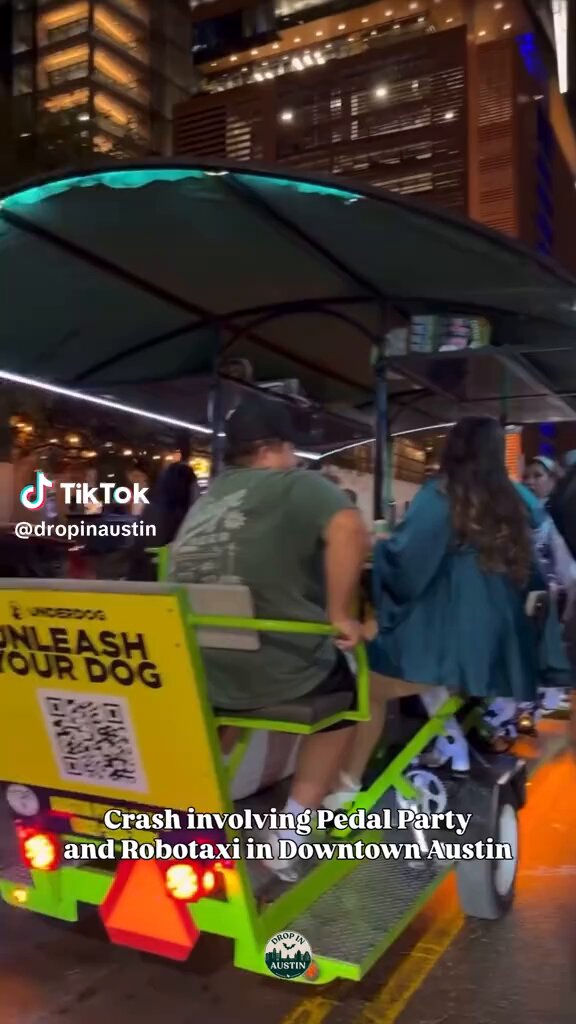
A Tesla Cybercab operating in downtown Austin, Texas was involved in a minor collision with a party bike on October 30, 2026, resulting in a piece of the vehicle's door being torn off. The incident adds a real-world data point to what has otherwise been a closely watched commercial launch — and raises practical questions about how Cybercab incidents are handled when they happen on busy urban streets.

What We Know So Far
The collision appears to have been low-speed. Based on the footage circulating on X, the damage is localized to a door panel — a piece was torn free on impact — but the vehicle does not appear to have sustained structural damage. No injuries have been reported in connection with the incident, and as of publication, neither Tesla nor Austin law enforcement has issued an official statement.
Party bikes — pedal-powered group vehicles common in Austin's entertainment districts — are a fixture of downtown nightlife. They move slowly but occupy a wide footprint in traffic lanes, making them a genuine edge case for any autonomous vehicle operating in a dense urban environment. Whether the Cybercab's autonomy system was engaged at the time, or whether a remote operator was supervising, has not been confirmed.
What This Means If You're a Cybercab Rider or Bystander
Tesla has not publicly detailed its incident response protocol for Cybercab collisions, but based on how the broader robotaxi industry operates, here's what to expect and what to do if you're involved:
- Stay with the vehicle and document everything. If you're a passenger when a collision occurs, remain calm and do not exit into traffic. Use your phone to photograph the damage, the other vehicle, and the surrounding scene before anything is moved.
- Use the in-app support channel immediately. Tesla's ride app includes a support contact pathway. Initiate it on-scene — this creates a timestamped record tied to your ride session, which matters for any insurance or liability follow-up.
- Note whether the vehicle stopped autonomously or required intervention. This detail is relevant if you later need to file a report. Autonomous vehicle incidents in Texas are subject to state reporting requirements for the operator (Tesla), but riders and third parties can also file reports with the Texas Department of Transportation.
- If you're a third party (like a party bike rider), treat it like any other vehicle collision. Exchange information, photograph the scene, and contact Austin PD if there's any dispute over fault or damage. The fact that the other vehicle is autonomous does not change the standard process.
- Report to NHTSA if you believe the autonomous system behaved unexpectedly. The National Highway Traffic Safety Administration accepts public complaints at nhtsa.gov. For AV incidents specifically, NHTSA's Standing General Order requires manufacturers to report crashes — but individual riders and bystanders can file independently as well.
The Bigger Picture
One fender-bender does not define a program. Autonomous vehicle deployments accumulate minor incidents as a normal part of real-world operation — what matters is the response protocol, the data review, and whether the system learns. Austin's downtown core is one of the more challenging urban environments Tesla could have chosen: dense pedestrian traffic, unconventional vehicles like party bikes and e-scooters, and a nightlife corridor that creates unpredictable movement patterns at all hours.
What remains unconfirmed is the operational mode at the time of impact, the exact sequence of events, and Tesla's internal review status. Those details will matter more than the collision itself. Watch for any official statement from Tesla or Austin PD — if the autonomy stack was engaged and the system failed to anticipate the party bike's path, that's a meaningful data point for the broader rollout.
🚕 Following the Robotaxi rollout? See every operating city, launch date and announced market in our Tesla Robotaxi Tracker.
Related Gear
Gear up your Tesla with tested, custom-fit BASENOR accessories — shop Tesla accessories →
Sources & reporting notes
The links below identify the material source records used for this report.
- @TeslaNewswire on X (2026-10-30T06:21:37.000Z) — Direct source
Source links are preserved as published or accessed. See our editorial standards and corrections policy.
The BASENOR Editorial Desk covers Tesla, SpaceX, and related technology, curating reporting from primary sources — official accounts, regulatory filings, and software release data. Every article passes source-record and fact-checking review before publication. About the newsroom.
This report was curated by the BASENOR Editorial Desk from the sources listed above. Read our editorial standards or email editorial@basenor.com to report an error.