Tesla's Cybercab went from concept to commercial reality in the span of 48 hours this week. An invitation-only launch event in Austin on September 3 gave way to paid public rides the very next day — and the early signals from both riders and analysts suggest this is more than a soft launch. Here's what you actually need to know.
What exactly launched, and when?
Tesla held an invitation-only Cybercab debut event in Austin, Texas, on September 3, 2026. Paid rides for the general public began on September 4 in limited areas of Austin. The service runs through the Tesla Robotaxi app (version 25.8.10), which added Cybercab support in Austin alongside the launch. According to available data, the app recorded over 2 million iOS downloads on its first day.
Is this genuinely unsupervised — no safety driver?
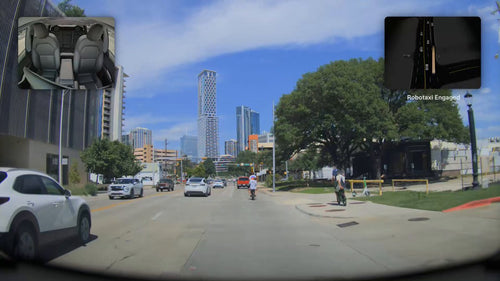
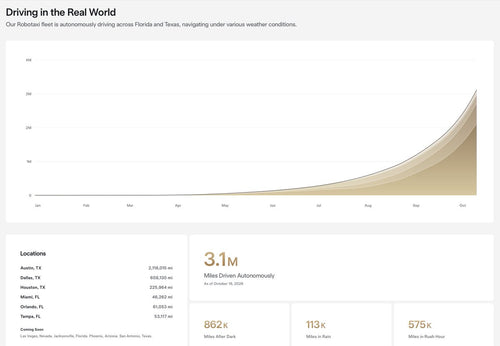
Yes. The Cybercab has no steering wheel, no pedals, and no side mirrors — there is no provision for a human driver. It operates entirely on Tesla's FSD v15 software, which is specifically designed for unsupervised operation. As of September 4, Tesla announced the Robotaxi fleet has collectively completed 1 million miles of unsupervised driving. Analyst Gary Black, who has followed Tesla's autonomy roadmap closely, put it plainly: with the Cybercab launch, Tesla has solved for unsupervised autonomy.
What are the Cybercab's actual specs?
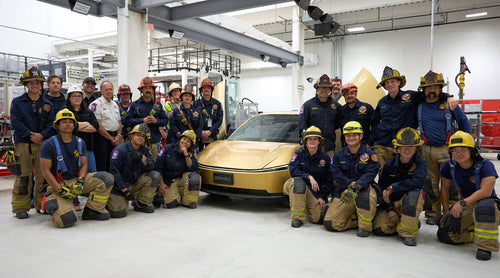
The Cybercab is a two-passenger battery-electric vehicle built from the ground up for autonomous operation. Key figures: 293 miles of range, a 48 kWh battery using 4680 cells, 219 horsepower, and an efficiency rating of 5.5 mi/kWh. It weighs 3,113 lbs, features gull-wing doors, and has a step-in height of 16.5 inches. Rear cargo capacity is 20.2 cubic feet — useful for groceries or luggage. The vehicle is designed for a 500,000-mile lifespan, which matters a lot for fleet economics. Starting price is $25,000.
How big is the current fleet, and where can you ride?
As of September 3, 2026, there are 45 Cybercabs authorized for commercial robotaxi use in Texas. That's a deliberately small pilot fleet — pilot production at Gigafactory Texas only began in February 2026. Rides are currently available in limited areas of Austin. The service is not yet available outside Texas, and there's no confirmed timeline for expansion to other cities yet.
How do you actually get a ride?
Download the Tesla Robotaxi app on iOS or Android, open it in a supported Austin zone, and request a Cybercab. The experience is closer to a standard rideshare app than anything requiring a Tesla account or vehicle ownership. Early riders report that the cars are drawing immediate attention on the street — Whole Mars Catalog noted that every time he steps out of a Cybercab, bystanders ask about it, and many have already downloaded the app unprompted.
What's the competitive picture going forward?
Gary Black's full post frames the milestone with an important caveat: while Tesla has clearly achieved unsupervised autonomy, he has consistently noted that other players — including Alphabet's Waymo, Baidu, and others — are also advancing on similar timelines. The question for Tesla is no longer whether it can deliver the technology, but how quickly it can scale the fleet and expand geographically before the autonomous ride market becomes crowded. With 45 cars on the road today and a $25,000 vehicle price that supports fleet economics, the scaling math is at least plausible — but Austin is still a very long way from everywhere.
🚕 Following the Robotaxi rollout? See every operating city, launch date and announced market in our Tesla Robotaxi Tracker.
Related Gear
Gear up your Tesla with tested, custom-fit BASENOR accessories — shop Tesla accessories →
Sources & reporting notes
The links below identify the material source records used for this report.
- @wholemars on X (2026-09-05T14:19:25.000Z) — Direct source
- @garyblack00 on X (2026-09-05T14:48:41.000Z) — Direct source
Source links are preserved as published or accessed. See our editorial standards and corrections policy.
The BASENOR Editorial Desk covers Tesla, SpaceX, and related technology, curating reporting from primary sources — official accounts, regulatory filings, and software release data. Every article passes source-record and fact-checking review before publication. About the newsroom.
This report was curated by the BASENOR Editorial Desk from the sources listed above. Read our editorial standards or email editorial@basenor.com to report an error.