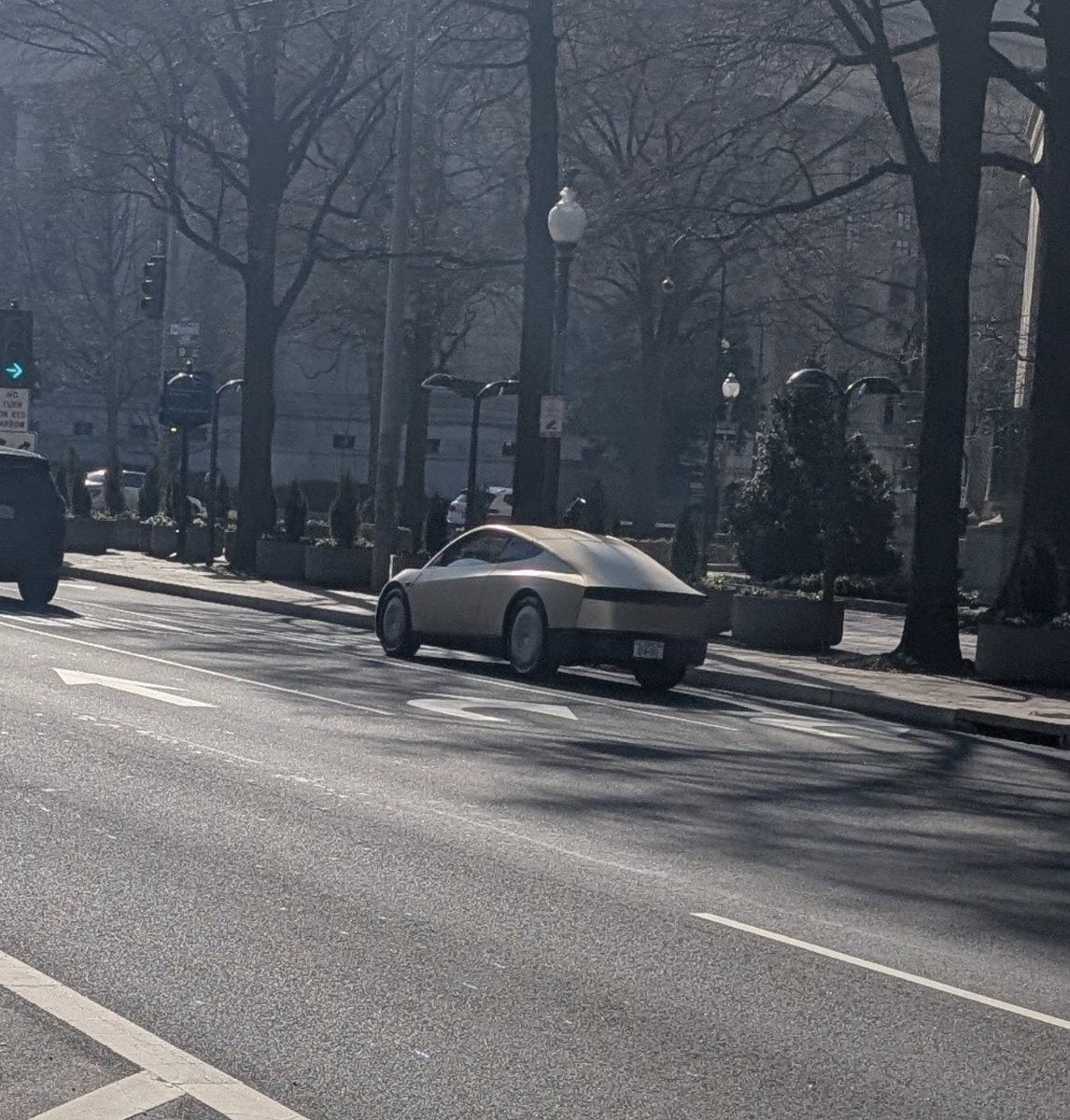
The News: Tesla's Cybercab robotaxi has been spotted testing on public roads in Washington D.C., marking its first confirmed appearance in the nation's capital.
Why It Matters: D.C. is a politically and symbolically significant testing ground — Cybercab's presence there signals Tesla is actively expanding its pre-commercial testing footprint ahead of volume production starting in April 2026.
Source: @SawyerMerritt on X
Tesla Cybercab Spotted Testing on Public Roads in Washington D.C.
Tesla's purpose-built Cybercab robotaxi has now been confirmed testing on public roads in Washington D.C., according to a report from Tesla news tracker Sawyer Merritt. This marks a notable geographic expansion of Cybercab's real-world testing program — and it's happening just weeks before volume production is set to begin at Gigafactory Texas.

📊 Key Figures
| Metric | Detail |
|---|---|
| New Testing Location | Washington D.C. |
| Previous Testing Cities | Los Altos CA, Austin TX, Chicago IL |
| First Production Unit | Mid-February 2026 |
| Volume Production Target | April 2026 (Gigafactory Texas) |
| Target Production Cost | ~$30,000 |
| Expected Range | ~300 miles (480 km) |
Why Washington D.C. Is a Big Deal
Tesla has been methodically expanding where the Cybercab gets real-world exposure. Earlier sightings placed prototypes in Los Altos, California, Austin, Texas, and Chicago — cities that are either Tesla strongholds or existing robotaxi markets. Washington D.C. is a different kind of signal entirely.
The capital is home to federal regulators, policymakers, and the agencies that will ultimately shape the legal framework for autonomous vehicles across the country. Testing there — even if informal — puts the Cybercab directly in front of the audience that matters most for its long-term commercial viability. It's hard to ignore a mirrorless, pedalless robotaxi navigating the streets outside your office window.
There's also a practical dimension. D.C. presents a genuinely challenging urban environment: dense traffic, complex intersections, heavy pedestrian activity, and a mix of government vehicles, cyclists, and tourists. If the Cybercab's Hardware 5 (AI5) autonomy stack can handle D.C., it can handle most American cities.
Where the Cybercab Stands Right Now
To understand why this D.C. sighting matters, it helps to know where the Cybercab program actually is. Tesla rolled the first production unit off the Gigafactory Texas line in mid-February 2026 — a milestone that confirmed the vehicle had cleared the prototype phase. Volume production is now targeting April 2026, with Elon Musk previously stating that a 10-second assembly cycle could eventually enable 2 to 3 million units annually.
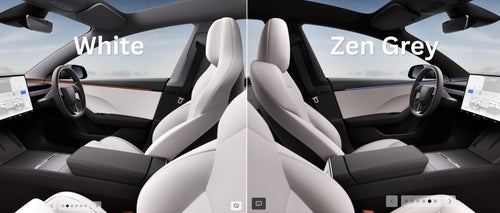
The vehicle itself is unlike anything else in Tesla's lineup. It's a two-seater with no steering wheel, no pedals, and dual butterfly doors. Inside, you get vegan leather seats, ambient lighting, and a 20.5-inch central display. The battery pack is expected to sit below 50 kWh while still delivering around 300 miles of real-world range — a testament to the efficiency gains from building a vehicle optimized purely for autonomy rather than retrofitting an existing platform.
Charging is handled primarily through wireless inductive pads, with a discreet physical port retained for high-speed Supercharging when rapid turnaround is needed for fleet operations. Tesla reportedly used roughly 60% fewer structural components than a Model Y to hit its ~$30,000 production cost target.
🔭 The BASENOR Take
Timeline: Public road testing in D.C. — March 2026 | Volume production begins — April 2026 | Robotaxi service expansion (beyond Austin) — H1 2026 target
Impact Level: High — geographic testing expansion this close to production start is a meaningful signal of program confidence
Confidence: Medium-High — sighting reported by a credible tracker; D.C. as a specific testing location has not yet been independently corroborated by multiple sources
The timing here is not coincidental. Tesla doesn't send prototypes to new cities on a whim, especially not the nation's capital weeks before production ramp. This looks like a deliberate move — part regulatory optics, part real-world data collection in a dense urban environment the Austin-centric testing program hasn't fully covered.
For current Tesla owners, the Cybercab's trajectory matters even if you never plan to ride in one. The autonomy software powering the Cybercab — built on the same FSD foundation that runs on your Model 3 or Model Y — gets smarter with every mile logged in every city. D.C. miles are now in that dataset. For more on how Tesla's self-driving program is developing, see our FSD coverage.
The bigger question is whether D.C. testing signals an intent to launch robotaxi service there. Tesla's service launched in Austin in June 2025 using Model Y vehicles, with expansion to additional cities planned for the first half of 2026. D.C. was not previously named as a near-term target — but showing up to test on its streets is usually how these things start.
🚕 Following the Robotaxi rollout? See every operating city, launch date and announced market in our Tesla Robotaxi Tracker.
Related Gear
Gear up your Tesla with tested, custom-fit BASENOR accessories — shop Tesla accessories →
Sources & reporting notes
The links below identify the material source records used for this report.
- @SawyerMerritt on X (2026-03-10T14:43:21.000Z) — Direct source
Source links are preserved as published or accessed. See our editorial standards and corrections policy.
The BASENOR Editorial Desk covers Tesla, SpaceX, and related technology, curating reporting from primary sources — official accounts, regulatory filings, and software release data. Every article passes source-record and fact-checking review before publication. About the newsroom.
This report was curated by the BASENOR Editorial Desk from the sources listed above. Read our editorial standards or email editorial@basenor.com to report an error.