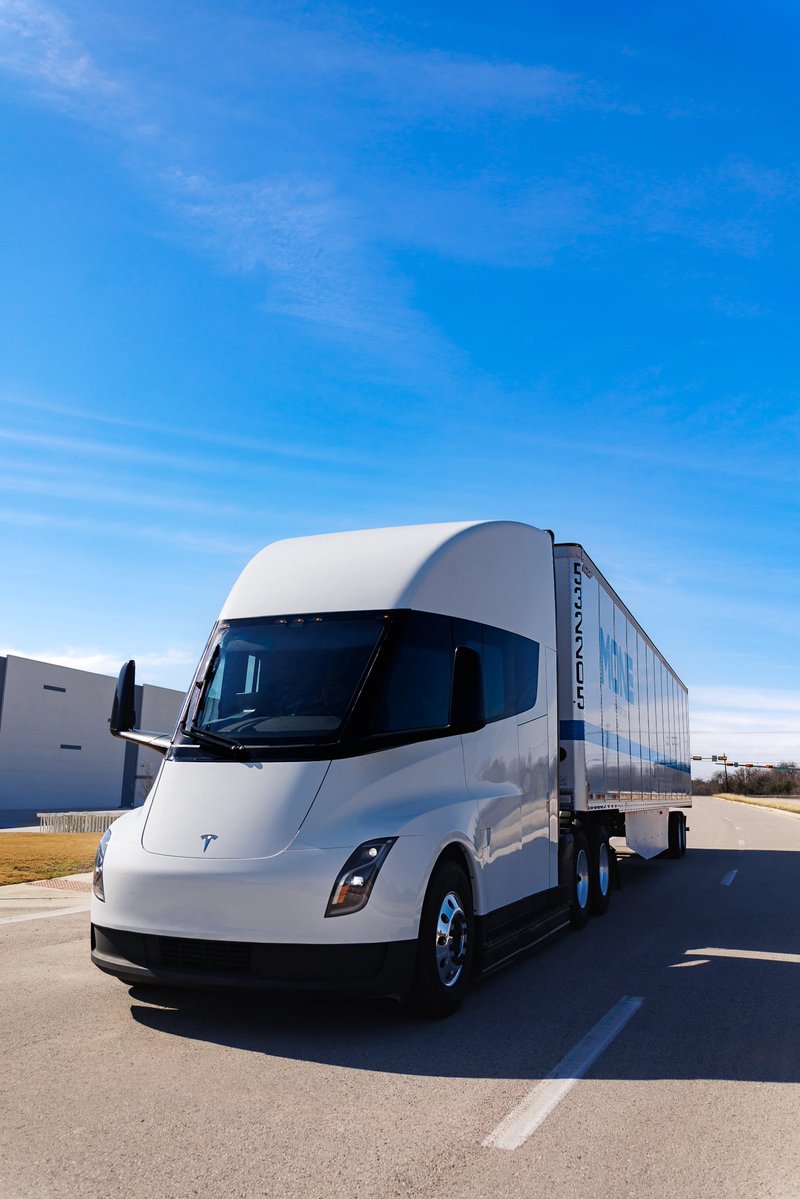
The News: Tesla Semi achieved 1.64 kWh/mile over a 4,700-mile real-world trial with Mone Transportation in Texas.
Why It Matters: Real-world efficiency data from independent operators continues to validate — and in some cases beat — Tesla's own stated specs, strengthening the Semi's commercial case ahead of volume production.
Source: @SawyerMerritt on X
Tesla Semi Hits 1.64 kWh/Mile in 4,700-Mile Texas Trial — The Numbers Are Hard to Ignore
The Tesla Semi just posted another strong real-world efficiency result. Mone Transportation ran the truck through 4,700 miles of Texas operations and recorded an average of 1.64 kWh per mile — a figure that sits well below Tesla's own official specification of 1.7 kWh/mile and puts the Semi in elite company among real-world heavy-duty electric truck trials.

📊 Key Figures
| Metric | Value | Context |
|---|---|---|
| Mone Transportation trial distance | 4,700 miles | Texas operations |
| Mone efficiency result | 1.64 kWh/mile | ↓ 3.5% below Tesla spec |
| Tesla official Semi spec | 1.7 kWh/mile | Tesla stated figure |
| Tesla internal fleet (Sept 2024) | 1.6 kWh/mile | 250,000 miles |
| ArcBest (ABF Freight) trial (July 2025) | 1.55 kWh/mile | 4,494 miles, incl. Donner Pass |
| DHL Supply Chain trial (2024) | 1.72 kWh/mile | 3,000 miles, 75,000 lb GCW |
| Tesla Semi range (spec) | 500 miles | Per charge, per Tesla |
| Units delivered to date | ~200 | Incl. PepsiCo fleet |

What Makes 1.64 kWh/Mile Significant?
To understand why this number matters, you need the right benchmark. Tesla's official spec for the Semi is 1.7 kWh/mile — already a figure the industry viewed with skepticism when it was first announced for a Class 8 truck. Mone Transportation's Texas trial came in below that spec, meaning real-world performance is outpacing the official rating.
Texas operations tend to favor efficiency: flatter terrain, consistent highway speeds, and warm ambient temperatures all reduce energy consumption compared to mountain routes or cold-weather corridors. That context matters when comparing this result to ArcBest's 1.55 kWh/mile figure, which was achieved over the Sierra Nevada including a 7,200-foot climb over Donner Pass — a genuinely punishing route for any heavy vehicle. Both data points, in their respective contexts, tell the same story: the Semi is performing at or better than advertised.
The DHL trial's 1.72 kWh/mile result — slightly above Tesla's spec — was recorded at a gross combined weight of 75,000 pounds operating at highway speeds, which represents a more demanding load scenario. Taken together, the range of real-world results (1.55–1.72 kWh/mile across varied conditions) paints a consistent picture of a truck that delivers on its efficiency promise.
The Bigger Picture: A Pattern of Validation
What's notable about the Mone Transportation result isn't that it's a single impressive data point — it's that it's part of a growing pattern. Tesla's own internal fleet logged 1.6 kWh/mile across 250,000 miles as of September 2024. ArcBest validated the truck on one of the toughest freight corridors in North America. DHL ran it fully loaded on long-haul routes. And now Mone Transportation adds Texas regional operations to the ledger.
Each independent trial chips away at the skepticism that has historically surrounded electric trucks in the freight industry. Fleet operators making multi-year purchasing decisions need more than a spec sheet — they need real operators running real miles in real conditions. That evidence base is now building rapidly.
🔭 The BASENOR Take
Timeline: Volume production expected H1 2026 at Tesla's Nevada factory, with tooling confirmed in place as of January 2026.
Impact Level: 🟡 Medium-High — Meaningful for the commercial trucking industry; less directly relevant to passenger Tesla owners, but a strong signal for Tesla's long-term revenue diversification.
Confidence: 🟢 High — Multiple independent trials now corroborate efficiency figures at or below Tesla's stated spec.
The timing of this data release is worth noting. Tesla is reportedly readying North American factories for Semi production ramps in the first half of 2026, and approximately 200 units have already been delivered to early customers including PepsiCo. Every positive real-world trial result that lands in the public domain between now and volume production start serves a commercial purpose: it gives fleet procurement teams the third-party validation they need to sign purchase orders.
The efficiency story also has a direct cost implication. At 1.64 kWh/mile versus a diesel truck consuming roughly 6.5 miles per gallon, the energy cost comparison swings heavily in the Semi's favor depending on local electricity rates. For a Texas fleet operator running regional routes — exactly the profile of the Mone Transportation trial — the economics are increasingly hard to dismiss.
The open question remains scaling. With roughly 200 units delivered to date and volume production still ramping, the Semi's real-world efficiency data is outpacing its production reality. That gap is expected to close in 2026 — and when it does, this growing body of trial data will have done much of the commercial groundwork already.
📰 Deep Dive
The 1.64 kWh/mile figure from Mone Transportation's Texas trial sits in a meaningful position within the broader dataset now accumulating around the Tesla Semi. It's better than Tesla's own spec, better than DHL's heavily-loaded long-haul result, and only slightly behind ArcBest's mountain-route figure — which, given the terrain difference, is arguably the more impressive result of the two. What this tells us is that the Semi's efficiency envelope is genuinely wide: it performs well in flat regional operations AND in demanding mountain freight corridors.
For the freight industry, the significance of this consistency cannot be overstated. Fleet managers don't buy trucks for best-case scenarios — they buy them for average-case reliability. A truck that delivers 1.55 kWh/mile over Donner Pass and 1.64 kWh/mile across Texas flatlands is a truck with a predictable, modelable operating cost. That predictability is what converts trial participants into volume buyers.
Tesla's production ramp timeline will be the critical variable to watch in 2026. The demand signal from independent operators is clearly positive. The efficiency case is made. The remaining question is whether Tesla can manufacture the Semi at the volume and price point that makes the economics work for the broader freight market — not just early adopters with favorable charging infrastructure already in place.
Related Gear
Gear up your Tesla with tested, custom-fit BASENOR accessories — shop Tesla accessories →
Sources & reporting notes
The links below identify the material source records used for this report.
- @SawyerMerritt on X (2026-03-10T14:39:10.000Z) — Direct source
- @SawyerMerritt on X (2026-03-10T14:39:10.000Z) — Direct source
Source links are preserved as published or accessed. See our editorial standards and corrections policy.
The BASENOR Editorial Desk covers Tesla, SpaceX, and related technology, curating reporting from primary sources — official accounts, regulatory filings, and software release data. Every article passes source-record and fact-checking review before publication. About the newsroom.
This report was curated by the BASENOR Editorial Desk from the sources listed above. Read our editorial standards or email editorial@basenor.com to report an error.