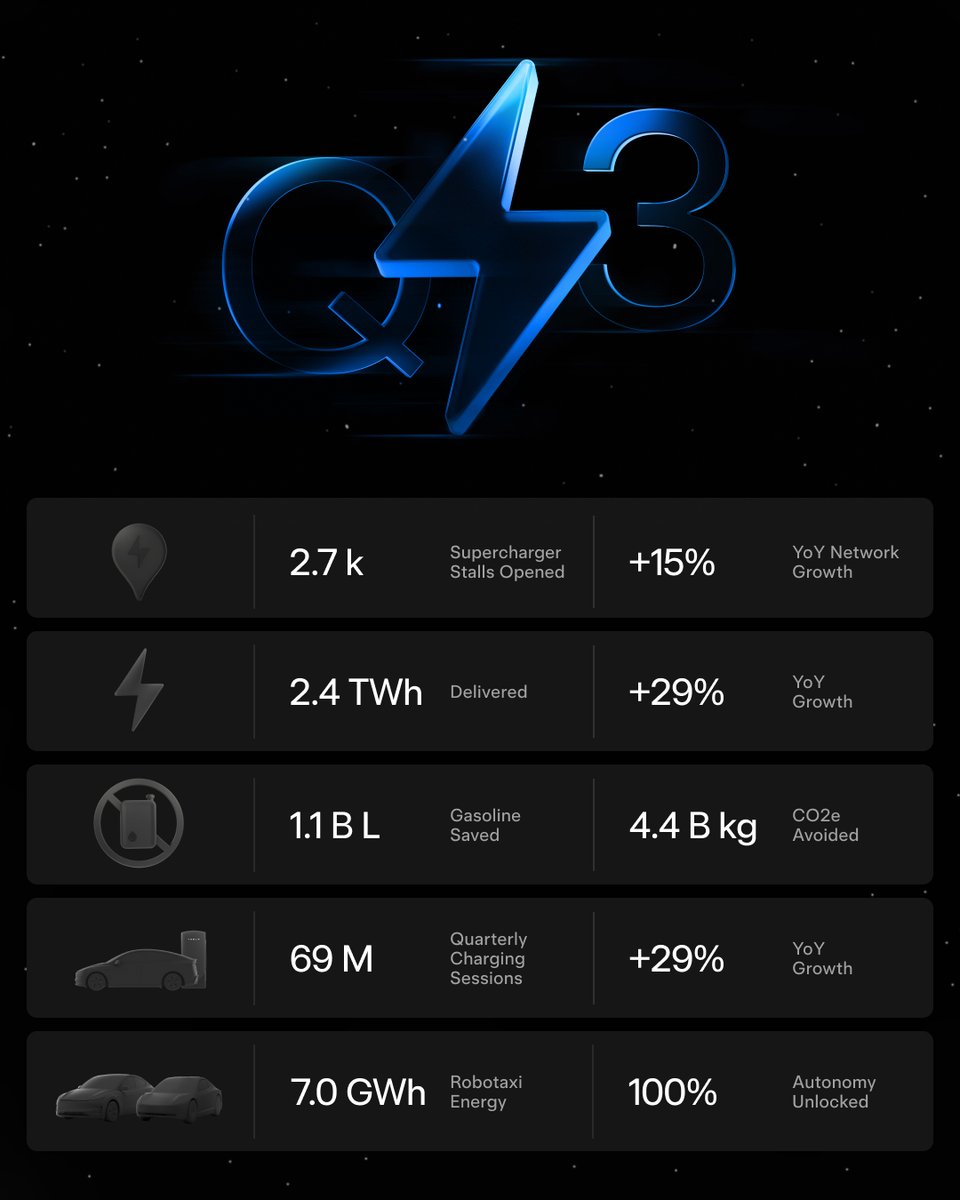
Tesla's charging network just posted one of its most telling utilization numbers yet. The global fleet recorded 69 million individual charging sessions in Q3 2026, up 29% from the same period a year ago — a figure that lands the day before Tesla's official Q3 production and delivery report is expected to drop.

What 69 Million Sessions Actually Means
Raw session counts are easy to gloss over, but this one deserves a closer look. At 69 million sessions across a single quarter, Tesla's fleet is averaging roughly 750,000 charging events every day — across Superchargers, home Wall Connectors, and third-party NACS-compatible stations alike. That's not just a network utilization story; it's a proxy for how actively the fleet is being driven.
The 29% year-over-year growth rate is also worth contextualizing. Analyst consensus heading into the Q3 delivery report — expected around October 2, 2026 — sits at roughly 461,974 vehicles delivered for the quarter. If that figure holds, it would represent a more modest single-digit delivery growth rate year-over-year. The fact that charging sessions are growing nearly 29% while the fleet itself is expanding at a slower pace suggests existing owners are driving — and charging — significantly more than they were a year ago. Higher utilization per vehicle is a different story than pure fleet expansion, and arguably a more durable one for the network's long-term economics.

The Network Behind the Number
Tesla has spent years building charging infrastructure ahead of demand — a capital-intensive bet that looked questionable at times during slower delivery periods. A 29% jump in quarterly session volume is the kind of data point that validates that approach. More sessions mean more revenue from non-Tesla vehicles using the now-open Supercharger network via NACS adapters, and more justification for continued station expansion and stall upgrades.
It also matters for Tesla Energy's broader narrative. As more automakers adopt NACS and the charging network becomes a genuine revenue line rather than a customer-retention tool, session volume becomes a core business metric — not just a footnote in a quarterly letter. Investors and analysts watching the energy and services segment will be paying attention to how Tesla chooses to present this figure in the official Q3 report.
What to Watch in Tomorrow's Report
The Q3 production and delivery report, anticipated for October 2, will be the next data point to set against this charging figure. If deliveries come in near or above the ~462,000 analyst consensus, combined with 69 million charging sessions, the picture is one of a fleet that's both growing and increasingly active. If deliveries disappoint, the charging data may actually serve as a counterweight — evidence that the installed base is healthy and engaged even if new vehicle sales face headwinds.
Either way, 69 million sessions in a single quarter is a number that will be hard to ignore when Tesla reports earnings later this month. The charging network has quietly become one of the company's most defensible assets — and Q3 2026 just gave it another data point to prove it.
Related Gear
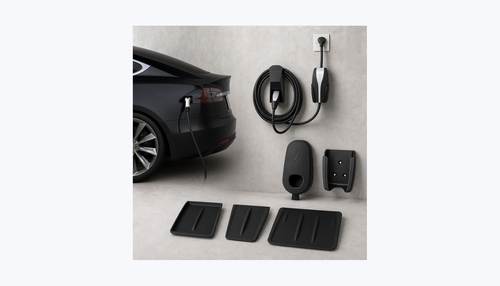
Gear up your Tesla with tested, custom-fit BASENOR accessories — shop Tesla accessories →
Sources & reporting notes
The links below identify the material source records used for this report.
- @SawyerMerritt on X (2026-10-01T17:40:14.000Z) — Direct source
Source links are preserved as published or accessed. See our editorial standards and corrections policy.
The BASENOR Editorial Desk covers Tesla, SpaceX, and related technology, curating reporting from primary sources — official accounts, regulatory filings, and software release data. Every article passes source-record and fact-checking review before publication. About the newsroom.
This report was curated by the BASENOR Editorial Desk from the sources listed above. Read our editorial standards or email editorial@basenor.com to report an error.