📌 UPDATE — July 22, 2026
Tesla's Q2 2026 earnings data reveals FSD adoption has accelerated significantly since our original report. The subscriber base has grown from 1.28M to 1.48 million active FSD subscribers, fueled by over 200,000 new subscriptions added in Q2 alone. Most notably, the adoption rate on new North American deliveries has crossed the 55% threshold — a meaningful jump that suggests FSD is becoming a default choice rather than an afterthought for new buyers. Combined, these subscribers now generate approximately $775 million in annual recurring revenue for Tesla, underscoring how the $99/month subscription model is maturing into a substantial and predictable revenue stream.

📌 UPDATE — July 22, 2026
Tesla's paid FSD user base has grown to 1.48 million — up from the 1.28M figure cited in this article — marking a gain of roughly 200,000 subscribers. Even more striking, over 55% of new Tesla deliveries in North America now include an FSD subscription, signaling that the feature is rapidly becoming a standard choice rather than an optional add-on for new buyers. Both data points were shared by @wholemars on July 22, 2026.


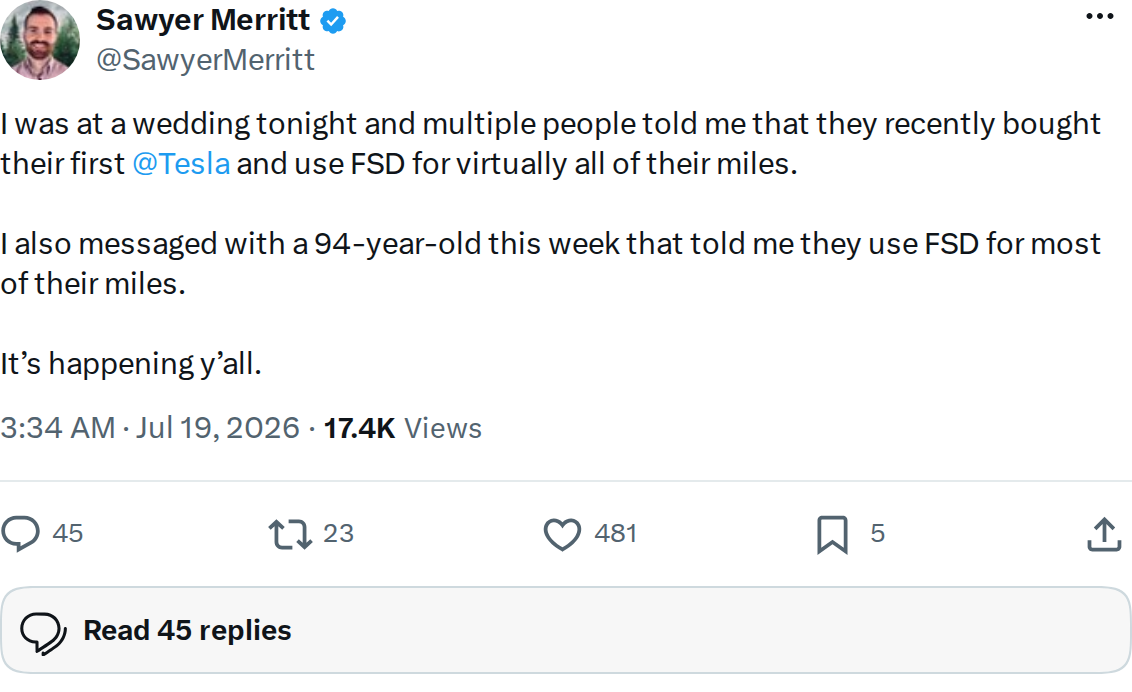
Anecdotal reports from Tesla community figures are starting to align with hard data: FSD adoption is accelerating in ways that would have seemed unlikely even two years ago. Sawyer Merritt, a prominent Tesla commentator, shared this week that multiple first-time Tesla buyers at a social event told him they use FSD for virtually all of their driving — and separately, that a 94-year-old owner relies on it for most of their miles. The numbers behind that sentiment are just as striking.

How many people are actually using FSD right now?
As of Q1 2026, Tesla reported 1.28 million total FSD users — a combination of 476,100 active subscribers and 823,900 outright purchases made before Tesla eliminated the one-time purchase option in February 2026. The subscriber count alone grew 44% sequentially from Q4 2025, and Tesla's CFO Vaibhav Taneja confirmed that subscriber churn is declining. That's not a vanity metric — it means people who try FSD are increasingly sticking with it.
How much real-world driving is the FSD fleet actually doing?
The FSD fleet surpassed 10 billion cumulative miles on May 4, 2026. By early June, the system was accumulating roughly 1 million miles of new driving data every single day. To put that in context: Elon Musk stated in January 2026 that approximately 10 billion miles of real-world data was the threshold needed for safe unsupervised self-driving. The fleet crossed that line within months of him saying it.
What does it cost to get FSD today?
The one-time purchase option is gone — Tesla removed it on February 14, 2026. The standard subscription is $99 per month in the U.S. Owners who previously purchased Enhanced Autopilot have access to a discounted rate of $49 per month, which went into effect on January 29, 2026. Musk has indicated the price will rise as the system's capabilities advance, so the current rate is not guaranteed to hold.
Why are new owners and older drivers adopting it so readily?
The anecdotal picture Merritt describes — first-time Tesla buyers leaning on FSD immediately, a 94-year-old using it for most of their miles — points to something the raw subscriber numbers don't fully capture: the system has crossed a usability threshold for a much broader demographic. Early FSD adopters were typically enthusiasts willing to tolerate rough edges. The current wave appears to include people who simply want a car that handles the driving, and FSD is meeting that expectation consistently enough that they're not switching it off.
What version of FSD is rolling out right now?
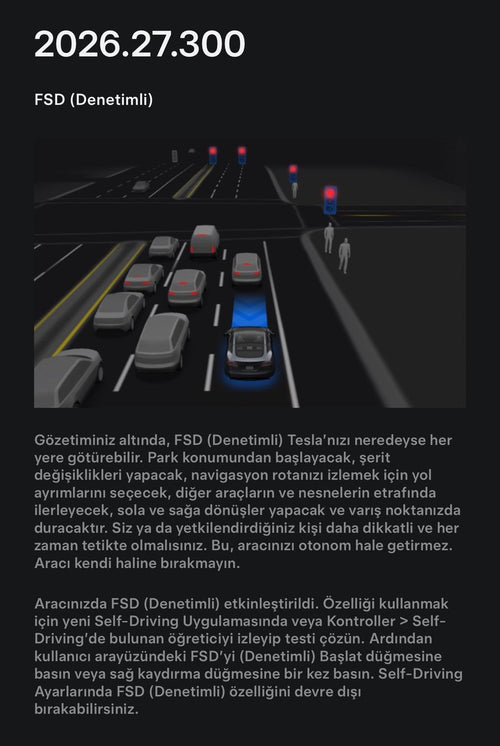
Tesla began rolling out FSD v14.3.5 (firmware 2026.20.6.6) on July 13, 2026. It introduces a Camera Preview feature and is currently a limited release — as of July 16, it had reached less than 1% of the fleet, with Hardware 4 (HW4/AI4) vehicles in the U.S. and Canada getting priority. FSD v14 Lite for Hardware 3 vehicles remains a limited release as well. Wider rollout is expected in the coming weeks.
Is unsupervised FSD available yet?
Tesla's unsupervised Robotaxi service launched in Dallas and Houston in April 2026. That's a geofenced, commercial deployment — not the same as the supervised FSD subscription available to all owners. For the broader fleet, FSD (Supervised) still requires the driver to remain attentive and ready to intervene. The gap between supervised and fully unsupervised operation is narrowing, but the subscription product available today still carries that supervision requirement.
The convergence of falling churn, rising daily mileage, and genuine mainstream adoption stories suggests FSD is moving past the early-adopter phase. Whether the $99 price holds — or climbs before most owners decide to subscribe — is the more pressing question for anyone still sitting on the fence. For our broader coverage of FSD and autonomous driving developments, see our FSD coverage.
Related Gear
Gear up your Tesla with tested, custom-fit BASENOR accessories — shop Tesla accessories →
Sources & reporting notes
The links below identify the material source records used for this report.
- @SawyerMerritt on X (2026-07-19T03:34:06.000Z) — Direct source
Source links are preserved as published or accessed. See our editorial standards and corrections policy.
The BASENOR Editorial Desk covers Tesla, SpaceX, and related technology, curating reporting from primary sources — official accounts, regulatory filings, and software release data. Every article passes source-record and fact-checking review before publication. About the newsroom.
This report was curated by the BASENOR Editorial Desk from the sources listed above. Read our editorial standards or email editorial@basenor.com to report an error.