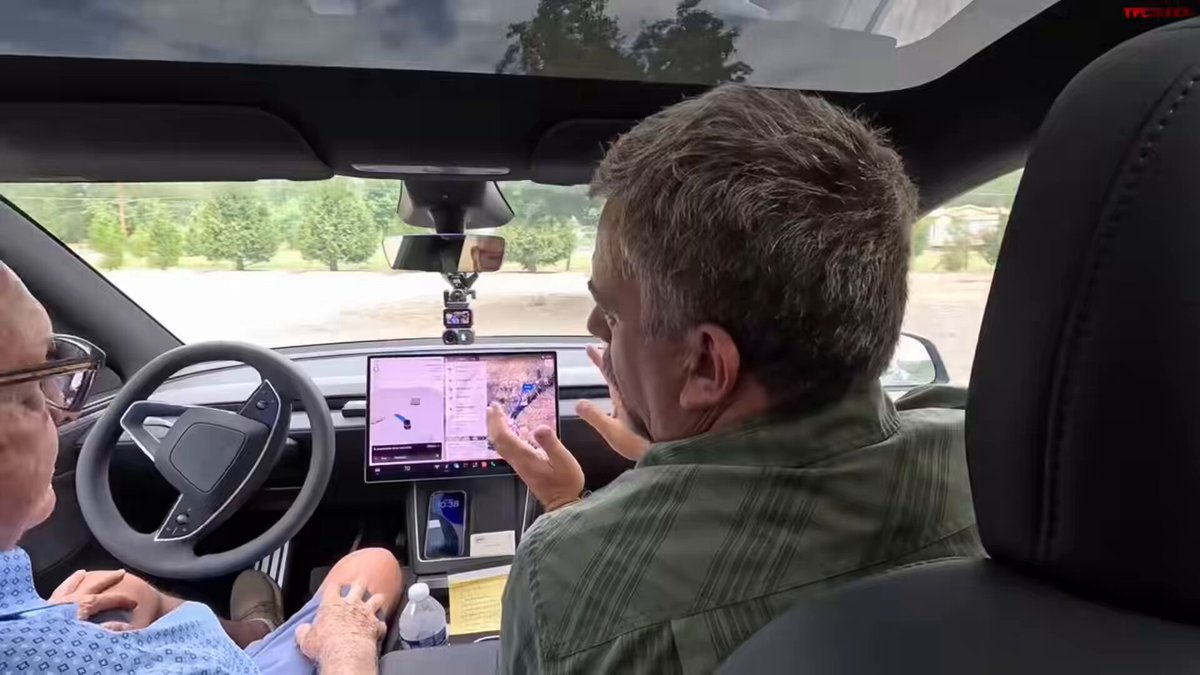
Elon Musk posted a video this week highlighting one of the less-discussed benefits of Tesla's Full Self-Driving technology: giving seniors who can no longer drive confidently a way to stay mobile. It's a use case that's been quietly building for over a year, and the latest FSD capabilities make the conversation more relevant than ever. Here's what you need to know.

What exactly is Musk claiming here?
That Tesla's self-driving technology can restore meaningful independence to seniors who have had to give up their keys. Reduced vision, slower reaction times, and medical conditions that make driving unsafe don't necessarily disappear with age — but the need to get to a doctor's appointment, a grocery store, or a family dinner doesn't disappear either. Musk has been making this point since at least July 2026, when he called supervised self-driving a potentially important mobility tool for older adults. This week's video appears to be a real-world demonstration of that idea.
Is FSD actually capable enough to handle this use case?
The data is encouraging. According to Tesla VP of AI Ashok Elluswamy, FSD has accumulated over 12 billion miles of real-world use as of July 2026, and Tesla's internal safety figures suggest vehicles with FSD Supervised engaged record one major collision every 5.3 million miles — roughly eight times better than the US average. The latest version, FSD v14.3.13, includes a 20% faster reaction time thanks to a rewritten AI compiler and an improved neural network vision encoder. That said, FSD (Supervised) remains an SAE Level 2 system, which means a licensed, attentive driver must remain in the seat and ready to take control at any moment. It is not a hands-free or driverless solution.
So a senior still needs to be able to drive?
Legally and practically, yes — for now. FSD Supervised requires the driver to monitor the road and intervene when needed. The system is not designed to operate without a capable human in the driver's seat. What it does is dramatically reduce the cognitive and physical workload of driving: it handles steering, acceleration, braking, lane changes, and navigation on most road types. For a senior who is still licensed but finds highway merges or heavy traffic stressful, that reduction in workload can be genuinely significant. For someone who is no longer legally permitted to drive, FSD does not currently provide a solution — though Tesla's robotaxi ambitions point toward that future.
How much does FSD cost, and is there a way to try it first?
FSD (Supervised) is subscription-only as of February 2026, when the one-time purchase option ended. The current price is $99 per month in the US. Owners who previously purchased Enhanced Autopilot are eligible for a discounted rate of $49 per month. Tesla has run free trial periods in the past, and in June 2026 the company launched a campaign specifically encouraging owners to demonstrate FSD to their parents or grandparents — so a trial for a family member is worth checking for in the Tesla app. Elon Musk has indicated the subscription price will rise as the technology improves, so the current rate represents the floor, not the ceiling.
Which Tesla vehicles support FSD?
All current Tesla models — Model 3, Model Y, and Cybertruck — ship with the hardware required for full FSD capability. Vehicles with Hardware 4 (AI4) receive the complete FSD v14.3 experience. Cars running Hardware 3 (Computer 3.0) receive a "Lite" version of FSD 14.3 with some capability differences. Older vehicles on Hardware 2.0 or 2.5 require a paid hardware upgrade to access a current FSD subscription. If you're considering a Tesla specifically for an older family member, a new or recent used vehicle with HW4 is the safest choice for long-term FSD access.
Is Tesla designing future products with seniors in mind?
Yes, explicitly. According to previous announcements, Elon Musk confirmed in December 2025 that the upcoming Tesla Model 2 is being designed with senior citizens as a core user group, with an emphasis on easier entry and exit and a simplified instrument layout. That vehicle is expected to launch in 2026. Combined with the ongoing development of Tesla's robotaxi network — where a human driver would not be required at all — the long-term roadmap suggests Tesla is treating senior mobility as a genuine product category, not just a talking point.
The gap between what FSD can do today and what a fully driverless service would unlock for seniors who can no longer drive at all remains the central unresolved question. How quickly Tesla closes that gap will determine whether this becomes one of the technology's defining social contributions — or stays a compelling but limited use case for the foreseeable future. For our ongoing FSD coverage, bookmark that page as capability updates continue to roll out.
Related Gear
Gear up your Tesla with tested, custom-fit BASENOR accessories — shop Tesla accessories →
Sources & reporting notes
The links below identify the material source records used for this report.
- @elonmusk on X (2026-11-06T16:16:45.000Z) — Direct source
Source links are preserved as published or accessed. See our editorial standards and corrections policy.
The BASENOR Editorial Desk covers Tesla, SpaceX, and related technology, curating reporting from primary sources — official accounts, regulatory filings, and software release data. Every article passes source-record and fact-checking review before publication. About the newsroom.
This report was curated by the BASENOR Editorial Desk from the sources listed above. Read our editorial standards or email editorial@basenor.com to report an error.