Tesla is building its own mapping system for Full Self-Driving — and it's nothing like the HD map approach used by most autonomous driving programs. According to Ashok Elluswamy, Tesla's VP of AI, the system uses an entirely new AI architecture that learns from both individual driver behavior and the collective data of the entire Tesla fleet. Here's what owners need to understand about where this is headed.

Why is Tesla building its own maps instead of using existing ones?
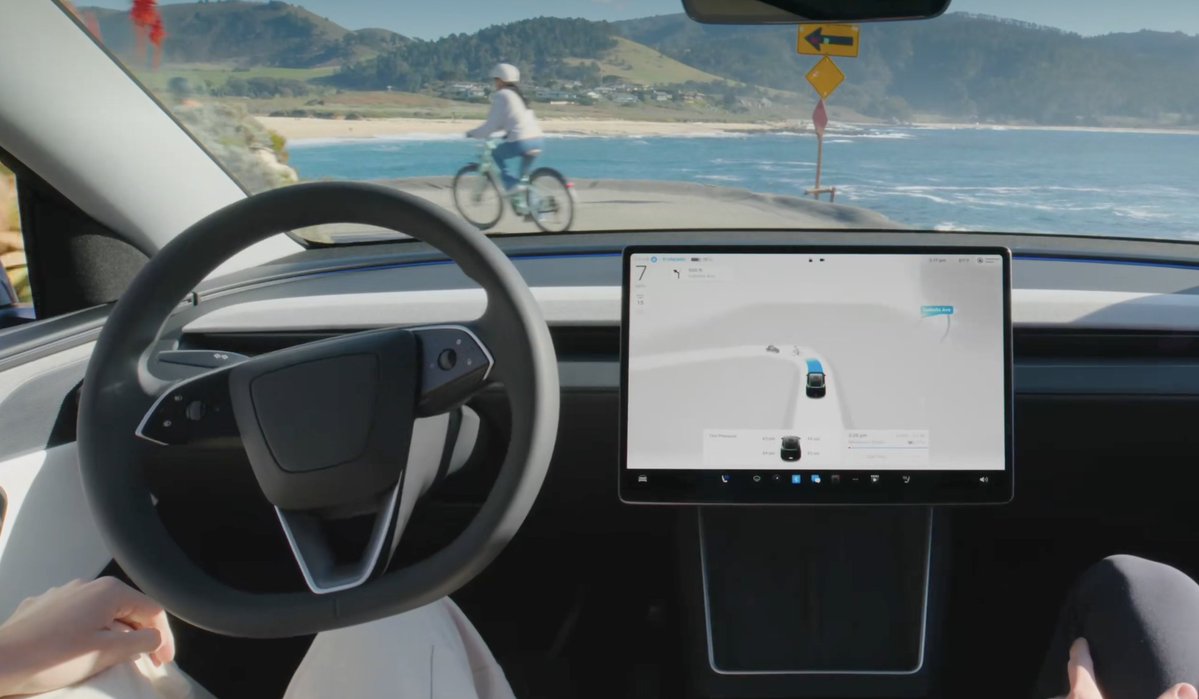
Most autonomous driving systems rely on pre-built, centimeter-accurate high-definition maps that are expensive to create and even more expensive to keep current. Tesla is taking a fundamentally different approach: rather than referencing a static map of the world, FSD's new architecture treats road geometry and lane connectivity as a real-time inference problem. The system uses an autoregressive transformer — the same class of architecture that powers large language models — to interpret road structure directly from camera pixels, on the fly. According to background research, this processing chain runs from raw camera input through backbone networks and multicam fusion, ultimately generating a live lane graph without ever consulting a pre-drawn map.
What does Ashok Elluswamy mean by "learning your preferences"?
Elluswamy confirmed earlier this year that Tesla is working on a feature where FSD will accept spoken, contextual instructions from the driver — things like which driveway to use, which entrance to take, or how aggressively to merge. Critically, the car will remember these preferences and apply them automatically on future trips. Beyond route-level instructions, the system is also being designed to learn individual speed and driving style preferences, so FSD gradually adapts to how you drive rather than forcing you to adapt to it.
And what does "fleet preferences" mean in practice?
Tesla's fleet learning model means that every mile driven by any Tesla on FSD contributes to a shared pool of behavioral data. According to background research, Tesla collects over 1 billion miles of driving data annually. When the system encounters an unusual intersection, a tricky merge, or a poorly marked construction zone, the aggregate experience of thousands of drivers who've navigated that same scenario informs how FSD handles it next time. Individual preference learning and fleet learning work in parallel — your car gets smarter from your own habits, and also from everyone else's.
When did this new architecture actually start rolling out?
The foundational shift happened earlier this year. FSD v14, specifically the v14.2.2.5 build that began rolling out in March 2026, introduced a routing engine that integrates navigation directly into the vision neural network — the first production deployment of this end-to-end approach. That update marked the practical transition away from relying on external routing APIs for FSD's core planning layer. What Elluswamy is describing now is the next layer on top of that foundation: the personalization and fleet-learning components that turn the system from a generic driver into one that knows you.
Does Tesla still use Google Maps?
Yes, but only for the visual interface — the map you see on the touchscreen. According to background research, the underlying routing engine (Valhalla, running on Tesla's own servers) is already proprietary, and the new FSD architecture operates entirely independently of any third-party map data for its actual driving decisions. In China, Baidu serves the visual layer. The key distinction is that what you see on screen and what FSD actually uses to drive are now two separate systems.
What's powering the training behind all of this?
Tesla's Dojo supercomputer is the primary training infrastructure for the unified end-to-end model. Dojo processes large volumes of high-fidelity, labeled video data to continuously refine the neural network. There's also a broader architectural payoff here: the same neural world simulator and end-to-end framework being developed for FSD is designed to transfer directly to Optimus, Tesla's humanoid robot. The mapping and spatial reasoning work happening inside FSD isn't siloed — it's feeding Tesla's broader AI stack.
What should FSD owners actually watch for?
The near-term signal to watch is the voice instruction feature Elluswamy described in July 2026 — the ability to give FSD spoken, location-specific commands that it retains across trips. That's the most tangible, owner-facing expression of the personalization layer. For the fleet-learning improvements, the changes will be more gradual and less visible: FSD simply getting better at specific roads you drive regularly, without you doing anything. If you use FSD regularly, the system is already learning from you — this new architecture is designed to make that learning loop faster and more deliberate.
Related Gear
Gear up your Tesla with tested, custom-fit BASENOR accessories — shop Tesla accessories →
Sources & reporting notes
The links below identify the material source records used for this report.
- @SawyerMerritt on X (2026-10-21T22:03:41.000Z) — Direct source
Source links are preserved as published or accessed. See our editorial standards and corrections policy.
The BASENOR Editorial Desk covers Tesla, SpaceX, and related technology, curating reporting from primary sources — official accounts, regulatory filings, and software release data. Every article passes source-record and fact-checking review before publication. About the newsroom.
This report was curated by the BASENOR Editorial Desk from the sources listed above. Read our editorial standards or email editorial@basenor.com to report an error.