The News: Construction has officially begun on a $325 million Tesla Megapack battery expansion in Queensland, Australia — the third and largest stage of the Western Downs Battery.
Why It Matters: When complete, the full facility will reach 845 MW / 2.3 GWh of combined storage, cementing it as one of the largest battery energy storage systems on the planet — and a major signal of Megapack's global momentum.
Source: @SawyerMerritt on X
Tesla Megapack Stage 3 Expansion Breaks Ground in Australia: $325M, 845 MW Total
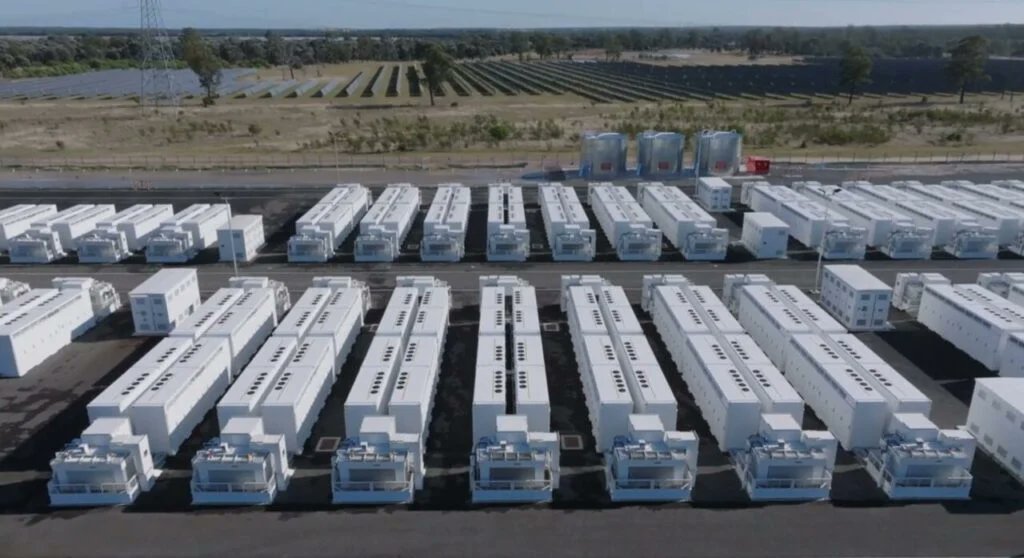
Tesla's Megapack business just hit another major milestone. Construction is now officially underway on the third stage of the Western Downs Battery in Queensland, Australia — a $325 million expansion that will push the facility's total capacity to 845 MW / 2.3 GWh, making it one of the largest battery energy storage systems anywhere in the world.

The project is owned and operated by Neoen Australia, located within the Western Downs Green Power Hub near Chinchilla, Queensland. Stage 3 adds 305 MW / 1,220 MWh of new capacity using 312 Tesla Megapack 2XL units — each one a testament to how far utility-scale battery technology has come. The stage is expected to come online during the Australian summer of 2027/28.
📊 Key Figures
| Metric | Value | Context |
|---|---|---|
| Stage 3 Investment | $325M AUD | Third and largest stage |
| Stage 3 Capacity | 305 MW / 1,220 MWh | 4 hours of storage |
| Megapack Units (Stage 3) | 312 × Megapack 2XL | Tesla's largest unit |
| Total Combined Capacity | 845 MW / 2.3 GWh | All 3 stages combined |
| Construction Start | February 2026 | Notices to proceed: Dec 2025 |
| Expected Online | Summer 2027/28 | Australian summer |
From Pilot to Powerhouse: The Western Downs Story
The Western Downs Battery didn't start at this scale. Stages 1 and 2 were already delivering grid reliability, frequency regulation, and firming services to Queensland's electricity network — the kind of critical infrastructure work that keeps the lights on when renewable generation fluctuates. Stage 3 carries that same grid-forming capability forward, meaning it won't just store energy passively; it will actively stabilize the grid.
Neoen has also secured two new virtual battery contracts with ENGIE backed by the Western Downs facility: one drawing on Stage 2 (25 MW / 50 MWh) and a larger one tied to Stage 3 (50 MW / 200 MWh, four hours). These agreements are a sign of how seriously energy buyers are treating large-scale battery storage as a reliable, dispatchable resource — not just a backup.
Construction is being delivered by UGL, a major Australian engineering contractor, alongside Tesla as the battery supplier. Notices to proceed were issued to both parties in December 2025, with early procurement and civil design work beginning well before that. The substation broke ground in March 2026, and full site construction is now in motion.
🔭 The BASENOR Take
Timeline: Notices to proceed issued December 2025 → Construction commenced February 2026 → Substation groundbreaking March 2026 → Expected online Australian summer 2027/28
Impact Level: 🟠 High — One of the world's largest battery storage facilities; significant Megapack revenue and global reference project for Tesla Energy
Confidence: ✅ High — Multiple verified sources including Neoen, UGL, and CIMIC confirm all figures
What makes this project worth paying attention to beyond the headline number is the trajectory. Tesla's Energy division has been the quiet outperformer in the company's portfolio, and projects like Western Downs Stage 3 are exactly why. A 312-unit Megapack 2XL deployment is a massive order — and it's one of several large-scale projects Tesla Energy has in its pipeline globally.
The grid-forming capability built into all three stages is also significant. Traditional battery storage is largely passive — charge when supply is high, discharge when demand peaks. Grid-forming inverters go further, actively synthesizing the inertia and voltage support that grids used to get from spinning turbines. As coal plants retire across Australia, that capability becomes increasingly valuable. Western Downs isn't just big; it's doing sophisticated work.
📰 Deep Dive
Australia has become one of the most important proving grounds for utility-scale battery storage in the world. The country's aggressive renewable energy targets, combined with an aging coal fleet and a geographically dispersed grid, have created both the need and the market conditions for projects like Western Downs. Tesla has been a consistent winner in that environment, and Stage 3 reinforces that position.
The virtual battery agreements with ENGIE are worth unpacking. A virtual battery contract essentially allows an energy retailer or generator to access a defined slice of a physical battery's capacity without owning the asset outright. For Neoen, it's a way to monetize the facility's capacity before it even comes online. For ENGIE, it's a way to offer dispatchable, clean capacity to customers without building their own storage. These structures are becoming increasingly common in mature battery markets — and they depend entirely on having a facility large enough and reliable enough to underpin the contract.
For Tesla Energy, Western Downs Stage 3 is a reference project in the truest sense. When Tesla pitches Megapack to a utility in Europe, the US, or Southeast Asia, a 2.3 GWh facility operating at grid-forming spec in Queensland is a compelling data point. Scale begets scale — and at 845 MW combined, Western Downs is now firmly in the conversation for the largest battery storage facilities ever built.