30-Second Brief
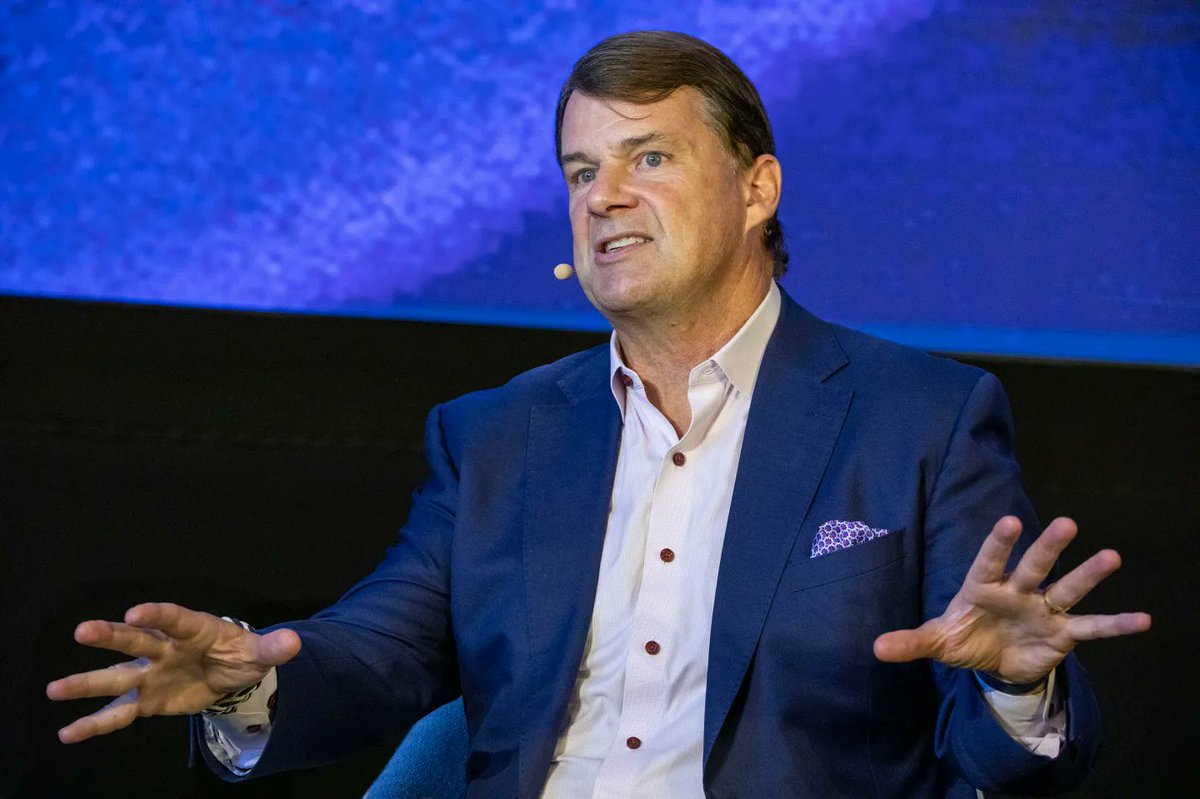
The News: Ford CEO Jim Farley publicly acknowledged that Ford was "No. 2 to Tesla" in EVs for three to four years — and admitted the strategy cost Ford enormously.
Why It Matters: When your closest domestic competitor's CEO openly concedes Tesla's sustained leadership, it underscores just how durable Tesla's technological and market advantage really is.
Source: @SawyerMerritt on X
Ford CEO Admits Tesla's Sustained EV Leadership — And What Ford Got Wrong
It's not often that a Fortune 500 CEO goes on record to concede a competitor's dominance — but that's exactly what Ford CEO Jim Farley did in a new interview, openly stating that Ford was "No. 2 to Tesla for three or four years in EVs." For Tesla owners, it's a candid validation of something the market data has shown for years. For the broader EV industry, it's a revealing autopsy of how legacy automakers misread the transition.

📊 Key Figures
| Metric | Value | Context |
|---|---|---|
| Ford Model e Losses (2024) | $5B+ | Division-level losses |
| Ford U.S. EV Sales (2024) | 97,865 units | +34.8% YoY |
| Tesla U.S. Market Share (2024) | ~38% | Down from 60% in 2020 |
| Tesla Global Sales (2024) | 1.78M units | 10.3% global EV share |
| Mach-E vs. Model 3 Wiring | +1.6 km extra | Also 70 lbs heavier |
| Ford Affordable EV Target Price | ~$30,000 | Mid-size truck, 2027 launch |
What Farley Actually Said — And Why It's Significant
Farley's comment isn't just a diplomatic nod to a competitor. It's a frank admission that Ford's EV push — while aggressive — was fundamentally miscalibrated. "We moved really fast, but these were designed the wrong way," he said, adding that the vehicles "lost a lot of money." The silver lining he offered: Ford got a front-row seat to how real customers make EV purchase decisions.
That's a meaningful concession. Ford's Model e division posted over $5 billion in losses in 2024 alone, according to verified reporting. The Mustang Mach-E — Ford's flagship EV effort — was found by Ford's own engineers to use approximately 1.6 kilometers more wiring than a Tesla Model 3 and weighed 70 pounds more. Farley himself said he was "humbled" and "shocked" after Ford engineers tore down Tesla and Chinese EV models to understand the gap.
The engineering delta isn't abstract. More wiring means more cost, more weight, more potential failure points, and less software integration. It's the difference between a car built around software from the ground up and one where software was bolted onto an existing architecture.
Tesla's Lead Is Real — But It's Narrowing
Tesla's U.S. market share has compressed significantly — from roughly 60% in 2020 to approximately 38% in 2024 — as more competitors entered the market. Globally, BYD overtook Tesla as the top EV seller by volume in 2024. These are facts worth keeping in perspective.
But market share compression in a rapidly expanding market is not the same as losing leadership. Tesla still sold 1.78 million vehicles globally in 2024, commands the largest Supercharger network, and maintains the most advanced over-the-air software update infrastructure of any automaker. The fact that Ford's CEO is still framing his company's strategy relative to Tesla — not BYD, not GM, not Rivian — tells you something about where the competitive benchmark sits in the U.S. market.
🔭 The BASENOR Take
Timeline: Farley has led Ford since 2020, created the Model e EV division in 2022, and has been increasingly candid about Tesla's advantages through 2025 and into 2026.
Impact Level for Tesla Owners: Low — Informational
Confidence in Analysis: High — Multiple verified sources
Farley's comments are consistent with a broader pattern: legacy automakers are now openly studying Tesla's architecture rather than dismissing it. Ford's pivot toward a $30,000 affordable EV truck — expected in 2027 — signals they've absorbed the lesson. Whether they can execute it profitably is a different question entirely. For Tesla owners, the more interesting signal is what Ford's teardown data revealed: Tesla's cost efficiency and software-first design remain genuinely difficult to replicate, even for a company with Ford's manufacturing scale and resources.
📰 Deep Dive
Farley's candor is strategically interesting. CEOs rarely concede competitor superiority in public unless they're trying to reframe a narrative — in this case, repositioning Ford's costly EV losses as tuition paid for market intelligence. The framing of "we got to see how customers choose" suggests Ford is now betting on a more data-informed second act, rather than a volume-at-any-cost approach.
The numbers back up why this reset was necessary. Ford's Model e division burned through more than $5 billion in 2024 while selling roughly 105,000 electric vehicles globally — a unit economics problem that's unsustainable at scale. By contrast, Tesla has spent years refining its manufacturing efficiency, with each vehicle generation requiring fewer components, less wiring, and tighter software-hardware integration. The Mach-E teardown findings — 1.6 km of extra wiring, 70 extra pounds — aren't just embarrassing talking points. They represent real dollars in material cost, assembly time, and warranty exposure.
What's less clear is whether Ford's corrective strategy will close the gap in time. A $30,000 EV truck targeting 2027 is a credible move toward the volume segment Tesla hasn't fully addressed yet. But 2027 is still a year away, and Tesla's own product roadmap — including more affordable models — is moving in parallel. The race isn't over, but Farley's interview makes one thing plain: Ford knows exactly who set the pace.
Related Gear
Gear up your Tesla with tested, custom-fit BASENOR accessories — shop Tesla accessories →
Sources & reporting notes
The links below identify the material source records used for this report.
- @SawyerMerritt on X (2026-04-19T23:34:22.000Z) — Direct source
Source links are preserved as published or accessed. See our editorial standards and corrections policy.
The BASENOR Editorial Desk covers Tesla, SpaceX, and related technology, curating reporting from primary sources — official accounts, regulatory filings, and software release data. Every article passes source-record and fact-checking review before publication. About the newsroom.
This report was curated by the BASENOR Editorial Desk from the sources listed above. Read our editorial standards or email editorial@basenor.com to report an error.