📌 UPDATE — August 16, 2026
New data expands the American-Made story beyond just the index rankings: Tesla's Model 3, Model Y, and Cybertruck collectively source 84% of their parts from within the United States, giving Tesla a commanding lead over all other automakers. Ford ranks a distant second at just 63% domestic parts content. The 21-percentage-point gap underscores how deeply Tesla's domestic supply chain — anchored by Gigafactory Texas and Fremont — outpaces traditional Detroit manufacturers. This parts-content figure is a separate metric from the Cars.com index placement and adds further weight to Tesla's American manufacturing credentials.
@TeslaNewswire · Aug 16, 2026
🇺🇸 Tesla Model 3, Model Y, and Cybertruck are the most American-made vehicles. Tesla has 84% of its parts produced in the US, putting the company far ahead of the competition. Ford ranks second at 63%.
📌 UPDATE — August 16, 2026
Elon Musk and the official Cybertruck account amplified the American-Made Index results on August 16, with Musk posting that "Tesla cars sold in America are the most made in America of any cars." The Cybertruck account separately claimed the title of "Most American made truck," reinforcing that Tesla's domestic manufacturing advantage extends across its entire lineup — not just the Model 3 and Model Y that top the Cars.com rankings. The social push brings renewed attention to Tesla's Fremont and Austin production footprints at a time when "Made in America" has become an increasingly prominent consumer and policy talking point.
@elonmusk · Aug 16, 2026
Tesla cars sold in America are the most made in America of any cars

❤️ 4,693 · 🔁 623 · 👁 649,744
For the sixth consecutive year, Tesla has claimed the top two spots on Cars.com's annual American-Made Index — and this year, the gap between Tesla and the traditional Detroit automakers is starker than ever. The Model 3 ranks #1 and the Model Y ranks #2 among all vehicles sold in the United States, gas or electric, while neither Ford nor General Motors placed a single vehicle in the top 10.

What the Index Actually Measures
Cars.com published its 21st annual American-Made Index on June 23, 2026. The methodology goes well beyond a simple assembly-location check. Each vehicle is scored on four factors: where it is finally assembled, the percentage of U.S. and Canadian parts content, U.S. factory employment tied to that model, and the domestic origin of engines and transmissions.
That multi-factor approach is why the rankings can surprise people. A vehicle assembled in the U.S. with heavily imported components scores lower than one that sources its supply chain domestically. Tesla's Fremont, California, and Austin, Texas, plants — both high-volume, vertically integrated facilities — give the Model 3 and Model Y a structural advantage on every dimension the index tracks.
According to Cars.com's data, the top 10 vehicles on the 2026 index averaged 70% U.S. and Canadian parts content for the second straight year — the highest average since the current methodology was adopted in 2020.
The EV Picture Is More Complicated
The Model 3 and Model Y were the only pure battery-electric vehicles to land in the top 10 of the 2026 index. That headline sounds encouraging for domestic EV manufacturing, but the broader trend is less flattering for the industry: the total number of BEVs appearing anywhere on the full index dropped to five in 2026, down from eleven in 2025. The Kia EV9 (No. 17), Hyundai Ioniq 5 (No. 21), and Cadillac Lyriq (No. 77) round out the EV contingent outside the top 10.
The sharp decline in EV representation reflects the difficulty of building a domestic EV supply chain — battery cells, cathode materials, and power electronics remain heavily import-dependent for most manufacturers. Tesla's long-running investment in domestic cell production and its Gigafactory footprint has given it a durable edge that competitors have not yet closed.
One notable absence from this year's index: the Model S and Model X, which had appeared in previous editions. Both models were discontinued in May 2026 as Tesla converted the Fremont S/X production line to Optimus robot manufacturing, removing them from eligibility.
What It Means Beyond the Trophy
Rankings like this carry real policy weight. Domestic content percentages factor into federal procurement rules, trade tariff calculations, and consumer tax credit eligibility discussions. A sustained #1 finish on a well-regarded third-party index gives Tesla a credible, independent data point when those conversations happen in Washington.
For owners, the practical implication is more straightforward: a vehicle built predominantly with domestic parts and labor is generally less exposed to supply-chain disruptions tied to international trade friction. That has been a live concern across the auto industry over the past several years, and it is a resilience argument Tesla can now make with six years of independent validation behind it.
The Model 3 starts at $36,990 and the Model Y at $39,990 — making them not only the most American-made vehicles on the market, but also the most accessible entry points into that distinction. Whether that combination resonates with buyers who weigh domestic content alongside price will be worth watching as the 2026 model year progresses.
Related Gear
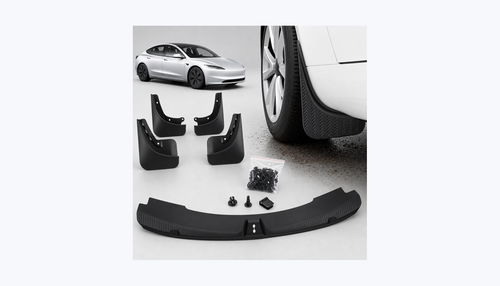
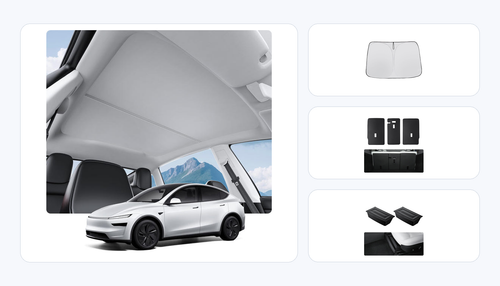
Gear up your Model 3 with tested, custom-fit BASENOR accessories — shop Model 3 accessories →
Sources & reporting notes
The links below identify the material source records used for this report.
- @SawyerMerritt on X (2026-08-15T15:38:42.000Z) — Direct source
Source links are preserved as published or accessed. See our editorial standards and corrections policy.
The BASENOR Editorial Desk covers Tesla, SpaceX, and related technology, curating reporting from primary sources — official accounts, regulatory filings, and software release data. Every article passes source-record and fact-checking review before publication. About the newsroom.
This report was curated by the BASENOR Editorial Desk from the sources listed above. Read our editorial standards or email editorial@basenor.com to report an error.