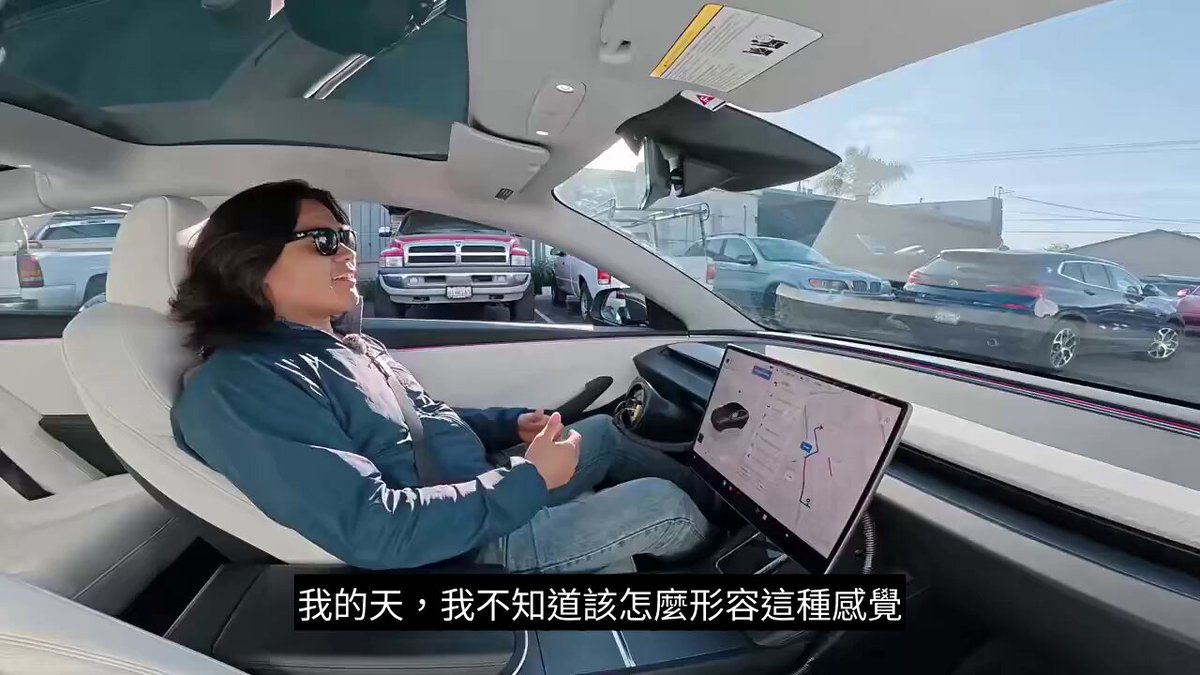
The News: A Tesla Model 3 has driven itself on public roads with no steering wheel — a reported first, and a direct proof-of-concept for the Cybercab's no-controls design philosophy.
Why It Matters: This is the clearest signal yet that Tesla's FSD is mature enough to operate without any manual fallback — the exact capability the Cybercab requires to exist as a product.
Sources: @ray4tesla · @wholemars
A Steering Wheel Was Never the Point
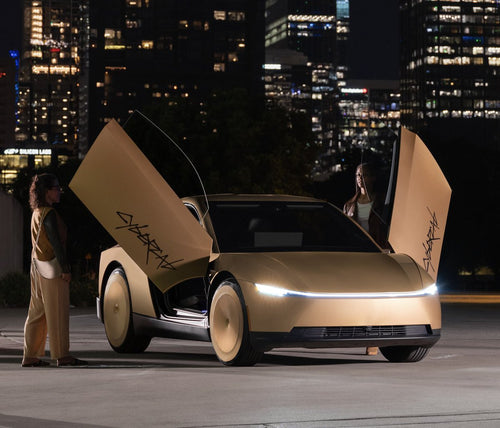
Tesla has always treated the steering wheel as a concession to regulation, not a design choice. The Cybercab — a two-passenger robotaxi with no steering wheel, no pedals, and butterfly doors — is the company's clearest statement of where it believes autonomous driving is headed. And now, a Model 3 has just made that argument on public roads.

According to Tesla community observer Ray (@ray4tesla), this marks the first time a Model 3 has driven itself autonomously on public roads without a steering wheel installed — a setup that removes any possibility of human intervention. This isn't a simulation, a closed track, or a controlled environment. It happened on real roads.
The significance is hard to overstate. Every current Tesla FSD deployment — even the unsupervised Model Y tests running in Austin and San Francisco — still operates in vehicles equipped with a steering wheel and pedals. A human could, in theory, take over. Remove those controls and you've crossed a philosophical and engineering threshold: the system must work, because there is no backup.
The Cybercab Context
The Cybercab isn't just a new Tesla model — it's a bet that fully autonomous, driverless transportation is ready to be a commercial product. Tesla confirmed the first Cybercab production unit rolled off the line at Gigafactory Texas in February 2026, with volume production targeted to begin in April 2026. The long-term ambition, according to Elon Musk, is 2 million Cybercabs per year across multiple factories.
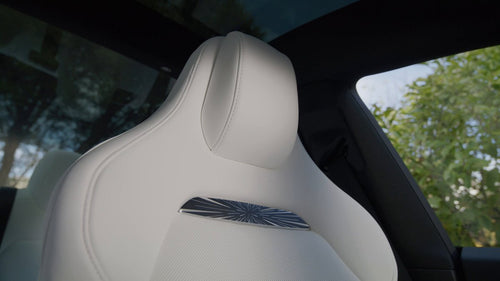
The design spec is uncompromising: no steering wheel, no pedals, dual butterfly doors, no rear window, no traditional side mirrors — cameras handle all of it. The interior is passenger-centric, built around a large central display, vegan leather seating, and physical emergency controls with Braille accessibility. The price target sits at approximately $25,000.
But none of that matters if the software isn't ready. The Model 3 test on public roads — stripped of its steering wheel — is Tesla demonstrating, in the most direct way possible, that FSD can operate without a human safety net. It's the Cybercab's core requirement, validated on existing hardware.

The Henry Ford analogy from @wholemars cuts to the heart of the debate. Critics who argue the Cybercab needs a steering wheel are, in this framing, asking for a faster horse. They're optimizing for familiarity rather than capability. Tesla's position — and the position this Model 3 test appears to support — is that the question isn't whether people want a steering wheel. It's whether they need one.
📊 Key Figures
| Metric | Value | Context |
|---|---|---|
| Cybercab Volume Production Start | April 2026 | Confirmed by Elon Musk |
| Long-Term Production Target | 2M units/year | Across multiple factories |
| Cybercab Price Target | ~$25,000 | Per Q3 2024 earnings call |
| Miles Needed for Safe Unsupervised FSD | ~10 billion | Threshold projected ~July 2026 |
| First Cybercab Production Unit | February 2026 | Gigafactory Texas |
🔭 The BASENOR Take
Timeline: March 14, 2026 — First public road test of a steering-wheel-free Tesla
Impact Level: 🔴 High — Direct validation of Cybercab's core technical requirement
Confidence: High on the milestone itself (video evidence cited); Medium on commercial readiness timeline
The regulatory path remains the biggest open question. U.S. Federal Motor Vehicle Safety Standards currently require steering wheels and pedals in passenger vehicles. Tesla is reportedly seeking exemptions, but that process is slow and politically sensitive. A successful public road demo accelerates the argument — regulators find it harder to deny exemptions when the technology is demonstrably working.
There's also a hardware consideration worth flagging: the Cybercab is expected to launch on Tesla's current AI4 chip platform, with the next-generation AI5 reportedly delayed until mid-2027. That means the autonomous performance you're seeing demonstrated today — in this Model 3, and in the unsupervised Model Y fleet — is the same compute foundation the Cybercab will ship with. If FSD on AI4 is good enough to operate a steering-wheel-free vehicle on public roads, the Cybercab's April production timeline becomes a lot more credible.
For existing Tesla owners, this moment matters beyond the Cybercab itself. A steering-wheel-free FSD demonstration on a Model 3 signals that the underlying software has crossed a confidence threshold that Tesla's own engineers are willing to test publicly. That same software — refined further — is what powers your car's FSD subscription today. The gap between where FSD is and where it needs to be for full unsupervised deployment is closing faster than most expected. For more on how Tesla's self-driving technology is progressing, see our FSD coverage.
🚕 Following the Robotaxi rollout? See every operating city, launch date and announced market in our Tesla Robotaxi Tracker.
Related Gear
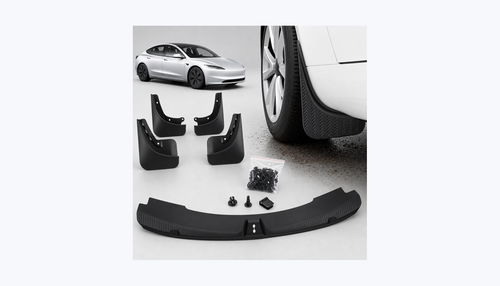
Gear up your Model 3 with tested, custom-fit BASENOR accessories — shop Model 3 accessories →
Sources & reporting notes
The links below identify the material source records used for this report.
- @wholemars on X (2026-03-14T16:33:49.000Z) — Direct source
- @ray4tesla on X (2026-03-14T16:24:54.000Z) — Direct source
Source links are preserved as published or accessed. See our editorial standards and corrections policy.
The BASENOR Editorial Desk covers Tesla, SpaceX, and related technology, curating reporting from primary sources — official accounts, regulatory filings, and software release data. Every article passes source-record and fact-checking review before publication. About the newsroom.
This report was curated by the BASENOR Editorial Desk from the sources listed above. Read our editorial standards or email editorial@basenor.com to report an error.