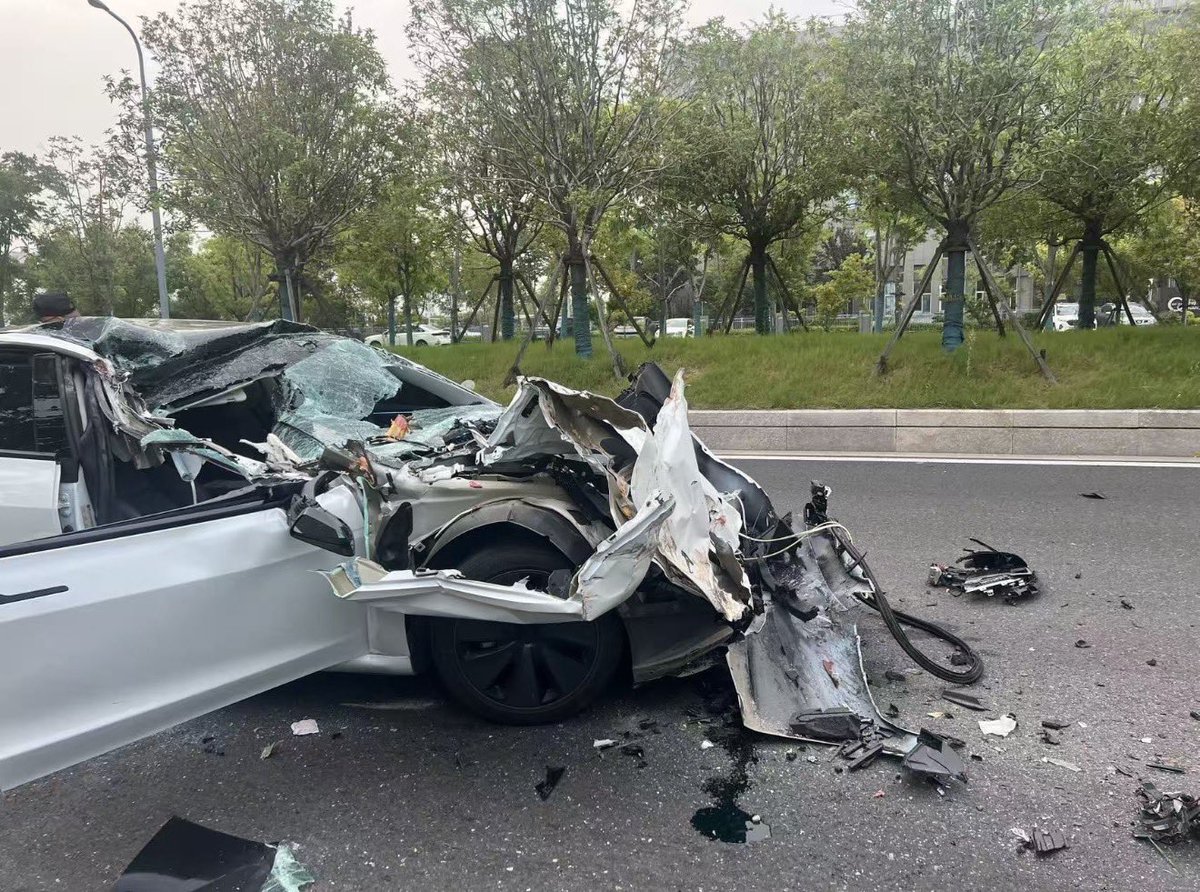
A Tesla Model 3 was involved in a severe rear-end collision with a truck, leaving the front of the vehicle completely destroyed. Despite the catastrophic appearance of the wreck, the occupants reportedly walked away with only minor injuries — a result that points directly to the structural and safety systems built into the car.


Why the Cabin Held When the Front Didn't
The images are striking: the Model 3's front end is gone, yet the passenger compartment appears largely intact. That's not luck — it's the crumple zone working exactly as designed. Tesla's rigid occupant cell is engineered to absorb and redirect crash energy away from the cabin, allowing the front structure to sacrifice itself while the people inside remain protected. The 2026 Model 3 carries a 5-star overall NHTSA safety rating, including 5 stars in frontal crash testing, and earned a "Good" rating from the IIHS in the moderate overlap front test.


Beyond the physical structure, Tesla's restraint systems — seatbelt pretensioners and multi-stage airbags — activate within milliseconds of a significant impact. According to a late-2025 NHTSA examination of a comparable Model 3 rear-end collision, minor injuries in that incident were specifically attributed to the effective functioning of these integrated restraint systems.
What Happens to Your Tesla After a Serious Crash
Most owners never think about post-crash safety until they need it. Here's what your Model 3 is doing in the seconds and minutes after a severe impact:
- Hazard lights activate automatically — the vehicle switches on accelerated hazard flashers to alert other drivers.
- Emergency contact attempt — via eCall or your paired mobile device, the car attempts to reach emergency services on your behalf.
- High-voltage battery disconnects — to reduce the risk of fire or electrical shock for occupants and first responders, the HV system is automatically isolated. Tesla highlighted these post-event safety measures in an April 2026 update.
First responders are trained on these systems, but if you're conscious after an impact, you can also manually cut high-voltage power from the touchscreen under Controls → Safety.
Action Plan: What Every Model 3 Owner Should Check Now
You don't need to be in a crash to benefit from reviewing your safety setup. Run through this checklist:
- Confirm Emergency SOS is enabled. Go to Controls → Safety → Emergency SOS. Make sure the toggle is on and your emergency contacts are current. This is what triggers the eCall system after a severe impact.
- Check that your paired phone has a data connection. The post-crash emergency contact attempt routes through your phone if the built-in connection isn't available. A phone with an active plan and Bluetooth paired to the car gives you a backup channel.
- Review your seatbelt fit. The restraint system is only as effective as the belt fit. The lap belt should sit across your hips — not your stomach — and the shoulder belt should cross the center of your chest. After any minor impact, have seatbelt pretensioners inspected; they are single-use devices.
- Know where the manual HV disconnect is. In the Model 3, the 12V battery is in the front trunk. If you ever need to manually disable the vehicle for first responders, the procedure is in your owner's manual under Emergency Response. Familiarize yourself before you need it.
- Keep Autopilot collision warnings active. Controls → Autopilot → Forward Collision Warning. Set it to "Early" — this gives you the maximum reaction time if the vehicle ahead stops suddenly.
Crashes like this one are a reminder that passive safety — the structure, the airbags, the crumple zones — does the heavy lifting when prevention fails. The Model 3's ratings aren't marketing numbers; this wreck is what they look like in practice. The car was totaled. The people weren't.
Related Gear
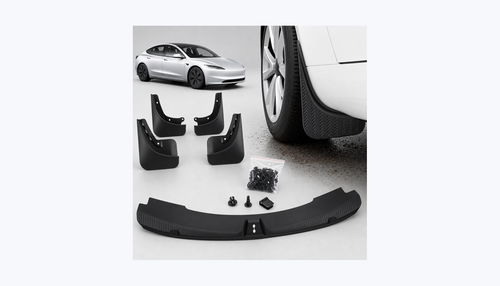
Gear up your Model 3 with tested, custom-fit BASENOR accessories — shop Model 3 accessories →
Sources & reporting notes
The links below identify the material source records used for this report.
- @TeslaNewswire on X (2026-08-15T15:39:02.000Z) — Direct source
Source links are preserved as published or accessed. See our editorial standards and corrections policy.
The BASENOR Editorial Desk covers Tesla, SpaceX, and related technology, curating reporting from primary sources — official accounts, regulatory filings, and software release data. Every article passes source-record and fact-checking review before publication. About the newsroom.
This report was curated by the BASENOR Editorial Desk from the sources listed above. Read our editorial standards or email editorial@basenor.com to report an error.