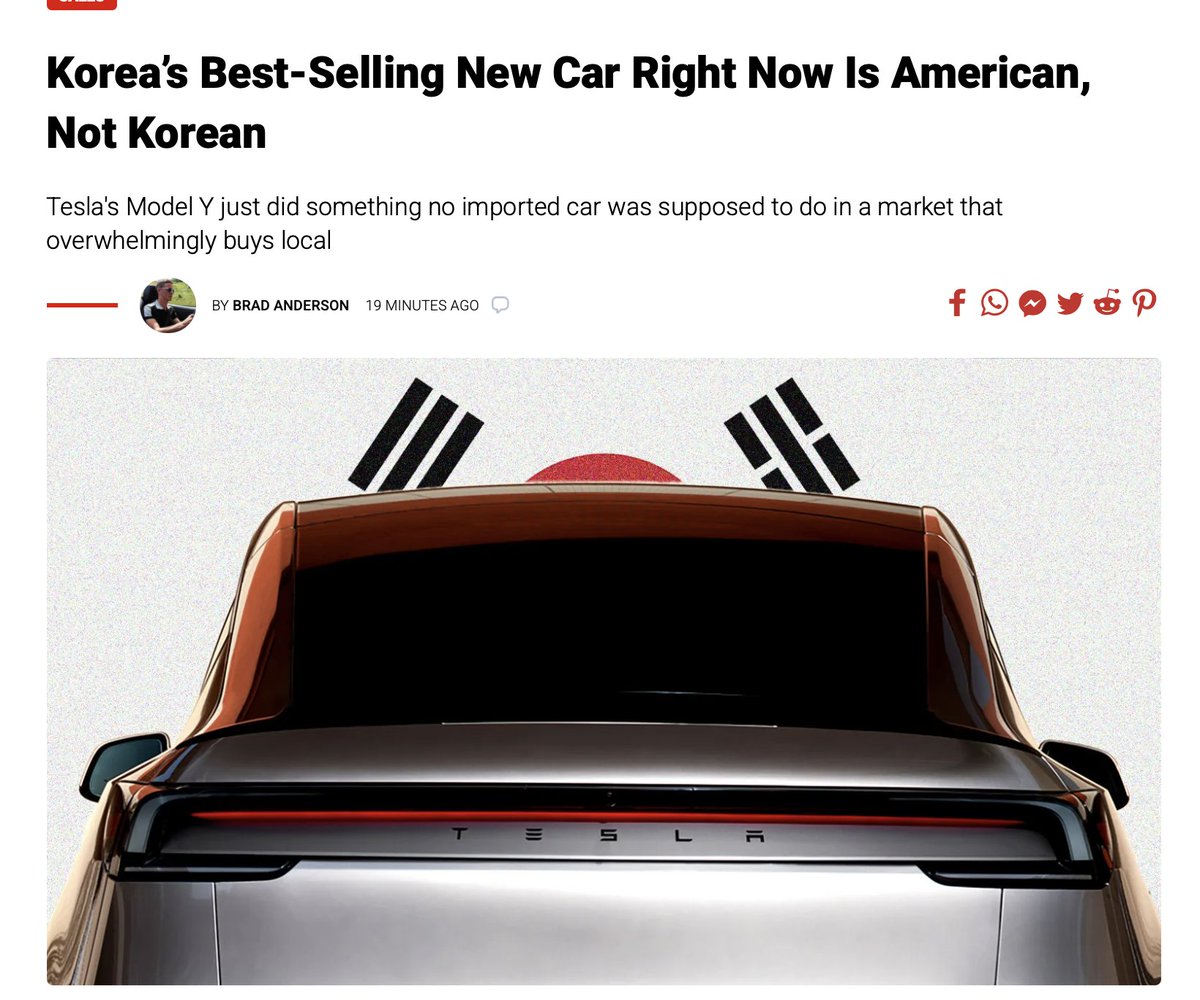
An American electric crossover is now the most popular new car in one of the world's most brand-loyal automotive markets. The Tesla Model Y topped South Korea's monthly sales chart in July 2026, outselling every domestic sedan, crossover, and hatchback — including the Hyundai Grandeur and Kia Seltos — in a country where local brands have historically dominated. It's the second time the Model Y has claimed that position this year, and the numbers behind it reveal a deliberate, sustained strategy rather than a one-month anomaly.

The Numbers Behind the Milestone
In July 2026, the Model Y recorded 8,705 registrations in South Korea, edging out the Hyundai Grandeur (8,532 units) and the Kia Seltos (7,427 units). That margin is thin enough that a single bad logistics week could have flipped the result — which makes the consistency across multiple months all the more telling.
July wasn't a fluke. In May 2026, the Model Y became the first imported model ever to top South Korea's monthly passenger car sales chart, with 8,762 registrations. That month it outsold the Kia Sorento by nearly 1,000 units and the Hyundai Grandeur by more than 3,500. Two months later, it did it again.
| Month | Model Y Units | Runner-Up | Runner-Up Units |
|---|---|---|---|
| May 2026 | 8,762 | Kia Sorento | 7,836 |
| July 2026 | 8,705 | Hyundai Grandeur | 8,532 |
Zoom out further and the scale becomes clearer. Tesla's cumulative South Korea sales for January through July 2026 reached 66,376 units — a 149.8% increase year-over-year, according to data cited by multiple Korean automotive outlets. Of those, 52,064 were Model Ys, making it the best-selling imported single model in the country by a wide margin. Tesla also held 33.1% of all imported car sales in July, dwarfing BMW (6,533 units) and Mercedes-Benz (3,959 units).
How Tesla Built This Position
The result didn't happen by accident. Two structural decisions made the Model Y competitive in a market where domestic loyalty runs deep.
First, sourcing. Korean-market Model Ys are built at Gigafactory Shanghai and equipped with lithium iron phosphate (LFP) batteries. That supply chain decision brought the entry price down to approximately 49.99 million won — roughly $36,500 USD — low enough to qualify for full South Korean government EV subsidies. In a subsidy-sensitive market, hitting that threshold is the difference between being a niche import and a mainstream option.
Second, the product itself improved at the right time. The Juniper refresh in 2025 gave the Model Y a substantially updated interior and exterior, and South Korean buyers responded: annual sales surpassed 50,000 units in 2025, up from around 18,000 in 2024. The 2026 trajectory suggests that momentum has only accelerated.
The July breakdown by variant is also instructive. The Model Y Premium led with 6,612 units, while the Premium Long Range added 2,092 — meaning buyers aren't just choosing the cheapest option. A meaningful share are upgrading, which points to genuine brand preference rather than pure subsidy arbitrage.
What This Means Beyond the Sales Chart
South Korea is not an easy market to crack. Hyundai and Kia together account for the overwhelming majority of domestic sales, benefit from deep dealer networks, strong national identity around their brands, and years of product refinement tuned specifically for Korean consumer preferences. For a foreign automaker — let alone an American one — to outsell them on their home turf twice in three months is a result that will be studied in automotive strategy circles.
Tesla's streak of exceeding 10,000 total monthly sales in South Korea has now run five consecutive months since March 2026, according to sales data reported by sedaily.com and teslarati.com. That consistency suggests the company has moved past the registration-spike pattern that sometimes inflates monthly import figures, and into something more like a structural market position.
The broader question is whether this is a South Korea story or a preview of what Tesla can do in other markets where domestic brands are entrenched. The formula — competitive pricing enabled by Shanghai production, LFP batteries that reduce cost without sacrificing range for urban use cases, and a refreshed product — is replicable. South Korea may be the clearest proof of concept yet that it works.
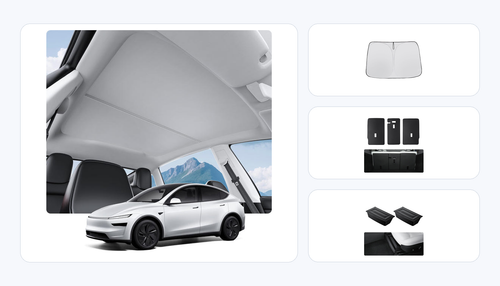
Related Gear
Gear up your Model Y with tested, custom-fit BASENOR accessories — shop Model Y accessories →
Sources & reporting notes
The links below identify the material source records used for this report.
- @SawyerMerritt on X (2026-08-17T15:01:26.000Z) — Direct source
- @SawyerMerritt on X (2026-08-17T15:01:26.000Z) — Direct source
Source links are preserved as published or accessed. See our editorial standards and corrections policy.
The BASENOR Editorial Desk covers Tesla, SpaceX, and related technology, curating reporting from primary sources — official accounts, regulatory filings, and software release data. Every article passes source-record and fact-checking review before publication. About the newsroom.
This report was curated by the BASENOR Editorial Desk from the sources listed above. Read our editorial standards or email editorial@basenor.com to report an error.