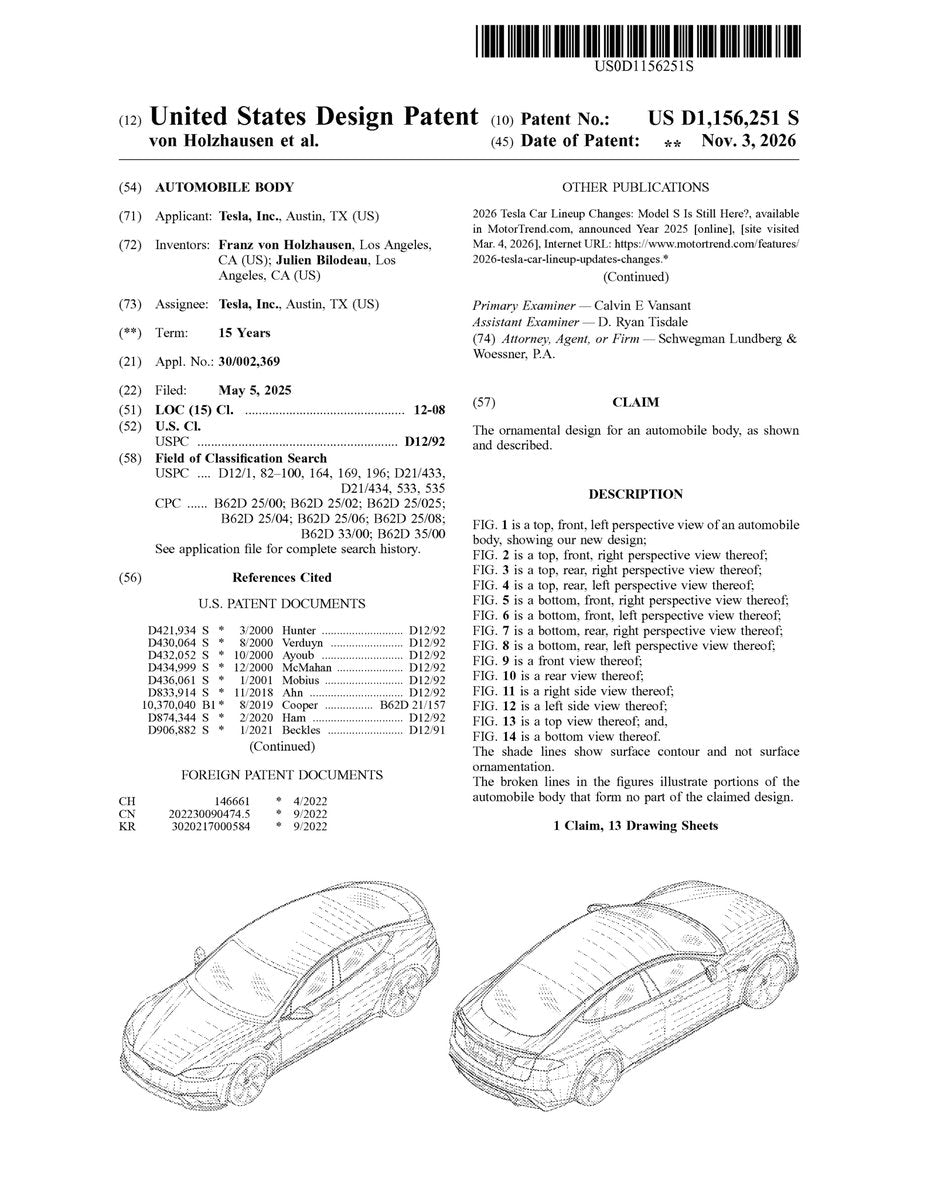
Tesla has secured a design patent for the Model S — a move that comes several months after the sedan's production concluded in Q2 2026. The patent is aimed at preventing other automakers from copying the vehicle's distinctive aesthetic, preserving the design as protected intellectual property even as the car exits the market.

Why Patent a Car You No Longer Build?
At first glance, protecting the design of a discontinued vehicle might seem like a low-priority legal housekeeping task. But there's a clear strategic logic here. Design patents in the automotive industry typically grant protection for 15 years, meaning Tesla can pursue legal action against any manufacturer that lifts the Model S's silhouette, roofline, or distinctive body surfacing for use in their own vehicles — even now that Tesla itself has stopped building the car.
The timing is notable. Tesla officially ended Model S and Model X production on May 9, 2026, with the Fremont assembly lines decommissioned within 46 days and repurposed for Optimus humanoid robot manufacturing. The production sunset was first signaled by Elon Musk during Tesla's Q4 2025 earnings call in January 2026. With the Model S now a closed chapter in Tesla's manufacturing history, locking down the design legally ensures that its visual identity — developed and refined over more than a decade — cannot simply be appropriated by competitors looking to borrow credibility from an iconic form.

The Broader IP Picture
This isn't Tesla's first significant patent activity in recent years. In September 2025, the company was granted patents related to manufacturing processes — including an automated exterior vehicle part assembly patent and the so-called "Unboxed Process" — but those were process patents, not design patents. Protecting how you build something is different from protecting what it looks like. This Model S filing is squarely about the latter.
Design patents are a relatively underused tool in the EV space, but they carry real teeth. Apple's aggressive use of design patents in consumer electronics offers a useful parallel: the protection isn't just about preventing outright clones, it's about establishing legal standing to challenge designs that borrow too liberally from a protected aesthetic. For Tesla, whose vehicles have been widely cited as design benchmarks across the industry, that standing has tangible value.

What It Means for the Model S Legacy
For the roughly half-million Model S owners worldwide, this patent has no practical effect on their vehicles — software updates, FSD improvements, and service support continue as normal. But the filing does carry a certain symbolic weight. By patenting the design post-production, Tesla is signaling that the Model S isn't just a retired product; it's a piece of design heritage worth defending.
The Model S spent over a decade as Tesla's flagship, and its fastback silhouette became one of the most recognizable shapes in the automotive industry. Securing the design now, while the car is still fresh in the market's memory, is the kind of quiet IP housekeeping that tends to matter most when a competitor eventually pushes a design that looks a little too familiar.
Whether Tesla pursues any enforcement actions off the back of this patent remains to be seen. But the filing itself is a clear statement: the Model S design belongs to Tesla, and they intend to keep it that way.
Related Gear
Gear up your Model S & X with tested, custom-fit BASENOR accessories — shop Model S & X accessories →
Sources & reporting notes
The links below identify the material source records used for this report.
- @TeslaNewswire on X (2026-11-03T19:19:07.000Z) — Direct source
Source links are preserved as published or accessed. See our editorial standards and corrections policy.
The BASENOR Editorial Desk covers Tesla, SpaceX, and related technology, curating reporting from primary sources — official accounts, regulatory filings, and software release data. Every article passes source-record and fact-checking review before publication. About the newsroom.
This report was curated by the BASENOR Editorial Desk from the sources listed above. Read our editorial standards or email editorial@basenor.com to report an error.