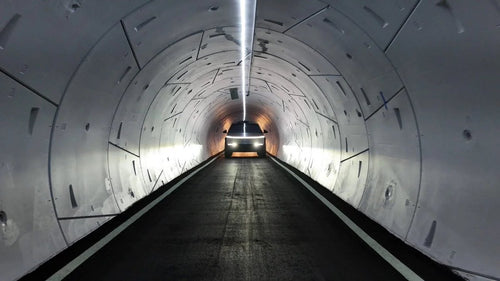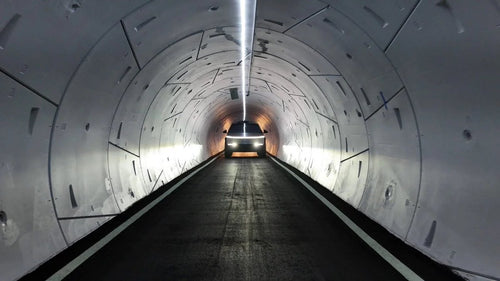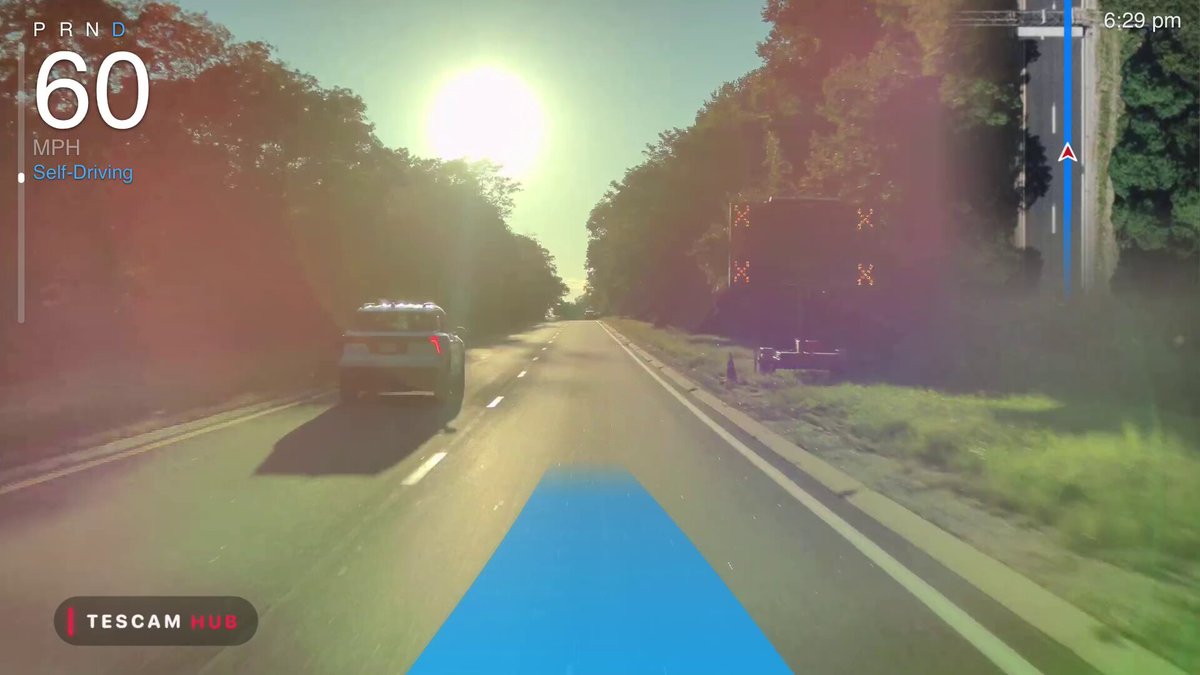
Tesla's official account dropped a short, confident post this week — 'Photon count reconstruction FTW 😎' — alongside a video that shows exactly what that means in practice. The clip demonstrates how Tesla's vision system resolves scenes that would leave a conventional camera blind. If you've ever wondered why FSD keeps improving in rain, fog, and dead-of-night conditions, this is the underlying reason.

1. It throws out the traditional image processor entirely
Every conventional camera — including the ones on most competing vehicles — runs its sensor data through an image signal processor (ISP) before any AI ever sees it. The ISP tone-maps the scene, compresses dynamic range, and produces a clean-looking JPEG-style image. Convenient for human eyes; limiting for a neural network. Tesla's photon count approach bypasses the ISP altogether and feeds the raw count of light particles hitting each pixel directly into the neural net. The AI gets unfiltered reality, not a processed approximation of it.
2. The neural network sees what the ISP would have thrown away
When an ISP compresses dynamic range to produce a viewable image, it makes a choice: expose for the shadows or expose for the highlights. Tesla's system doesn't make that choice — it preserves both simultaneously. The neural network can resolve a stop sign in deep shadow at the same moment it handles oncoming high-beam headlights in the same frame. That's the core perceptual advantage: no blown-out highlights, no crushed blacks, in a single pass.
3. The technology has been building since late 2021
This isn't a sudden leap. According to background research, Elon Musk confirmed in November 2021 that Tesla was moving toward training on 'actual photon counts' and 'removing the filters.' FSD Beta 10.9 in January 2022 was the first public build to upgrade its static object network to use 10-bit photon count streams instead of 8-bit ISP tone-mapped images — a change that reportedly improved overall recall by 3.9% and precision by 1.7%. The Q1 2025 earnings call referenced direct photon counting explicitly, and NHTSA followed up in July 2026 requesting a formal technical description of the capability. Tesla has been quietly stacking this foundation for nearly five years.
4. FSD v14.3.x is where it's most visibly deployed
The most recent software milestones make the real-world impact concrete. FSD (Supervised) v14.3.2, released in early May 2026, introduced an upgraded neural network vision encoder specifically targeting 'rare and low-visibility scenarios.' FSD v14.3.8, part of the 2026.26.1 update train released in September, extended that with strengthened 3D geometry understanding, expanded traffic sign recognition, and a rewritten AI compiler with MLIR that cut reaction time by 20%. Any Tesla owner on Hardware 3 or Hardware 4 running a current FSD build is already running a version of this photon-aware pipeline. Hardware 4 cameras, with their higher resolution and improved low-light sensitivity, give the system richer raw data to work with. For more on recent FSD updates, see our FSD coverage.
5. The practical gains go beyond night driving
Night performance gets the headlines, but the benefits span a wider set of conditions. According to background research, the system performs 'probably slightly better than people' in fog, improves detection of pedestrians and cyclists in low-visibility scenarios, and prevents the image washout that plagues conventional cameras in high-glare situations — think sun directly ahead at dawn or dusk. The estimated reduction in nighttime accident rates tied to this approach is cited at around 20%, though that figure should be treated as a modeling estimate rather than a confirmed real-world result. The NHTSA inquiry from July 2026 suggests regulators are paying close attention to exactly how these claims hold up in practice.
Tesla's breezy 'FTW' framing undersells how technically significant this is. Stripping out the ISP and training directly on photon counts is a fundamental architectural choice — one that compounds over time as the neural networks grow larger and the camera hardware improves. The September 10 post is a flex, but it's also a signal: Tesla considers this capability mature enough to show off publicly, which typically means the next round of improvements is already in training.
Related Gear
Gear up your Tesla with tested, custom-fit BASENOR accessories — shop Tesla accessories →
Sources & reporting notes
The links below identify the material source records used for this report.
- @Tesla on X (2026-09-10T16:11:37.000Z) — Direct source
Source links are preserved as published or accessed. See our editorial standards and corrections policy.
The BASENOR Editorial Desk covers Tesla, SpaceX, and related technology, curating reporting from primary sources — official accounts, regulatory filings, and software release data. Every article passes source-record and fact-checking review before publication. About the newsroom.
This report was curated by the BASENOR Editorial Desk from the sources listed above. Read our editorial standards or email editorial@basenor.com to report an error.