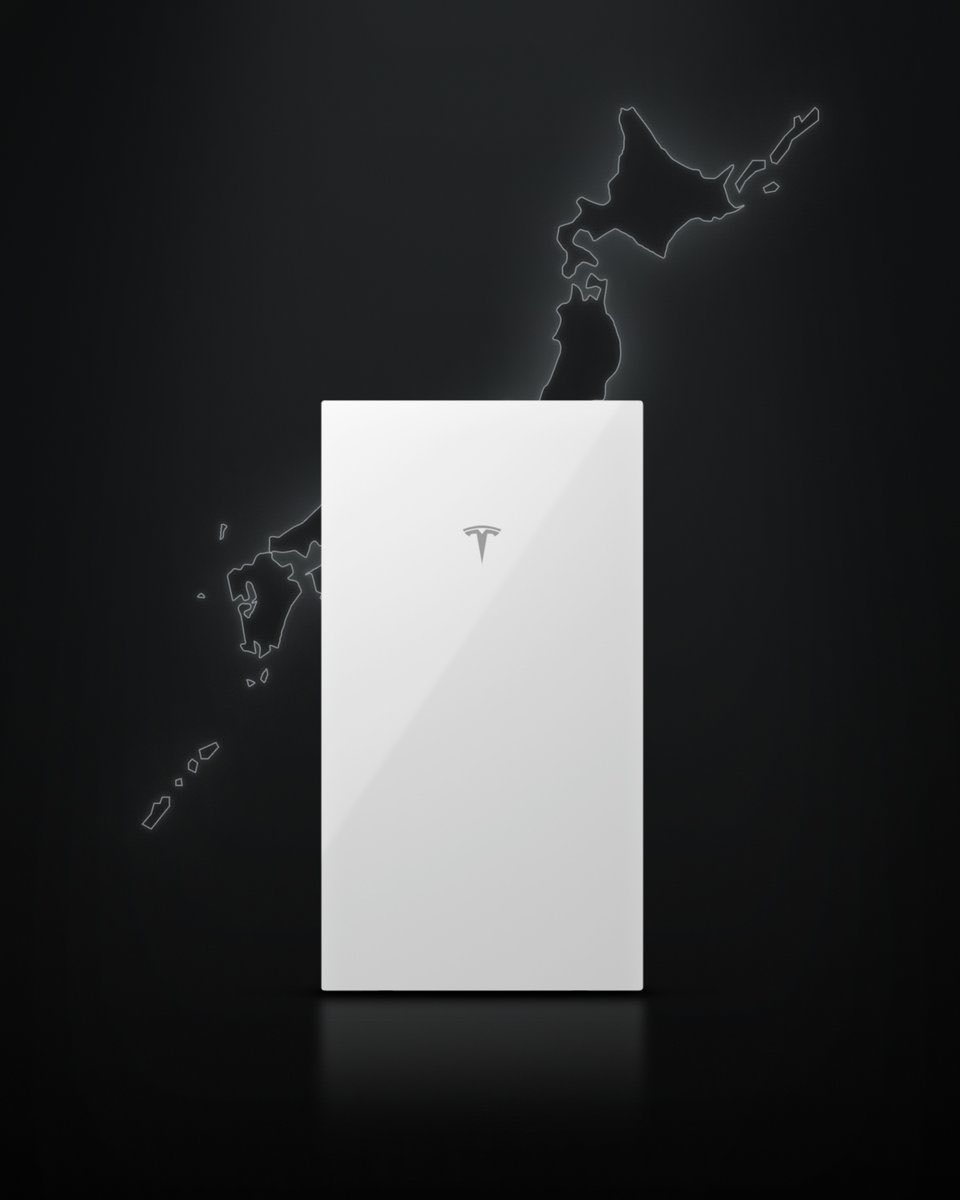
Tesla has officially brought the Powerwall 3 to Japan, marking a significant step in the company's push to expand home energy storage across Asia. The launch opens up Tesla's most capable residential battery system to Japanese homeowners — and there's more to the rollout than a simple product listing going live.

1. The Powerwall 3 Brings an Integrated Solar Inverter — a First for Japan
Unlike its predecessor, the Powerwall 3 includes a built-in solar inverter, meaning it can connect directly to solar panels without a separate inverter unit. For Japanese homeowners who already have rooftop solar — a common setup given Japan's feed-in tariff history — this simplifies installation considerably and improves whole-system efficiency. According to Tesla's specifications, solar-to-home/grid efficiency sits at 97.5%, with solar-to-battery-to-home efficiency at 89%.
2. The Core Specs: 13.5 kWh, 11.5 kW Continuous Output
The Powerwall 3 delivers 13.5 kWh of usable storage and 11.5 kW of continuous AC discharge power — enough to run most Japanese households through an outage or peak-rate period. It operates across a wide temperature range of -20°C to 50°C, which covers Japan's climate extremes from Hokkaido winters to Okinawa summers. Up to four units can be stacked for homes with higher energy demands, and the system comes with a 10-year warranty.
3. Pricing Is Still Undetermined in Japan
Tesla's Japanese support page lists pricing as "undetermined" at launch. For reference, a single Powerwall 3 in the US is priced at around $11,959 before tax, delivery, and installation, with an average all-in installed cost of approximately $13,473 in 2026. Japanese pricing will reflect local market conditions, import costs, and applicable incentives — so prospective buyers should expect the final figure to differ meaningfully from the US number. Tesla has indicated orders are open now, suggesting pricing will be confirmed at the point of purchase.
4. Government Subsidies Are Available
The Powerwall 3 qualifies for government subsidies in Japan, which could make a meaningful difference to the total installed cost. Japan has maintained active incentive programs for residential energy storage as part of its broader push toward energy resilience and carbon reduction — particularly relevant after the lessons of the 2011 Fukushima disaster, which permanently shifted Japanese attitudes toward home energy independence. Buyers should check current national and prefectural subsidy programs before committing, as eligibility and amounts vary.
5. Yamada Denki Is the Distribution Partner
Tesla is not going it alone in Japan. According to background reporting, the rollout is being supported through a partnership with Yamada Denki, one of Japan's largest electronics and home appliance retailers. That's a significant distribution channel — Yamada Denki has hundreds of locations nationwide and an established customer base for home energy products. Tesla also held an "INSTALLER DAY" event in April 2025 to certify local sales and construction partners ahead of the launch, suggesting the groundwork for a proper nationwide rollout has been in place for over a year.
The Japan launch follows a pattern Tesla has used in other markets: build the installer network first, then open orders. With subsidies in place, a major retail partner on board, and the Powerwall 3's integrated inverter making it a cleaner fit for solar-heavy Japanese homes, the conditions for adoption look reasonably strong. Pricing clarity will be the next piece to watch.
Related Gear
Gear up your Tesla with tested, custom-fit BASENOR accessories — shop Tesla accessories →
Sources & reporting notes
The links below identify the material source records used for this report.
- @TeslaNewswire on X (2026-08-03T04:35:01.000Z) — Direct source
Source links are preserved as published or accessed. See our editorial standards and corrections policy.
The BASENOR Editorial Desk covers Tesla, SpaceX, and related technology, curating reporting from primary sources — official accounts, regulatory filings, and software release data. Every article passes source-record and fact-checking review before publication. About the newsroom.
This report was curated by the BASENOR Editorial Desk from the sources listed above. Read our editorial standards or email editorial@basenor.com to report an error.