Tesla is recalling certain 2026 Model Y vehicles because one or more front suspension lateral link fasteners may not have been properly tightened at the factory, according to a defect notice filed with the U.S. National Highway Traffic Safety Administration under Campaign 26V558000. If the bolts loosen further, the lateral link can separate from the sub-frame — a failure that would shift wheel alignment, cause loss of vehicle control, and increase crash risk.
The remedy is free: Tesla Service will tighten or replace the fasteners, check wheel alignment, and swap any related parts that may already have been damaged. Owner notification letters are scheduled to go out October 30, 2026. Tesla's internal reference for the campaign is SB-26-31-004.
Below is a straightforward action plan for owners who bought a new Model Y this model year — or are about to take delivery.
What NHTSA Filed
| NHTSA Campaign | 26V558000 |
| Tesla Reference | SB-26-31-004 |
| Vehicle | Certain 2026 Model Y |
| Component | Suspension — critical fasteners (front lateral link) |
| Defect | One or more fasteners may not have been properly tightened, allowing the lateral link to loosen or separate from the sub-frame |
| Consequence | Wheel alignment shift, potential loss of vehicle control, increased crash risk |
| Remedy | Free inspection, tightening/replacement of fasteners, alignment check, replacement of damaged related parts |
| Notification Date | October 30, 2026 (mailed) |
| Tesla Customer Service | 1-877-798-3752 |
The filing does not list an affected-unit count in the summary data available at publication. NHTSA typically publishes the final population figure with the Part 573 defect report; that number will appear on the campaign page at nhtsa.gov once posted in full.
Why This Matters
The front lower lateral link is a core control-arm-style component that locates the front wheel and manages lateral loads under cornering and braking. If a fastener backs out entirely, the link can separate at the sub-frame end. NHTSA's own consequence language for this campaign is direct: a separation could "shift the wheel alignment, causing a loss of vehicle control and increasing the risk of a crash."
This is the kind of defect where symptoms typically appear before catastrophic failure — a new clunk, a pull to one side, uneven tire wear, or a steering wheel that no longer sits straight. Those are the things to watch for while you wait for a service appointment.
Action Plan for Owners
1. Check whether your VIN is affected
Do not wait for the mailed notification letter. Two ways to verify now:
- Open the Tesla mobile app → tap the car → Service. Any open recall or safety campaign will be flagged at the top of the service screen.
- Enter your 17-character VIN at nhtsa.gov/recalls. If Campaign 26V558000 applies to your vehicle, it will appear in the results.
2. Book a service appointment through the app
If your VIN is included, request service in-app and select the recall notice as the reason. Because the fix is a physical inspection and torque procedure — not an over-the-air software patch — you will need to bring the car to a Tesla Service Center or accept a mobile service visit if Tesla offers one for your area. All parts and labor are free under the recall.
3. Drive attentively until the fix is complete
Between now and your service visit, pay attention to:
- New noises — clunks, knocks, or metallic rattles from the front end, especially over bumps, speed humps, or during low-speed turns.
- Steering feel — a sudden pull to one side, a steering wheel that sits off-center on a straight road, or vague on-center response.
- Tire wear — unusual inner or outer edge wear appearing quickly.
If you notice any of these, contact Tesla customer service at 1-877-798-3752 and reference recall SB-26-31-004. Do not continue driving a vehicle you suspect has a loose or separating suspension link.
4. Ask for the alignment record
Because the remedy includes a wheel alignment check, request the before/after alignment printout when you pick the car up. It is useful documentation if you later notice pull or uneven tire wear, and it confirms the alignment portion of the recall was actually performed rather than just the torque check.
5. If you are still awaiting delivery
Buyers with a 2026 Model Y in transit or scheduled for delivery should ask their delivery advisor whether the specific VIN is included in Campaign 26V558000 and, if so, whether the fastener inspection has already been completed at the delivery center. Tesla can perform the remedy pre-delivery so you take home a car that is already cleared.
How This Fits the Broader Suspension Picture
Tesla has a documented history with lateral link fasteners on this design family. Prior campaigns include NHTSA 22V895000 covering certain 2023 Model Y vehicles for improperly attached front lateral link fasteners, and 23V-235 in March 2023, which expanded a 2021 action and affected 422 Model 3 units built 2018–2019. In that 2023 filing, Tesla reported 25 warranty claims and two field reports over a five-year window, with no known crashes or injuries.
Separately, NHTSA opened a preliminary evaluation on July 31, 2026, covering roughly 1.2 million Model 3 (2018–2020) and Model Y (2021–2023) vehicles after 156 complaints of a front suspension component detaching while driving, according to reporting from Electrek and Reuters coverage of the NHTSA action. That investigation is distinct from Campaign 26V558000 — NHTSA has stated the failures under investigation appear to go beyond the scope of earlier recalls and do not appear to stem from the same production issue.
The new 26V558000 campaign is narrower: it targets a specific 2026 Model Y assembly issue — fasteners that were not torqued to spec on the line — rather than an in-service wear-out condition. That is important framing, because the remedy (verify torque, replace if damaged, realign) is a straightforward factory correction, not a redesign.
What to Watch Next
- Final population count — NHTSA's full Part 573 defect report will confirm how many 2026 Model Y units are involved and the build-date window.
- Delivery hold status — Tesla sometimes pauses deliveries of affected VINs until the remedy is applied. Watch for delivery-advisor communications if you have a Model Y on order.
- The larger 1.2M-vehicle NHTSA probe — if that preliminary evaluation escalates to an engineering analysis or a recall, it would affect a far larger population of older Model 3 and Model Y owners than 26V558000.
Bottom Line
If you own or are taking delivery of a 2026 Model Y, check your VIN today rather than waiting for the October 30 letter. The fix is free, the procedure is quick, and any suspicious noise or steering symptom in the interim is worth a call to Tesla customer service. Recall SB-26-31-004 — reference number 26V558000 at NHTSA — is the paperwork that gets you serviced.
Related Gear
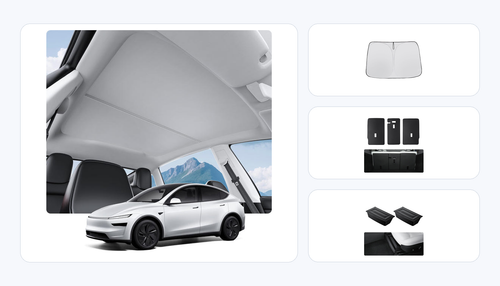
Gear up your Model Y with tested, custom-fit BASENOR accessories — shop Model Y accessories →
Sources & reporting notes
The links below identify the material source records used for this report.
- NHTSA — Primary public record
Source links are preserved as published or accessed. See our editorial standards and corrections policy.
The BASENOR Editorial Desk covers Tesla, SpaceX, and related technology, curating reporting from primary sources — official accounts, regulatory filings, and software release data. Every article passes source-record and fact-checking review before publication. About the newsroom.
This report was curated by the BASENOR Editorial Desk from the sources listed above. Read our editorial standards or email editorial@basenor.com to report an error.