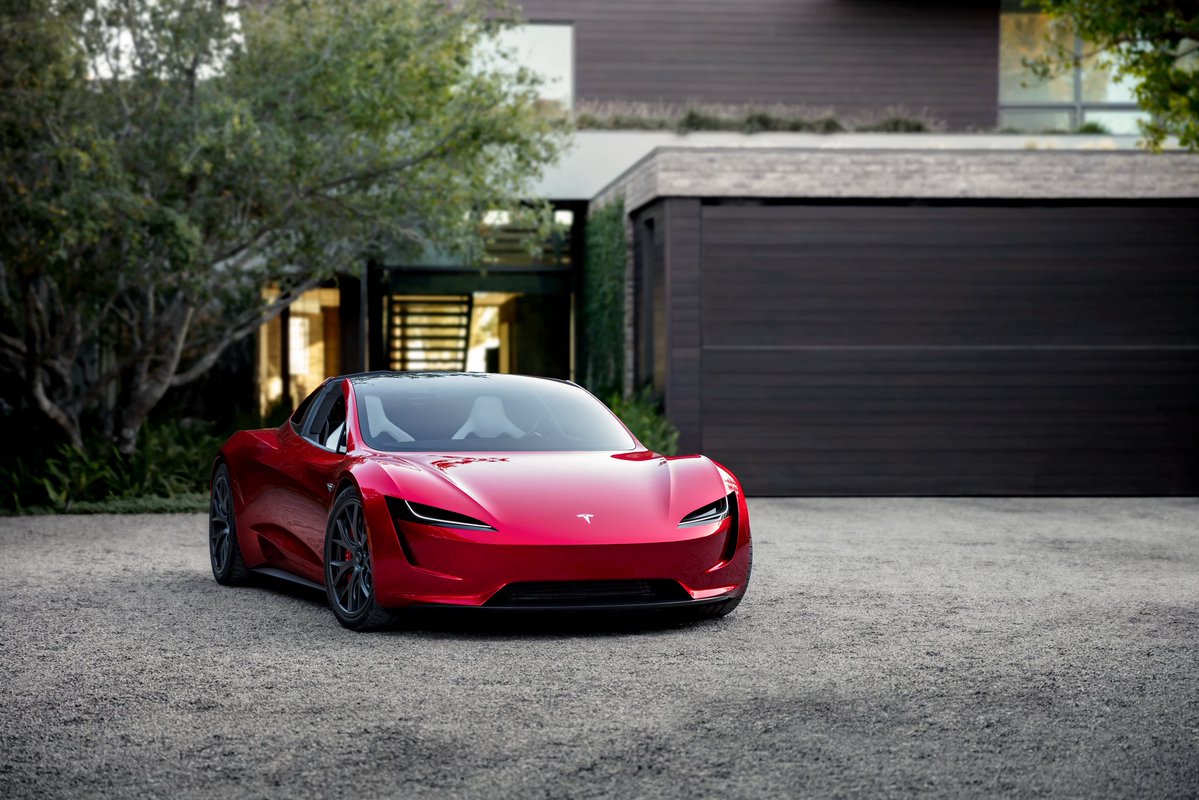
The News: Elon Musk stated that long-term, the new Tesla Roadster will be the only manually driven car in Tesla's lineup.
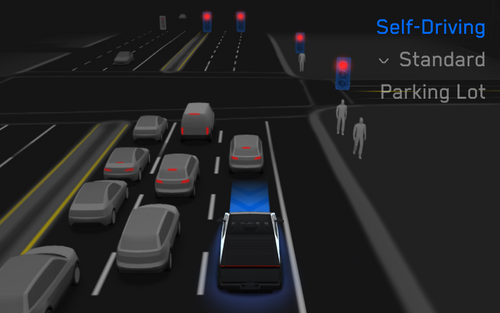
Why It Matters: It's the clearest signal yet that Tesla's entire vehicle portfolio is on a path to full autonomy — and the Roadster is being positioned as the last driver's car by design.
Source: @wholemars on X
Tesla Roadster: Elon Musk's Vision for the Last Manually Driven Car
Elon Musk has never been subtle about where Tesla is headed. But a statement circulating this morning cuts through the noise more sharply than most: "Long term, the only manually driven car will be the new Tesla Roadster." For Tesla owners, that's not just a product tease — it's a roadmap for the entire company's future.

What Musk Actually Said — and What It Signals
The quote is deliberate in its framing. Musk didn't say the Roadster would be the best manually driven car. He said it would be the only one. That's a fundamentally different statement — one that implies every other Tesla model is on a trajectory toward removing the human from the driver's seat entirely.
This aligns with language Musk has used previously, describing the Roadster as "the best of the last of the human-driven cars" — a kind of automotive swan song for the era of manual control. It's a collector's piece framing applied to an entire vehicle category.
For owners of Model 3, Model Y, Model S, Model X, and Cybertruck, the implication is clear: those vehicles are not being designed around the driving experience. They're being engineered toward a future where the car drives itself and the human is a passenger by default.
📊 Key Figures
📊 Tesla Roadster — What We Know
| Metric | Detail |
|---|---|
| Production-Spec Unveil | Late April 2026 |
| Production Start (Est.) | Late 2027 – 2028 |
| Base Price | ~$200,000 |
| Founders Series Price | $250,000+ (1,000 units only) |
| 0–60 mph | Under 2 seconds (claimed) |
| Top Speed | Over 250 mph (claimed) |
| Range | Up to 620 miles (claimed) |
| Battery | 200 kWh (4680 cells) |
| Powertrain | Tri-motor AWD, ~10,000 Nm wheel torque |
| FSD Available | Yes, as optional feature |
The Roadster's Dual Identity: Driver's Car and Autonomy Showcase
Here's the tension that makes the Roadster genuinely interesting: it's being built as the ultimate driver's car — sub-2-second 0–60, 250+ mph top speed, 620-mile range — while simultaneously being offered with Full Self-Driving as an option. Musk has been candid that safety is not the primary design objective for the Roadster, comparing it to a Ferrari in spirit. Yet FSD will still be available for those who want it.
That duality is intentional. The Roadster isn't just a performance statement. It's a cultural artifact — Tesla's acknowledgment that the era of human-driven cars deserves a proper send-off, and that send-off should be spectacular. A sub-2-second supercar with a 200 kWh battery and optional rocket-assisted acceleration (the SpaceX package, which could push 0–60 below one second) is Tesla's way of saying: if you're going to drive manually, do it in something worth remembering.
🔭 The BASENOR Take
Timeline: Roadster unveil targeted for late April 2026. Production expected late 2027 to 2028. Unsupervised FSD for consumer vehicles not expected until Q4 2026 at the earliest, per Musk's Q1 2026 earnings call comments.
Impact Level: High — this is a long-term strategic signal, not a near-term product announcement.
Confidence: High on the vision; moderate on the timeline. Tesla's history with the Roadster specifically includes significant delays, and FSD is still classified as SAE Level 2 ADAS as of today, meaning the driver remains legally responsible for supervising the vehicle.
The practical reality for current Tesla owners is that FSD and Autopilot remain driver-assistance systems — not autonomous driving. Unsupervised FSD is expected to roll out geography by geography starting no earlier than Q4 2026. The vision Musk is describing is years away from being the default experience across the fleet.
But the statement matters because it removes ambiguity about Tesla's direction. Every new vehicle platform, every FSD software update, every Cybercab announcement is pointing toward the same destination: a fleet where human control is the exception, not the rule. The Roadster is being positioned as the deliberate, celebrated exception.
📰 Deep Dive
Musk's framing of the Roadster as the "last" manually driven car is a masterclass in brand positioning. By designating one vehicle as the keeper of the manual-driving flame, Tesla can aggressively pursue full autonomy across the rest of its lineup without alienating the driving-enthusiast segment of its customer base. The Roadster becomes the release valve — the car you buy if you want to feel the road. Everything else becomes transportation.
This also reframes how we should think about the Roadster's price. At $200,000 base and $250,000+ for the Founders Series — with only 1,000 Founders units planned — the Roadster isn't competing with mass-market EVs. It's competing with collector cars, with Ferraris and McLarens, with objects that people buy partly for what they represent. Being the last manually driven Tesla isn't a limitation. It's the entire value proposition.
The harder question is whether "long term" means five years or twenty-five. Regulatory frameworks for fully autonomous vehicles vary enormously by country and state, and the technology itself — while advancing rapidly — is still being validated. As of today, FSD requires active driver supervision and is not approved for unsupervised operation on public roads in most jurisdictions. The path from where Tesla is now to a world where the Roadster is genuinely the only car you can manually drive is long, and the road has plenty of turns in it. But the destination, at least, has never been clearer.

Marcus covers Tesla's software releases, FSD rollouts, and OTA changes. Background in automotive engineering. Based in Austin.
Sources verified at publish time. Spotted an inaccuracy? Email editorial@basenor.com.