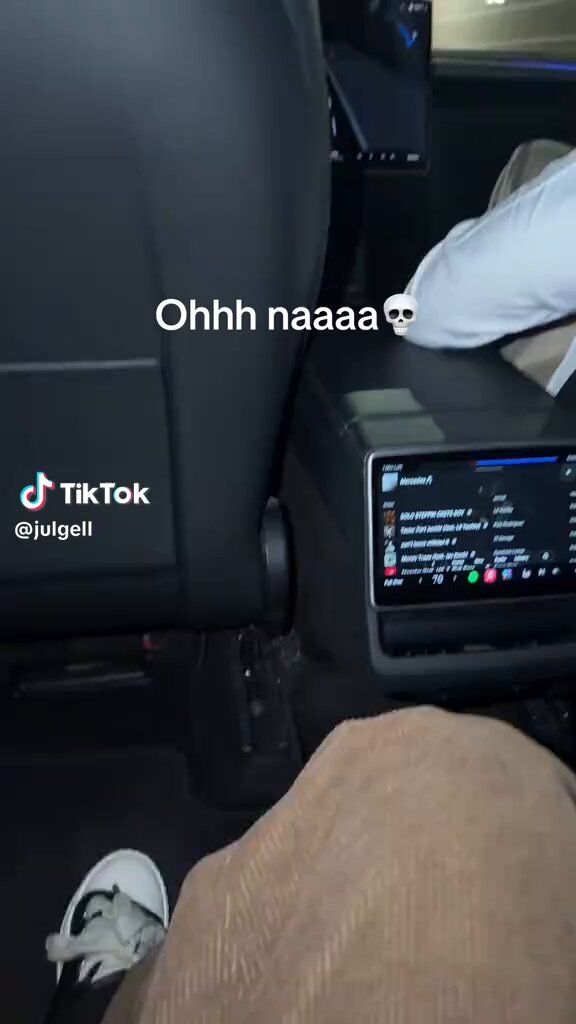
Tesla's Robotaxi system doesn't just drive autonomously — it actively fights back if someone tries to take over. Video shared by Whole Mars Catalog on September 16 shows the Robotaxi resisting manual control attempts on vehicles that still have a steering wheel and pedals, a design choice that reveals just how seriously Tesla is treating the AI's authority over the driving task.

What This Actually Means
The Robotaxi fleet currently operating in Austin includes two distinct vehicle types: purpose-built Cybercabs with no steering wheel or pedals at all, and transitional Model Y units that retain physical controls. For the Cybercab, the question of manual override is moot by design. But for the Model Y Robotaxis, the presence of a wheel and pedals creates a theoretical intervention point — and Tesla has apparently decided to close it off.
The resistance behavior isn't arbitrary. Tesla self-certified its Model Y Robotaxis for SAE Level 4 autonomy in Texas, which by definition means the system is designed to handle all driving tasks within its operational design domain without human backup. Allowing a rider or bystander to seize control mid-trip would undercut that certification and introduce a new category of risk: an untrained, unvetted person suddenly responsible for a vehicle in live traffic.
The Broader Safety Architecture
This isn't Tesla's first step toward assertive AI intervention. According to Teslarati, FSD Supervised version 14.3.9 already includes an "Automatic Collision Evasion" feature that allows the system to activate and take control even when a human driver is manually operating the vehicle — triggering if an imminent frontal collision is detected where braking alone won't suffice, or if driver attention is deemed inadequate.
Tesla AI lead Ashok Elluswamy has also signaled that the upcoming FSD version 15 will push this further, with a focus on "even earlier prediction of hazards, even faster reaction time and overall significantly better safety and collision avoidance" — explicitly designed to allow the driving stack to intervene even during manual operation.
The Robotaxi's control-resistance behavior sits at the far end of this spectrum. Rather than intervening in an emergency, the system is pre-emptively maintaining authority throughout the entire trip. The AI isn't a co-pilot that can be overruled — it's the sole pilot, and the physical controls are effectively inert from a Robotaxi passenger's perspective.
Remote Assistance as the Real Safety Valve
If a passenger can't take manual control, what happens when something goes wrong? Tesla's answer is its network of remote assistance operators (RAOs) — in-house employees who can temporarily assume direct control of a Robotaxi if a rider requests help, if the autonomous system flags an issue, or if a vehicle needs to be moved from a compromised position. This human-in-the-loop redundancy is the designed fallback, not a steering wheel in the back seat.
It's a meaningful architectural distinction. Traditional vehicle safety thinking defaults to "let the human take over." Tesla's Robotaxi architecture inverts that: the AI holds authority, humans provide remote oversight, and physical controls on transitional vehicles exist as a legacy artifact rather than an active safety mechanism.
Regulatory Pressure in the Background
The timing of this footage is notable. NHTSA opened an audit on September 4 — just twelve days before this video surfaced — reviewing approximately 1,000 steering-wheel-free Cybercabs for compliance with federal safety standards that typically mandate manual controls. The agency's concern is essentially the inverse of what the Robotaxi video shows: regulators worry about vehicles that lack controls entirely, while Tesla is now demonstrating that even vehicles with controls have neutralized them for Robotaxi operation.
Both situations point to the same underlying tension: federal vehicle safety regulations were written for human drivers, and Tesla's Robotaxi program is operating in a space those rules didn't anticipate. How NHTSA ultimately frames its audit findings — and whether it extends scrutiny to the control-resistance behavior on Model Y Robotaxis — will be worth watching closely as the Austin fleet scales.
🚕 Following the Robotaxi rollout? See every operating city, launch date and announced market in our Tesla Robotaxi Tracker.
Related Gear
Gear up your Tesla with tested, custom-fit BASENOR accessories — shop Tesla accessories →
Sources & reporting notes
The links below identify the material source records used for this report.
- @wholemars on X (2026-09-16T23:30:39.000Z) — Direct source
Source links are preserved as published or accessed. See our editorial standards and corrections policy.
The BASENOR Editorial Desk covers Tesla, SpaceX, and related technology, curating reporting from primary sources — official accounts, regulatory filings, and software release data. Every article passes source-record and fact-checking review before publication. About the newsroom.
This report was curated by the BASENOR Editorial Desk from the sources listed above. Read our editorial standards or email editorial@basenor.com to report an error.