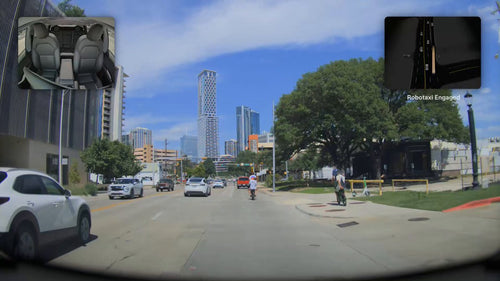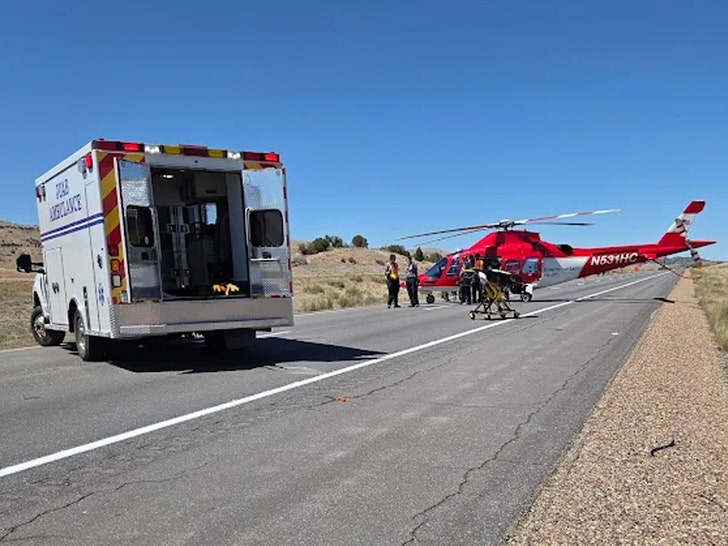
Another fatal crash. Another moment where Tesla's Self-Driving technology, had it been active, might have changed the outcome. That's the argument Whole Mars Catalog made on X this week — and it's one that keeps coming up with uncomfortable regularity. If you own a Tesla capable of running FSD, here's what the current safety evidence actually shows, and what you should be doing behind the wheel.

What the Safety Data Actually Says
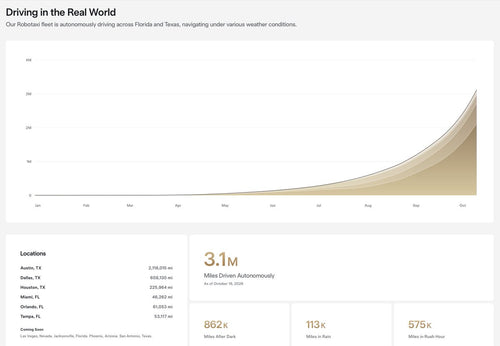
Tesla's Q3 2025 Vehicle Safety Report found that vehicles using Autopilot technology recorded one accident for every significantly higher number of miles driven compared to the national average for human-only driving. The pattern has held across multiple quarters: when the system is engaged and conditions are within its operational design domain, Tesla's active safety stack — automatic emergency braking, lane departure intervention, and FSD's predictive path planning — catches a meaningful share of the scenarios that kill people on roads every day.
That doesn't mean FSD is infallible. It means the aggregate data consistently points in one direction: miles driven with the system active tend to be safer than miles driven without it. The tragedy in posts like this week's is the gap between what the technology can do and how consistently owners actually use it.
Action Plan: Getting the Most from Your Tesla's Safety Systems
If you own a Tesla with Autopilot or FSD capability, these are the concrete steps worth taking today — not eventually.
1. Confirm your FSD subscription or purchase status
Go to Controls → Autopilot on your touchscreen. If you see "Full Self-Driving (Supervised)" listed, you have access. If not, check your Tesla account online — Tesla has periodically offered trial periods that may be available to your VIN. Knowing what you have is step one.
2. Enable Autopilot on every eligible highway mile
The system can only help you if it's on. For highway driving, engaging Traffic-Aware Cruise Control and Autosteer is a low-effort habit that puts Tesla's collision avoidance stack in an active state. Pull down the right stalk twice (or use the touchscreen shortcut if you've set one) at the start of any sustained highway segment.
3. Check your safety feature settings haven't been disabled
Navigate to Controls → Autopilot and scroll through the list. Confirm these are toggled ON:
- Forward Collision Warning — set to Early for maximum reaction time
- Automatic Emergency Braking — should be on by default; verify it hasn't been turned off
- Blind Spot Collision Warning Chime — audible alerts matter during lane changes
- Lane Departure Avoidance — set to Assist, not just Warning
4. Keep your profile's FSD behavior calibrated
Under Controls → Autopilot → Autopilot Comfort, the "Profile" setting (Chill / Average / Assertive) affects following distance and lane-change aggressiveness. For safety-first use, Average or Chill gives the system more buffer to react. Assertive mode is not a safety optimization.
5. Stay engaged — supervised means supervised
FSD is still classified as a supervised system. Tesla requires hands on the wheel and eyes on the road. The system will intervene in many dangerous scenarios, but it is not designed to operate without an attentive driver ready to take over. Treating it as a hands-free system defeats its safety value and creates new risks. When a warning chime sounds, respond immediately.
6. Report near-misses through the app
If FSD or Autopilot catches something — a car running a red light, a sudden cut-in — you can submit feedback directly from the Tesla app or by pressing the right scroll wheel button during or immediately after the event. These reports feed Tesla's training pipeline. Using the feedback mechanism is a small action that contributes to the broader improvement of the system for everyone.
The Bigger Picture
Posts like this week's from Whole Mars Catalog are uncomfortable because they force a specific question: if the technology exists to prevent a death, and the car was capable of running it, was it running? That question doesn't have a clean answer from the outside. But it's a useful one for every Tesla owner to sit with. The safety case for autonomous driving systems isn't theoretical — it shows up in the quarterly data. The gap between potential and actual safety benefit closes only when owners actively engage the tools they already have. For more on how Tesla's driver assistance systems work and what's changed across recent updates, see our FSD coverage.
Related Gear
Gear up your Tesla with tested, custom-fit BASENOR accessories — shop Tesla accessories →
Sources & reporting notes
The links below identify the material source records used for this report.
- @wholemars on X (2026-10-21T17:02:50.000Z) — Direct source
Source links are preserved as published or accessed. See our editorial standards and corrections policy.
The BASENOR Editorial Desk covers Tesla, SpaceX, and related technology, curating reporting from primary sources — official accounts, regulatory filings, and software release data. Every article passes source-record and fact-checking review before publication. About the newsroom.
This report was curated by the BASENOR Editorial Desk from the sources listed above. Read our editorial standards or email editorial@basenor.com to report an error.