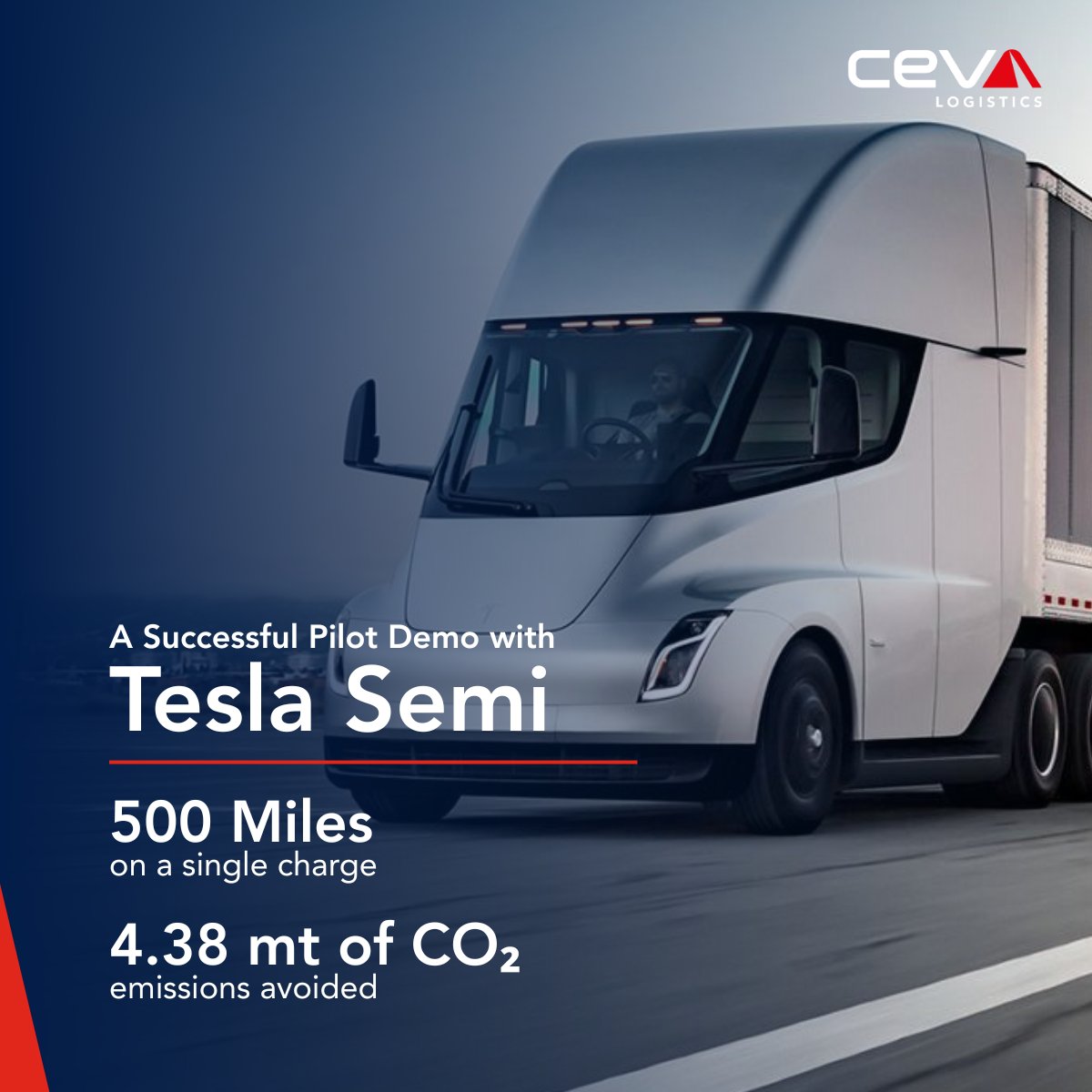
The News: CEVA Logistics completed a three-week Tesla Semi pilot across the U.S. West Coast, avoiding an estimated 4.38 metric tons of CO₂ compared to a diesel equivalent.
Why It Matters: This is one of the most detailed real-world Tesla Semi case studies published by a major logistics operator — and the numbers make a compelling case for fleet electrification.
Source: @SawyerMerritt on X
Tesla Semi Cuts 4.38 Metric Tons of CO₂ in CEVA Logistics West Coast Trial
The Tesla Semi just got its most credible real-world endorsement yet. CEVA Logistics — one of the world's largest third-party logistics providers — has completed a three-week pilot of the Tesla Semi across the U.S. West Coast, and the environmental data is striking: an estimated 4.38 metric tons (9,656 lbs.) of CO₂ avoided compared to running a conventional diesel truck over the same period.

📊 Key Figures
| Metric | Value | Context |
|---|---|---|
| Trial Duration | 3 weeks | U.S. West Coast routes |
| CO₂ Avoided (Trial) | 4.38 metric tons | 9,656 lbs. vs. diesel |
| Projected Annual CO₂ Reduction | ~76.9 metric tons | 169,536 lbs. per truck/year |
| Tesla Semi Range | Up to 500 miles | Single charge, Class 8 |
| Official Announcement | March 9, 2026 | Published by CEVA Logistics |
What CEVA Actually Learned
Beyond the headline CO₂ number, CEVA's operations teams came away with something arguably more valuable: a practical playbook for integrating electric Class 8 trucks into an existing logistics workflow. The pilot generated real-world insights on charge planning, dwell-time management, and real-time range optimization — the unglamorous but critical operational details that determine whether a fleet electrification program succeeds or stalls.
Charging was integrated directly into CEVA's daily workflow using Tesla's high-power charging infrastructure, with the company reporting reliable turnaround times. That's a meaningful signal for logistics operators who have historically cited charging downtime as a barrier to adoption.
The Tesla Semi used in the trial is the long-range variant — an all-electric Class 8 truck rated for up to 500 miles per charge. For context, that range covers the majority of U.S. regional freight corridors without a mid-route charge stop.
🔭 The BASENOR Take
Timeline: Pilot completed; official results published March 9, 2026.
Impact Level: 🟡 Medium-High — Significant for Tesla Semi commercial adoption momentum.
Confidence: High — Data published directly by CEVA Logistics, a publicly accountable enterprise operator.
The CEVA trial matters for a specific reason: it isn't a Tesla-produced marketing case study. It's an independent enterprise logistics operator publishing its own operational data. That distinction carries weight with fleet procurement teams who are skeptical of manufacturer-supplied performance claims.
The projected annual figure is the number worth watching. If a single Tesla Semi running CEVA's West Coast routes can avoid roughly 76.9 metric tons of CO₂ per year, a fleet of 50 trucks would represent a reduction of nearly 3,850 metric tons annually — the kind of number that moves the needle on corporate sustainability reporting and, increasingly, on regulatory compliance costs.
For Tesla, this is exactly the type of third-party validation the Semi program needs as it scales production. Early adopters like PepsiCo provided initial proof-of-concept data, but enterprise logistics partnerships with operators like CEVA — who run diverse, high-utilization routes — build the commercial credibility that drives broader fleet orders.
📰 Deep Dive
The Tesla Semi has been in limited commercial deployment since late 2022, with production ramping at Tesla's Gigafactory Nevada. The CEVA pilot represents the kind of structured, documented real-world trial that fleet operators need before committing to large-scale electrification — and the three-week duration, while short, was long enough to generate meaningful operational data across varied West Coast routes.
What stands out in CEVA's findings is the seamless charging integration. One of the persistent concerns among fleet managers considering electric Class 8 trucks is whether charging infrastructure can realistically fit into existing depot operations without disrupting turnaround schedules. CEVA's report suggests Tesla's high-power charging setup cleared that bar — at least for the routes and operational patterns tested during the pilot.
The 4.38 metric ton CO₂ reduction over three weeks also has a regulatory dimension worth noting. As carbon reporting requirements tighten for large logistics operators — particularly in California, where many West Coast routes originate — documented emissions reductions from electric fleets become balance-sheet items, not just PR talking points. The ability to quantify avoided emissions per truck, per route, per week gives fleet operators a tool for compliance reporting that diesel alternatives simply cannot match.
Whether CEVA moves toward a broader Tesla Semi deployment following this pilot hasn't been announced. But the fact that they published detailed results — rather than quietly returning the truck — suggests the operational experience was positive enough to share publicly. That's the kind of quiet endorsement that tends to accelerate conversations in enterprise procurement.
Related Gear
Gear up your Tesla with tested, custom-fit BASENOR accessories — shop Tesla accessories →
Sources & reporting notes
The links below identify the material source records used for this report.
- @SawyerMerritt on X (2026-03-11T21:50:06.000Z) — Direct source
Source links are preserved as published or accessed. See our editorial standards and corrections policy.
The BASENOR Editorial Desk covers Tesla, SpaceX, and related technology, curating reporting from primary sources — official accounts, regulatory filings, and software release data. Every article passes source-record and fact-checking review before publication. About the newsroom.
This report was curated by the BASENOR Editorial Desk from the sources listed above. Read our editorial standards or email editorial@basenor.com to report an error.