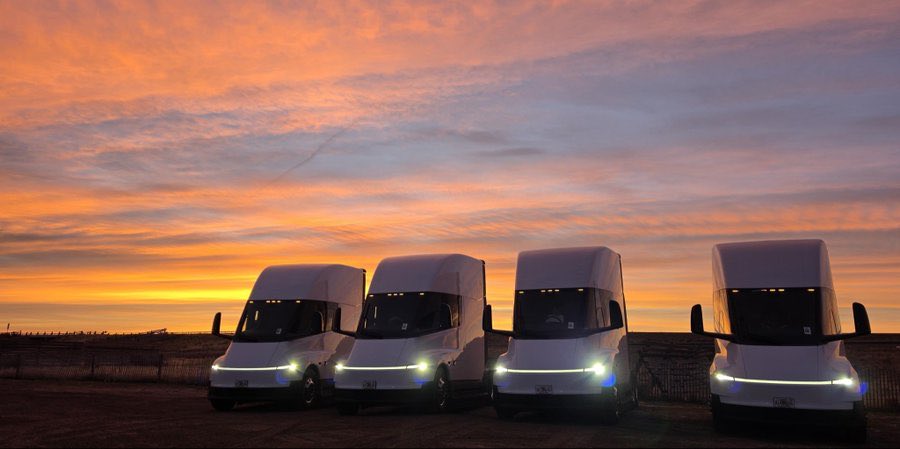
Tesla is preparing to hand over its first batch of 50 Semi trucks to a Chicago-based carrier, a delivery that marks the clearest signal yet that the company's dedicated Nevada Semi factory is moving from startup mode into genuine volume production. The order, worth roughly $15 million, is headed to HMD Trucking — and it arrives less than two months after Tesla officially launched high-volume Semi production in September 2026.

The Customer and the Deal
HMD Trucking, a carrier based in the Chicago area, received its first Tesla Semi on November 2 — making it the first registered Semi operator in Illinois. The 50-truck order is valued at approximately $15 million, or roughly $300,000 per unit, according to reporting from multiple industry sources. That per-truck figure sits above the Long Range Semi's estimated list price of around $290,000, which likely reflects options, charging infrastructure agreements, or delivery logistics built into the contract.
For context, a single 50-truck fleet order is not a pilot program. It is a commercial commitment. HMD Trucking is betting real capital on the Semi's ability to perform in daily long-haul operations — and Tesla's reported year-to-date Semi uptime of over 98% in 2026 is presumably part of what closed that deal.

What the Nevada Factory Actually Represents
Tesla's Semi factory in Nevada is not a converted corner of Gigafactory Nevada — it is a purpose-built facility spanning between 1.7 and 1.8 million square feet, designed from the ground up for Class 8 electric truck production. The stated annual capacity is up to 50,000 units. High-volume production officially began in September 2026, meaning this 50-truck Chicago delivery comes roughly eight weeks into that ramp.
The refreshed Semi that rolls off that line is a meaningfully different product from the prototype-era trucks that began limited deliveries to Pepsi in late 2022. The drivetrain borrows technology from the Cybertruck, the battery pack uses 4680 cells, and a next-generation heat pump handles thermal management. Range figures are 500 miles for the Long Range variant and 325 miles for the Standard Range model — both rated at a full 82,000-pound gross combination weight, which is the number that actually matters for commercial freight operators. Energy consumption is estimated at 1.7 kWh per mile.
Charging infrastructure has kept pace. Megachargers now support up to 1.2 MW, recovering roughly 60% of the Semi's range in 30 minutes. That kind of charge speed is what makes a 500-mile range practically useful on a freight route rather than just impressive on a spec sheet.
Key Numbers at a Glance
| Metric | Value |
|---|---|
| Chicago delivery batch size | 50 trucks |
| Order value | ~$15 million |
| Per-truck price (this order) | ~$300,000 |
| Long Range list price (est.) | ~$290,000 |
| Standard Range list price (est.) | ~$260,000 |
| Long Range (at 82,000 lbs GCW) | 500 miles |
| Standard Range (at 82,000 lbs GCW) | 325 miles |
| Energy consumption | 1.7 kWh/mile |
| Megacharger peak output | 1.2 MW |
| Nevada factory capacity (annual) | up to 50,000 units |
| 2026 YTD Semi uptime | >98% |
Infrastructure Following the Trucks
A fleet of 50 trucks in Chicago is only as useful as the service network behind it. On that front, Tesla is opening its first dedicated Semi Service Center in Laredo, Texas on November 12 — one day after this delivery announcement. The Laredo facility is currently undergoing a $1 million renovation, with a larger buildout expected to complete by December 2027. Laredo is a natural anchor point: it sits on one of the busiest U.S.-Mexico freight corridors in the country, making it a logical first location for a dedicated heavy-truck service hub.
The sequencing here — factory ramp in September, 50-truck fleet delivery in November, dedicated service center opening in November — suggests Tesla is executing a coordinated commercial rollout rather than delivering trucks and hoping the support infrastructure catches up later. Whether that pace holds as order volumes grow toward the factory's 50,000-unit ceiling is the question the next few quarters will answer.
Related Gear
Gear up your Tesla with tested, custom-fit BASENOR accessories — shop Tesla accessories →
Sources & reporting notes
The links below identify the material source records used for this report.
- @TeslaNewswire on X (2026-11-11T18:41:21.000Z) — Direct source
Source links are preserved as published or accessed. See our editorial standards and corrections policy.
The BASENOR Editorial Desk covers Tesla, SpaceX, and related technology, curating reporting from primary sources — official accounts, regulatory filings, and software release data. Every article passes source-record and fact-checking review before publication. About the newsroom.
This report was curated by the BASENOR Editorial Desk from the sources listed above. Read our editorial standards or email editorial@basenor.com to report an error.