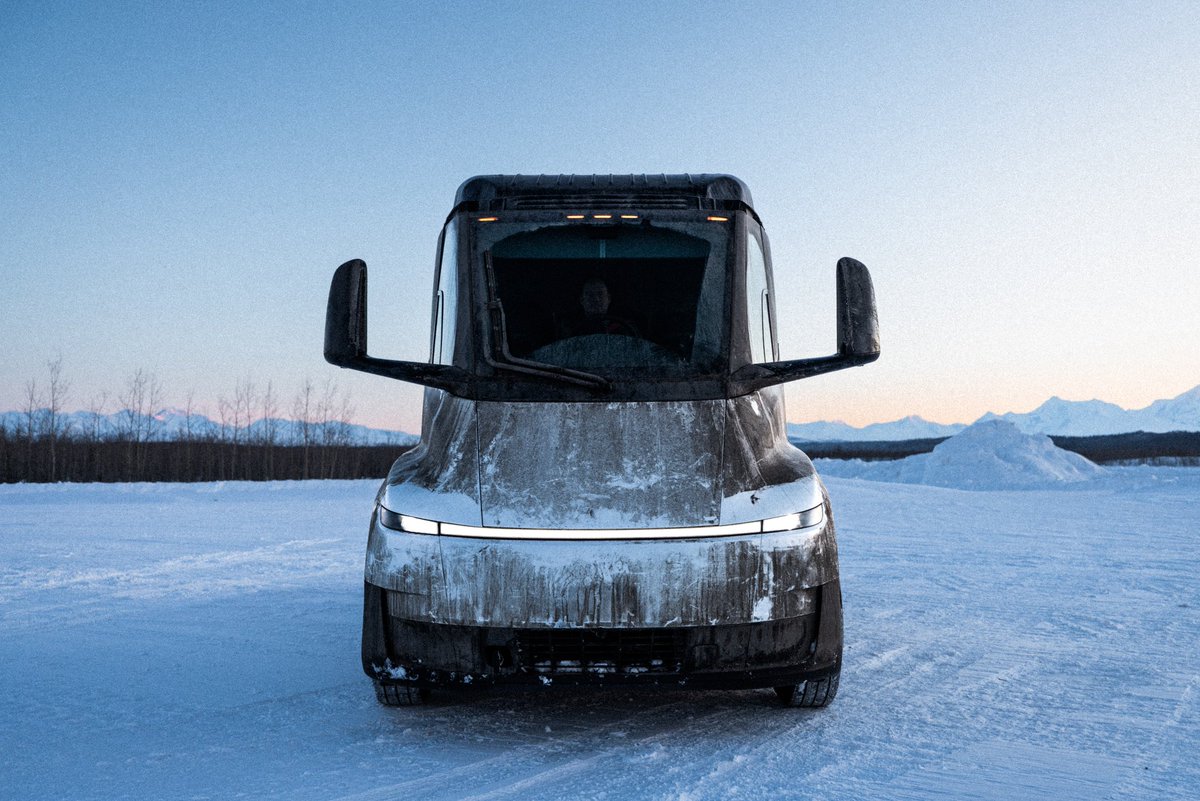
The News: Elon Musk posted a pointed reminder that Tesla has a Semi — with a winking emoji and a link — signaling renewed momentum around the truck as its dedicated Nevada factory enters mass production.
Why It Matters: The Tesla Semi is no longer a concept or a limited pilot. High-volume production is launching in 2026, with up to 50,000 units annually targeted once fully ramped. This is a major new revenue stream for Tesla and a direct challenge to the commercial trucking industry.
Source: @elonmusk on X
Elon's Two-Word Signal — And Why It Matters Now
When Elon Musk posts four words and a winking emoji, it's rarely random. "Tesla has a Semi 😉" dropped at 2 AM UTC on March 7, 2026 — and given the timing, it reads as a deliberate nudge toward what's happening on the ground in Nevada right now.

The post racked up over 34,000 likes and 3.2 million views within hours. That's not organic engagement on a throwaway comment — that's the market paying attention. And it should be. According to verified reports, the dedicated Tesla Semi factory adjacent to Gigafactory Nevada began mass production in March 2026, with full-scale ramp expected before the end of June.
📊 Key Figures
| Metric | Value | Context |
|---|---|---|
| Annual Production Target | 50,000 units | Once fully ramped |
| Mass Production Start | March 2026 | Full ramp by end of June 2026 |
| Standard Range Price | $250,000 | Before destination & taxes |
| Long Range Price | $290,000 | Before destination & taxes |
| Drive Power | 800 kW (~1,072 hp) | 3 independent rear motors |
| Energy Consumption | 1.7 kWh/mile | At max GCW of 82,000 lbs |
| First Customer Deliveries | December 2022 | Limited pilot with PepsiCo |
| Europe Availability | 2027 (expected) | Per Elon Musk |
From Pilot to Production: The Semi's Long Road
The Tesla Semi's journey has been anything but straightforward. First unveiled in 2017, it spent years in development limbo before limited deliveries to PepsiCo kicked off in December 2022. Those early trucks served as real-world validation — proving out the powertrain, the charging infrastructure, and the operational economics of running an 82,000-lb Class 8 electric truck on commercial routes.
Now, with a dedicated factory in Nevada coming online and Hight Logistics among the first to take delivery of a new Semi in March 2026, the program is crossing the threshold from pilot to genuine product line. The 50,000-unit annual target, once it's reached, would make Tesla a significant player in the North American commercial trucking market.
🔭 The BASENOR Take
| Timeline | Mass production now. Full ramp by June 2026. Europe in 2027. |
| Impact Level | 🔴 High — New revenue category for Tesla; major shift in commercial EV adoption |
| Confidence | High — Factory is operational, first deliveries confirmed in March 2026 |
Elon's tweet is casual, but the subtext is pointed. The Semi has faced years of skepticism — delays, production questions, charging infrastructure doubts. By posting a simple reminder that "Tesla has a Semi" right as the Nevada factory begins mass production, Musk is doing two things at once: signaling to the market that the program is real and moving, and reminding fleet operators who've been sitting on the fence that the window to order is opening.
The Semi also matters beyond its own revenue line. It validates Tesla's megawatt charging infrastructure buildout, demonstrates the scalability of Tesla's in-house powertrain engineering at commercial vehicle scale, and positions the company in a segment — Class 8 trucking — that moves an enormous share of North American freight. At $250,000–$290,000 per unit, even modest volume represents significant revenue.
For Tesla owners watching the company's broader trajectory, the Semi ramp is a meaningful signal: Tesla's product pipeline is executing. Cybertruck, Semi, and whatever comes next are no longer vaporware — they're production vehicles.
📰 Deep Dive
The timing of Musk's post deserves attention. It arrived in the early hours of March 7 — the same month the Nevada Semi factory reportedly began mass production. This isn't a coincidence. Tesla has historically used Elon's social media presence as a low-cost, high-reach communication channel, and a post like this, brief and playful as it is, functions as a soft launch announcement to 3+ million viewers in a single post.
What's technically notable about the Semi is the powertrain architecture. Three independent motors on the rear axles delivering up to 800 kW — roughly 1,072 horsepower — at a gross combination weight of 82,000 lbs. The 1.7 kWh/mile energy consumption figure, if it holds at scale in commercial operation, represents a compelling total cost of ownership argument for fleet operators when stacked against diesel fuel costs. Fleet economics, not sticker price, will drive Semi adoption — and Tesla appears to understand that.
The Europe timeline (2027, per Musk) also signals that Tesla is thinking about the Semi as a global product, not a North American niche. European commercial trucking operates under different regulatory frameworks and charging infrastructure realities, so a 2027 target gives Tesla time to validate the Nevada production model before tackling that complexity.
For the broader EV industry, the Semi's ramp is a proof point that electric powertrains can scale beyond passenger cars into heavy commercial applications. If Tesla hits anywhere near its 50,000-unit annual target, it will have demonstrated something the trucking industry has been watching closely: that battery-electric Class 8 trucks can be manufactured at volume, not just as engineering showcases.
Related Gear
Gear up your Tesla with tested, custom-fit BASENOR accessories — shop Tesla accessories →
Sources & reporting notes
The links below identify the material source records used for this report.
- @elonmusk on X (2026-03-07T02:01:51.000Z) — Direct source
Source links are preserved as published or accessed. See our editorial standards and corrections policy.
The BASENOR Editorial Desk covers Tesla, SpaceX, and related technology, curating reporting from primary sources — official accounts, regulatory filings, and software release data. Every article passes source-record and fact-checking review before publication. About the newsroom.
This report was curated by the BASENOR Editorial Desk from the sources listed above. Read our editorial standards or email editorial@basenor.com to report an error.