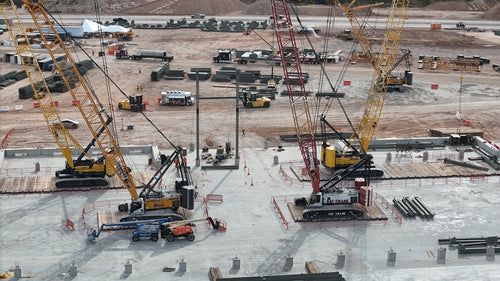
The News: Tesla's redesigned Semi is undergoing cold-weather testing in Alaska, while a brand-new Megacharger station has opened in Carson, Southern California.
Why It Matters: Both developments confirm Tesla is on track for volume Semi production in 2026 — the truck is being hardened for real-world conditions and the charging network it needs is already going live.
Sources: @SawyerMerritt · @wholemars
Redesigned Tesla Semi Is Being Pushed to Its Limits in Alaska
Cold-weather validation is one of the most demanding phases of any vehicle program — and the redesigned Tesla Semi is going through it right now in Alaska. Sawyer Merritt shared photos of the updated truck in testing, confirming that development is well into its final stages.

The redesigned Semi features a significantly updated front end — a horizontal light bar integrates the headlights, the frunk lid is flatter, and the bumper has been reshaped. The aesthetic direction clearly echoes the Model Y Juniper and the Cybercab, giving the Semi a more cohesive look within Tesla's current design language.
But this isn't just a cosmetic refresh. According to verified specs, the updated Semi will be built around 4680 battery cells and comes in two configurations:
📊 Tesla Semi — Confirmed Specifications
| Spec | Standard Range | Long Range |
|---|---|---|
| Range | 325 miles | 500 miles |
| Curb Weight | <20,000 lbs | ~23,000 lbs |
| Max Power | 1,070 hp | — |
| Charging Speed | 1.2 MW (60% in ~30 min) | 1.2 MW |
| GCWR | 82,000 lbs | 82,000 lbs |
| Battery Cells | 4680 | 4680 |
Volume production is targeted to begin at Giga Nevada in 2026, with Tesla aiming for 50,000 units per year in the second half of the year. Alaska winter testing at this stage suggests the program is on schedule — cold-weather validation typically happens in the final pre-production phase before a vehicle is cleared for mass manufacturing.
First Southern California Megacharger Is Now Live
Simultaneously, Whole Mars Catalog confirmed that a Megacharger station has officially opened in Carson, California — strategically positioned near the 405 and 110 freeways and within striking distance of the Port of Long Beach, one of the busiest freight hubs in North America.

The Carson station features up to 12 stalls, each capable of delivering up to 1.2 MW — the power level the Semi needs to add 60% range in roughly 30 minutes. That's not a convenience feature; for commercial freight operators, that turnaround time is the difference between a viable route and a non-starter.
🔌 U.S. Megacharger Network — Expansion Snapshot
Beyond dedicated Megacharger depots, Tesla is also rolling out Semi chargers at select Pilot Travel Centers across California, Georgia, Nevada, New Mexico, and Texas — construction is scheduled to begin in H1 2026, with first stations expected open by summer 2026. Each Pilot site will host 4–8 stalls at the same 1.2 MW output.
🔭 The BASENOR Take
| Timeline | Volume production H2 2026 at Giga Nevada; 50,000 units/year target |
| Impact Level | 🟠 High — commercial freight industry, Tesla's energy/transport strategy |
| Confidence | 🟢 High — cold-weather testing and Megacharger opening are confirmed, on-the-ground events |
Two things happening on the same day — Alaska testing photos and a Megacharger going live in SoCal — is not a coincidence. Tesla is deliberately building the infrastructure and hardening the vehicle in parallel, which is the only way to hit a credible H2 2026 volume production date.
The Carson location is a deliberate statement. The Port of Long Beach handles roughly 40% of all U.S. container imports. Placing the first Southern California Megacharger within easy reach of that hub sends a direct signal to fleet operators: the routes that matter most are being covered first. A Semi running a drayage loop between the port and a regional distribution center is exactly the use case Tesla has always described as the commercial sweet spot — predictable mileage, return-to-base charging, no range anxiety.
The Alaska testing adds another layer of confidence. Cold weather is the harshest environment for battery-electric powertrains — it stresses thermal management, regenerative braking, range estimates, and charging behavior simultaneously. Completing this phase successfully is a prerequisite for fleet customers operating in northern states and Canada. The fact that the redesigned Semi — with its updated fascia, 4680 cells, and FSD-ready architecture — is being put through this now suggests Tesla is not cutting corners on validation despite the aggressive production timeline.
For fleet operators watching from the sidelines: the window for early-mover advantage is narrowing. With 37 Megacharger sites targeted for 2026 and Pilot Travel Center stalls coming online by summer, the infrastructure argument against ordering is getting weaker by the month.
Related Gear
Gear up your Tesla with tested, custom-fit BASENOR accessories — shop Tesla accessories →
Sources & reporting notes
The links below identify the material source records used for this report.
- @SawyerMerritt on X (2026-03-08T02:02:28.000Z) — Direct source
- @wholemars on X (2026-03-08T02:04:23.000Z) — Direct source
Source links are preserved as published or accessed. See our editorial standards and corrections policy.
The BASENOR Editorial Desk covers Tesla, SpaceX, and related technology, curating reporting from primary sources — official accounts, regulatory filings, and software release data. Every article passes source-record and fact-checking review before publication. About the newsroom.
This report was curated by the BASENOR Editorial Desk from the sources listed above. Read our editorial standards or email editorial@basenor.com to report an error.