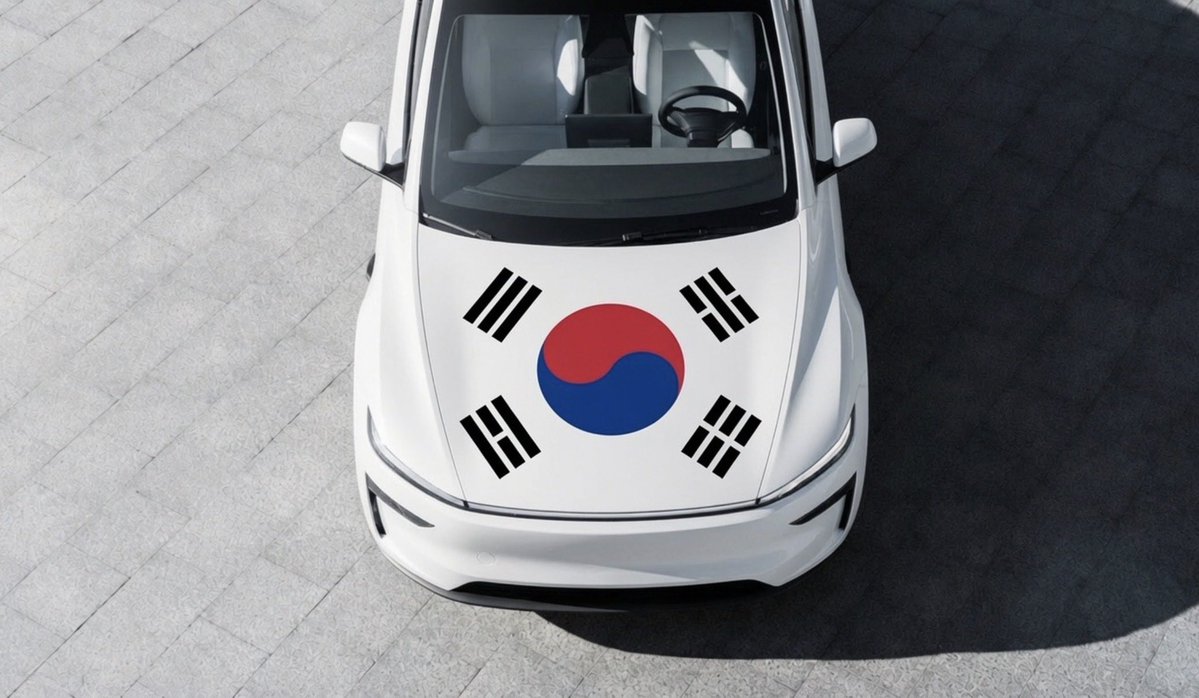
Tesla's South Korea operation just posted its strongest July on record. With 10,237 deliveries last month, a 39% year-over-year jump, and cumulative 2026 sales already up 150% versus the same period last year, the numbers tell a story of a brand that has moved from niche import to market fixture in one of Asia's most competitive auto markets. Here's what the data actually shows.

1. 10,237 — Best July in Tesla Korea History
Tesla delivered 10,237 vehicles in South Korea in July 2026, making it the brand's highest July sales figure ever in the market. That's not a marginal improvement — it's a record that lands in the context of Tesla having now exceeded 10,000 monthly deliveries for five consecutive months, a streak that began in March 2026. Sustaining that kind of volume through the summer, traditionally a softer period for auto sales, signals structural demand rather than a one-time incentive spike.
2. 39.1% — Year-Over-Year Growth Rate
Compared to July 2025, Tesla's Korean deliveries grew 39.1%. For context, the overall imported passenger car market in South Korea grew 14.3% year-over-year in July, according to market data. Tesla's growth rate ran nearly three times faster than the broader import segment, meaning it didn't just ride a rising tide — it took share. That gap is the clearest single indicator of competitive momentum in the market.
3. 33.1% — Tesla's Share of All Imported Cars Sold
Of the 30,976 imported passenger cars registered in South Korea in July, Tesla accounted for 33.1%. One in three imported cars sold in Korea last month was a Tesla. That's a market concentration figure that would be remarkable in any country, let alone one where German luxury brands have historically dominated import sales. It also means Tesla's performance is now large enough to materially move the overall import market statistics.
4. 8,705 — Model Y Units, the Top-Selling Car in Korea
The Model Y didn't just lead the imported segment — it was the top-selling passenger car in South Korea in July, period, beating both imported and domestic models. Of the 8,705 units delivered, 6,612 were the Model Y Premium and 2,092 were the Model Y Premium Long Range, according to market registration data. That breakdown suggests buyers are skewing toward the standard variant, likely reflecting price sensitivity, though the Long Range trim still moved meaningful volume.
5. 6 — Consecutive Months as the Top Imported Brand
July marked Tesla's sixth straight month as the bestselling imported passenger car brand in South Korea. Streaks like this matter because they reflect consistent supply, consistent demand, and an absence of major disruption — no recall crisis, no delivery delays, no pricing misstep significant enough to break the run. Six months is long enough to call it a pattern rather than a lucky quarter.
6. 66,376 — Year-to-Date Deliveries, Up 149.8%
Through the first seven months of 2026, Tesla has delivered 66,376 vehicles in South Korea — nearly 2.5 times the volume it moved over the same period in 2025. That cumulative figure puts Tesla on pace for a record full-year result in the market. The Model 3 contributed 10,392 units to that YTD total, ranking fourth among all imported models, while Model Y's dominance carried the bulk of the volume.

South Korea is increasingly looking like one of Tesla's most reliable growth markets outside the United States and China. The combination of a sustained 10,000-unit monthly floor, a dominant Model Y, and a market share figure above 33% of all imports suggests the brand has reached a level of penetration that's difficult to dislodge quickly. Whether Tesla can maintain this trajectory through the second half of 2026 — and whether any competitor can close the gap — will be worth watching when August numbers land.
Related Gear
Gear up your Model Y with tested, custom-fit BASENOR accessories — shop Model Y accessories →
Sources & reporting notes
The links below identify the material source records used for this report.
- @TeslaNewswire on X (2026-08-05T06:02:44.000Z) — Direct source
Source links are preserved as published or accessed. See our editorial standards and corrections policy.
The BASENOR Editorial Desk covers Tesla, SpaceX, and related technology, curating reporting from primary sources — official accounts, regulatory filings, and software release data. Every article passes source-record and fact-checking review before publication. About the newsroom.
This report was curated by the BASENOR Editorial Desk from the sources listed above. Read our editorial standards or email editorial@basenor.com to report an error.