
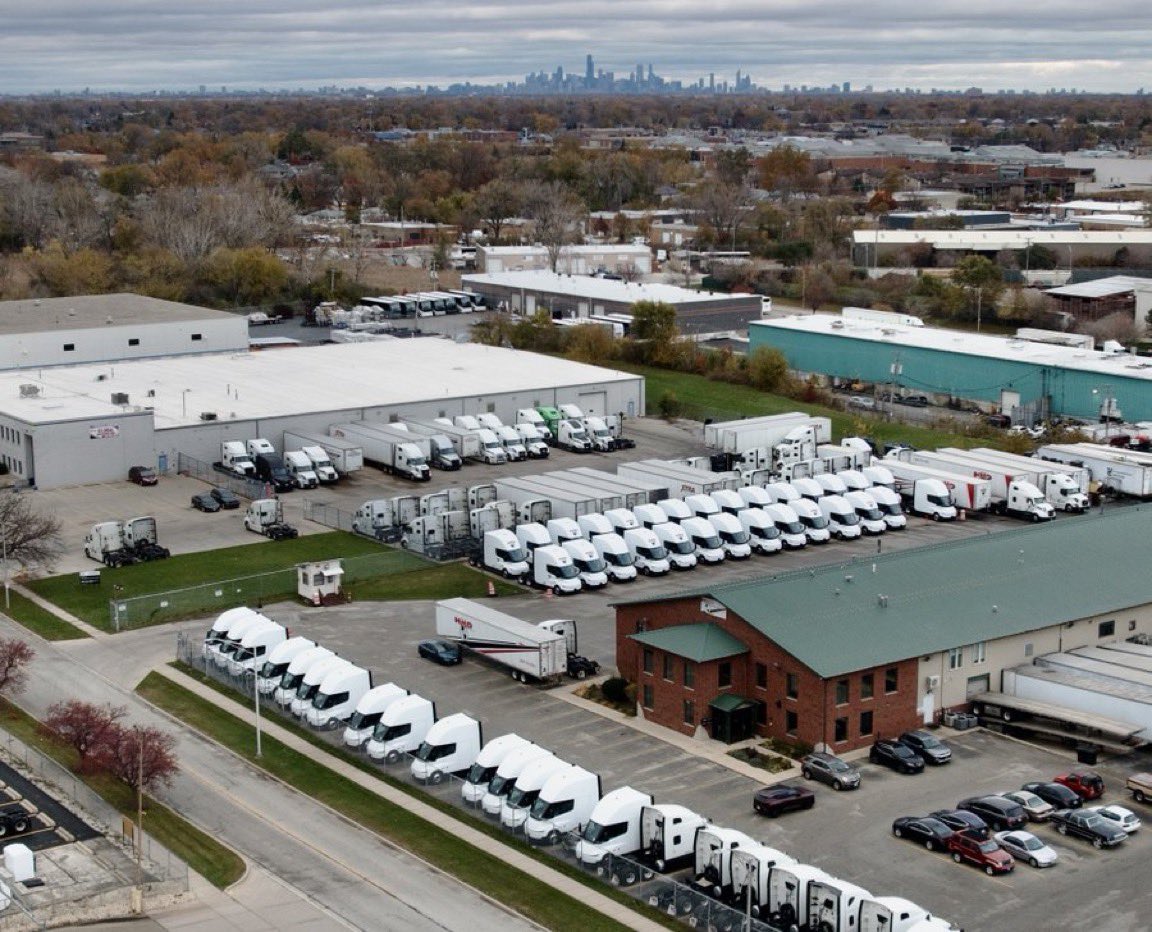
Fifty Tesla Semis ordered by HMD Trucking have completed their journey from Tesla's Nevada factory to Chicago, Illinois — marking one of the largest single-fleet deployments of electric Class 8 trucks in the U.S. to date. The arrival caps a months-long process that began with a summer road test, ran through a September order, and ended with a full batch delivery by November 18. Here's what the numbers and logistics behind this deal actually reveal.

1. The Order Moved Fast — From Signature to Delivery in Under Two Months
HMD Trucking placed its order for 50 Tesla Semis in September 2026. The first truck arrived on November 2, becoming the first Tesla Semi registered in the state of Illinois. The full batch of 50 was confirmed delivered by November 18 — a roughly six-week turnaround from order to complete fleet delivery. That pace reflects the ramp-up underway at Tesla's dedicated Semi factory in Sparks, Nevada, which began high-volume production in September 2026. For context on that factory milestone, see our earlier coverage of the Nevada ramp-up.
2. The Price Tag: ~$15 Million for the Batch
At roughly $300,000 per truck, HMD's 50-Semi order represents an approximately $15 million commitment. That's a significant capital outlay for a regional logistics operator running a fleet of nearly 700 diesel trucks. The bet, however, is grounded in real operating-cost data — not just optimism about electrification.
3. HMD's Own Test Data Made the Case
Before signing the order, HMD Trucking ran a 4,000-mile summer trial with a single Tesla Semi pulling a loaded dry van trailer. The truck averaged 1.74 kWh per mile. HMD's COO, Michael Mahler, used that figure to project the operating cost of a 400-mile regional day: approximately $84 per run in electricity costs, versus roughly $387 for a comparable diesel truck. That's a cost-per-run reduction of more than 75% — the kind of number that moves a purchase decision at a fleet operator.
4. A Megacharger Opened the Same Week the Fleet Arrived
Tesla's timing on charging infrastructure aligned closely with the delivery. On November 18 — the same date the full batch was confirmed received — Tesla celebrated the opening of its first Hodgkins Megacharger near Chicago. The facility has six stalls, each capable of delivering up to 1.2 MW. According to Tesla, a Semi can recover up to 60% of its range in approximately 30 minutes at a Megacharger. HMD also plans to install its own Basechargers at its depots for overnight charging, giving the fleet two complementary charging strategies.
5. These Trucks Are Regional, Not Long-Haul
HMD is deploying the Semis specifically on local and regional routes out of its Chicago Ridge yard. The company has been transparent that diesel trucks will continue handling long-haul operations — a pragmatic acknowledgment of where public charging infrastructure currently stands for Class 8 EVs. This regional-first strategy is likely to be the template for most early Semi fleet operators: electrify the predictable, depot-anchored routes first, and let the charging network catch up before pushing into over-the-road freight.
6. The Factory Behind It Can Scale to 50,000 Units a Year
HMD's 50 trucks are an early output from a facility built for a very different volume. Tesla's Sparks, Nevada Semi factory spans 1.7 million square feet and is designed for an annual production capacity of up to 50,000 units. High-volume production only began in September 2026, meaning this deployment — and others like it — are arriving at the very start of the ramp curve. If demand from fleet operators continues to build, the factory has substantial headroom to meet it without a new facility.
The HMD deployment is a useful data point precisely because it wasn't a headline-chasing pilot — it was a commercially motivated purchase backed by real test data, a specific cost model, and a charging plan. Whether other regional carriers follow the same playbook in 2027 will depend heavily on how quickly Tesla can replicate the Hodgkins Megacharger model in other freight corridors.
Related Gear
Gear up your Tesla with tested, custom-fit BASENOR accessories — shop Tesla accessories →
Sources & reporting notes
The links below identify the material source records used for this report.
- @TeslaNewswire on X (2026-11-23T08:31:52.000Z) — Direct source
Source links are preserved as published or accessed. See our editorial standards and corrections policy.
The BASENOR Editorial Desk covers Tesla, SpaceX, and related technology, curating reporting from primary sources — official accounts, regulatory filings, and software release data. Every article passes source-record and fact-checking review before publication. About the newsroom.
This report was curated by the BASENOR Editorial Desk from the sources listed above. Read our editorial standards or email editorial@basenor.com to report an error.