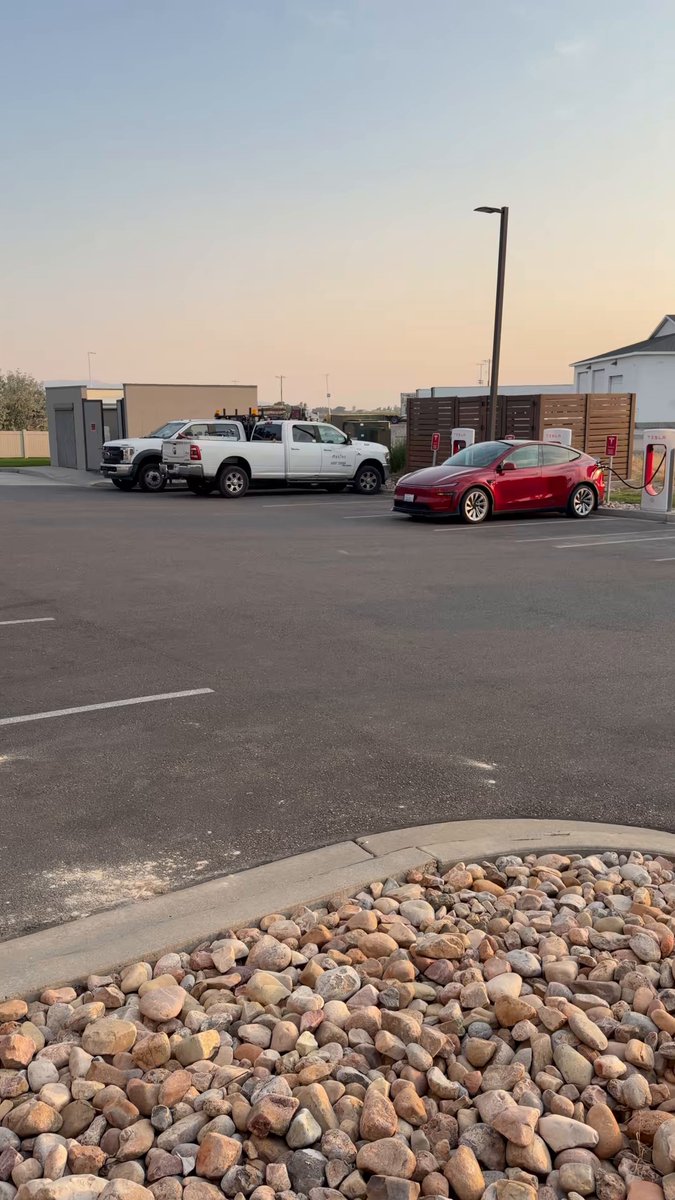
A simple but pointed idea is making the rounds in the Tesla community: the in-car Supercharger UI should tell drivers when they've pulled into a slower stall — and point them toward a faster one right next to it. The suggestion, from well-known Tesla commentator Whole Mars Catalog, also calls on FSD to factor stall speed into its routing decisions when it selects a Supercharger bay.

The core problem is a familiar one for anyone who's spent time at a busy Supercharger site. Not all stalls on a given row deliver the same power — older V2 hardware, shared-power cabinet pairs, or mixed V3/V4 deployments mean two stalls sitting side by side can charge at meaningfully different speeds. New Tesla owners, in particular, have no obvious way of knowing this from inside the car. The current UI shows stall occupancy, but it doesn't surface speed differences in a way that prompts action.
The FSD angle is arguably the more consequential half of the suggestion. As Tesla pushes more owners toward hands-free Supercharger navigation, the system that picks your stall should presumably care about charge rate — not just proximity or availability. If FSD is routing you to a stall that will add 20 minutes to your stop when a faster one is open two spaces down, that's a real efficiency gap. Incorporating live stall-speed data into stall selection logic would be a straightforward extension of the kind of optimization Tesla already applies to route planning.
Neither change would require a fundamental rethink of the charging experience — both are incremental UI and routing improvements. But for new owners still learning the quirks of the Supercharger network, a clear in-car prompt could prevent a lot of quiet frustration. And for FSD users, smarter stall selection is the kind of detail that compounds over thousands of trips.
Related Gear
Gear up your Tesla with tested, custom-fit BASENOR accessories — shop Tesla accessories →
Sources & reporting notes
The links below identify the material source records used for this report.
- @wholemars on X (2026-08-05T09:41:48.000Z) — Direct source
Source links are preserved as published or accessed. See our editorial standards and corrections policy.
The BASENOR Editorial Desk covers Tesla, SpaceX, and related technology, curating reporting from primary sources — official accounts, regulatory filings, and software release data. Every article passes source-record and fact-checking review before publication. About the newsroom.
This report was curated by the BASENOR Editorial Desk from the sources listed above. Read our editorial standards or email editorial@basenor.com to report an error.