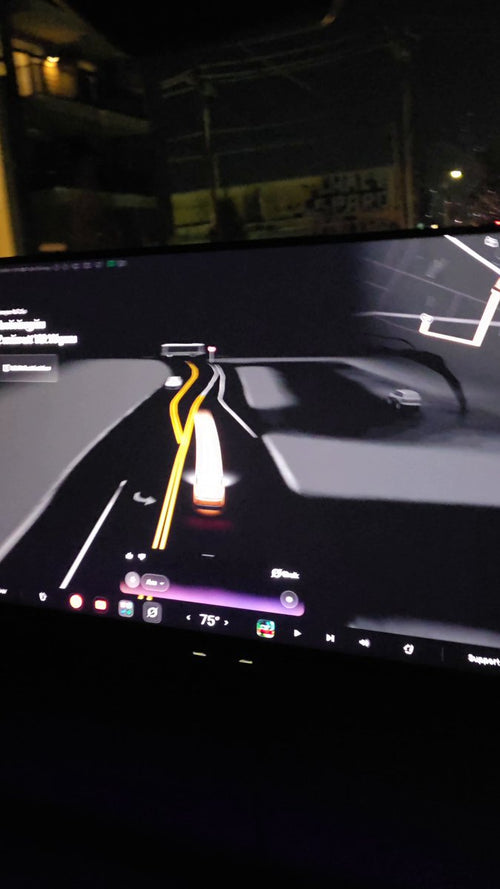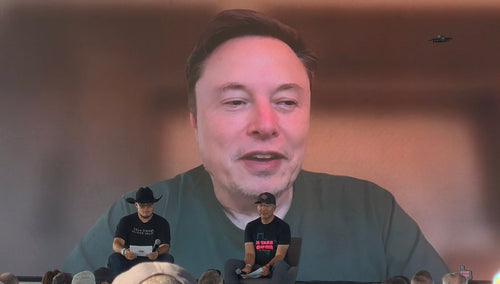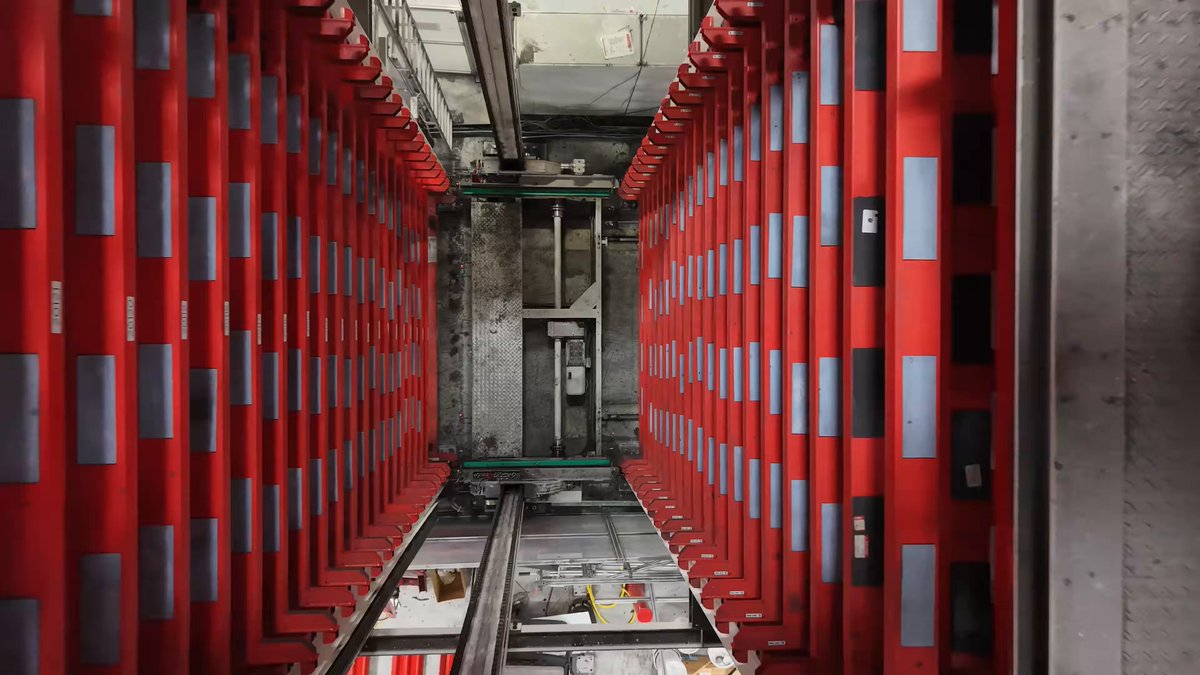
Tesla has begun tearing down the original Model S and Model X assembly line at its Fremont Factory, releasing new time-lapse footage showing the decommissioning process happening in just 46 days. The space will be repurposed for Optimus humanoid robot production, with a stated goal of 1 million robots per year once fully ramped. It's a symbolic and strategic pivot — the assembly line that put Tesla on the map as a carmaker is being dismantled to make room for what Elon Musk has repeatedly called the company's biggest long-term bet.

The End of an Era
The Model S entered production at Fremont in June 2012, followed by the Model X in 2015. Together they defined Tesla's identity as a premium EV maker for more than a decade. Production of both vehicles officially wound down around May 10, 2026, according to Teslarati and CBS News, after Musk announced the phase-out during Tesla's Q4 2025 earnings call in January 2026.
What's remarkable is the speed of the changeover. Tesla says the decommissioning of the legacy assembly line took just 46 days — a pace that reflects how aggressively the company is prioritizing the transition. According to reporting from The Robot Report and Assembly Magazine, the full conversion of the space to Optimus production lines is expected to be completed in roughly four months from start to finish.

What's Replacing the Line
The Fremont site will host production of the third generation of Optimus, Tesla's humanoid robot. Musk has publicly targeted 1 million units per year of annual capacity once the line is fully ramped — a figure that, if achieved, would dwarf any humanoid robot program in existence.
That capacity target is ambitious for a product that hasn't yet shipped commercially. Tesla plans to begin external commercial sales of Optimus later in 2026, according to Teslarati and optimusk.blog, with a long-term price target of $20,000 to $30,000 per unit. Early-access units in 2026 are expected to be priced higher — reports suggest $50,000 to $80,000 — with broader volume availability slated for 2027.
Initial output will be, in Musk's own words, "extremely slow." Each Gen 3 Optimus contains roughly 10,000 unique parts, and Tesla is standing up entirely new production processes for actuators, hands, and structural components that have no direct analogue in EV manufacturing. Limited production on the converted Fremont line is expected to begin in late July or August 2026, per reporting from Teslarati.
Key Figures
| Metric | Detail |
|---|---|
| Line decommissioning time | 46 days |
| Full conversion timeline | ~4 months |
| Model S/X production ended | ~May 10, 2026 |
| Optimus target capacity | 1 million units/year |
| Unique parts per Gen 3 unit | ~10,000 |
| Long-term price target | $20,000–$30,000 |
| Optimus generation | Gen 3 |
What About Fremont's Vehicle Output?
Fremont isn't exiting the car business. The factory will continue producing Model 3 and Model Y vehicles — Tesla's two highest-volume products and the bulk of the plant's throughput. The decommissioned space was specifically the legacy Model S/X general assembly line, which had been operating at a fraction of its potential volume for years as demand for the flagship sedans and SUVs tapered off relative to the mass-market cars.
For existing Model S and Model X owners, this doesn't change service or parts support. Tesla has consistently maintained legacy vehicle service commitments even as it retires older product lines, and the company hasn't signaled any change to that policy.
The Bigger Strategic Picture
Musk has told investors on multiple earnings calls that Optimus could eventually be worth more than Tesla's entire automotive business. Whether or not that materializes, physically converting the birthplace of Tesla's car business into a robot factory is the clearest signal yet that the company is acting on that thesis, not just talking about it.
According to reporting from The Robot Report, over 1,000 Gen 3 Optimus units were already operational on Tesla's own Fremont production floor as of early 2026, handling tasks like battery module assembly, EV pack loading, cable routing, and connector seating. That internal deployment gives Tesla a rare feedback loop: the robots being built at Fremont will, in part, help build the next generation of themselves.
What to Watch Next
- Late July / August 2026: Limited initial Optimus production expected to begin on the converted line.
- Q3 2026 earnings call: First official production and pre-order figures for external Optimus units.
- Late 2026: First external commercial deliveries, likely at the higher $50K–$80K early-access price band.
- 2027: Volume commercial availability and progress against the 1M/year capacity target.
The 46-day teardown is fast. Ramping a brand-new product with 10,000 unique parts to seven-figure annual volumes is a different problem entirely — and one Tesla has publicly acknowledged will take years, not months. But the empty floor space at Fremont is no longer theoretical. The next question is how quickly Tesla can fill it.
Related Gear
Gear up your Model S & X with tested, custom-fit BASENOR accessories — shop Model S & X accessories →
🤖 Tracking Tesla's humanoid robot? See every Optimus production milestone and appearance in our Tesla Optimus Tracker.
Sources & reporting notes
The links below identify the material source records used for this report.
- @TeslaNewswire on X (2026-07-10T18:14:44.000Z) — Direct source
- @SawyerMerritt on X (2026-07-10T17:42:42.000Z) — Direct source
- @gigafactories on X (2026-07-10T17:39:58.000Z) — Direct source
Source links are preserved as published or accessed. See our editorial standards and corrections policy.
The BASENOR Editorial Desk covers Tesla, SpaceX, and related technology, curating reporting from primary sources — official accounts, regulatory filings, and software release data. Every article passes source-record and fact-checking review before publication. About the newsroom.
This report was curated by the BASENOR Editorial Desk from the sources listed above. Read our editorial standards or email editorial@basenor.com to report an error.