📌 UPDATE — August 15, 2026
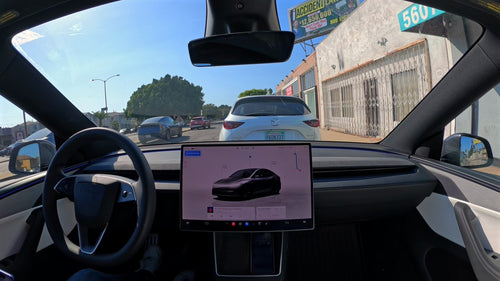
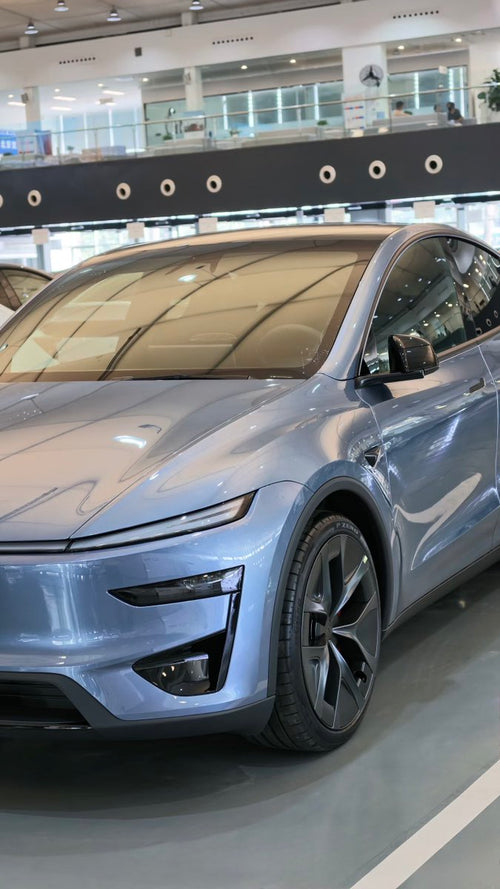
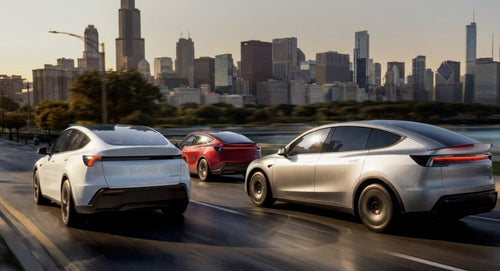
New footage has emerged showing a dedicated Tesla Robotaxi and Cybercab hub now established in Las Vegas, Nevada — the first on-the-ground visual evidence that Tesla's autonomous ride-hailing operations are moving beyond permitting into physical infrastructure. The hub suggests Tesla is actively staging Cybercab vehicles and support logistics in the market, a meaningful step beyond simply holding the Nevada AV Network Company permit. While Tesla has not issued an official statement on the hub's operational status or launch timeline, its existence signals that a commercial rollout in Las Vegas could be closer than previously indicated. 🔍 The hub's location and capacity details remain undocumented.
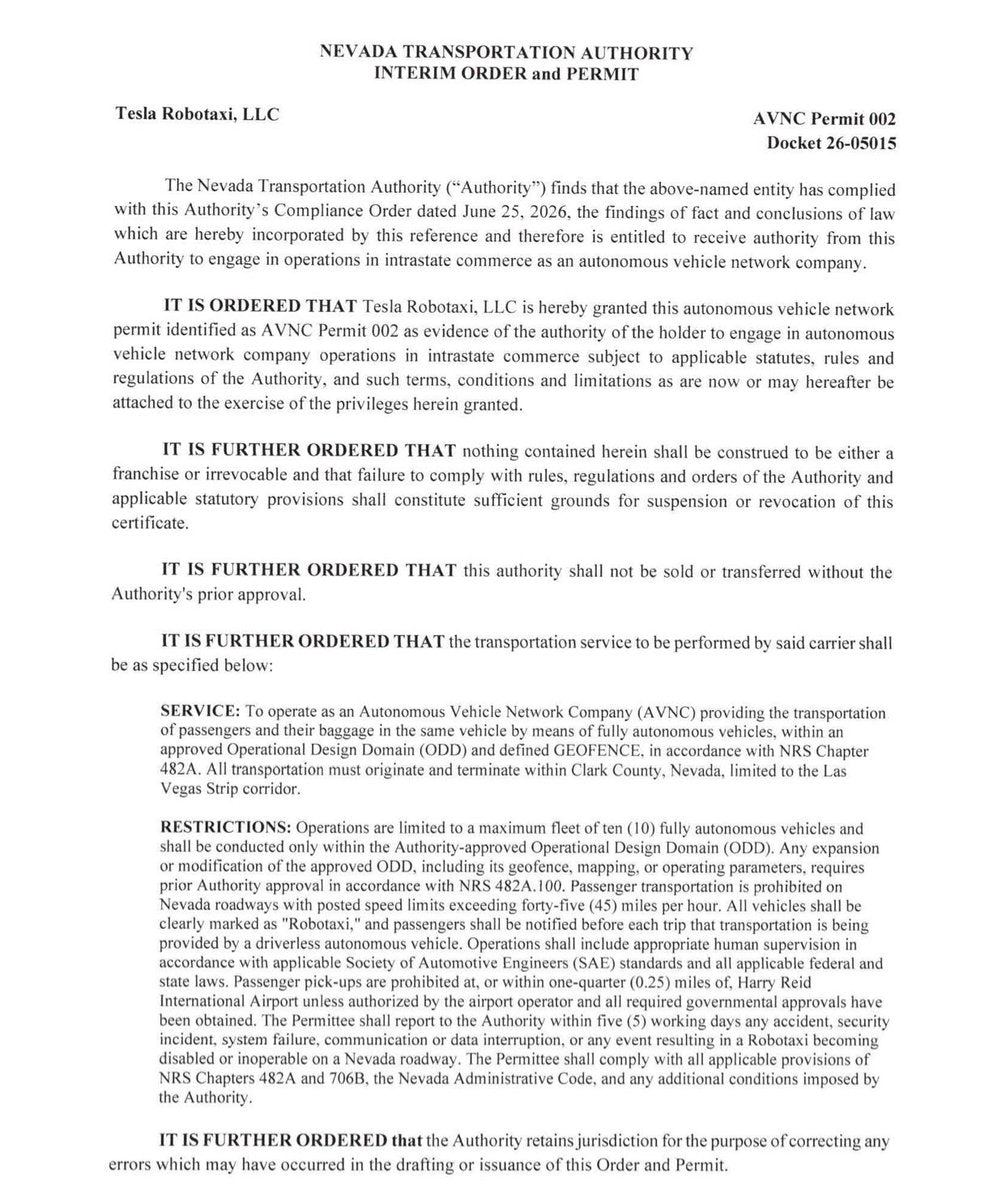
Tesla has cleared a critical regulatory hurdle in Nevada, receiving its Autonomous Vehicle Network Company permit from the Nevada Transportation Authority — the specific commercial license required to operate a paid robotaxi service in the state. The approval puts Las Vegas squarely in Tesla's near-term launch crosshairs, though the permit comes with meaningful operational constraints that define exactly how the rollout begins.

What the Permit Actually Covers
The Nevada Transportation Authority permit is not a blanket green light for unlimited autonomous operations. According to the permit terms reported by Sawyer Merritt, Tesla is authorized to operate a maximum fleet of 10 fully autonomous vehicles, and those vehicles must stay within Authority-approved Operational Design Domains — meaning defined geographic zones where the system has been validated to operate safely.
That fleet ceiling of 10 vehicles is a regulatory starting point, not a business ceiling. It's a standard structure Nevada uses to bring new autonomous operators online in a controlled, observable way before expanding scope. The more significant milestone here is that Tesla has crossed from the testing-only category into the commercial operator category — a distinction that matters enormously for what the company can now do legally.
The road to this permit was methodical. According to previous reporting, Tesla filed the application for an Autonomous Vehicle Network Company permit (Docket 26-05015) on June 5, 2026, targeting Clark County — which encompasses Las Vegas, Harry Reid International Airport, and Henderson Executive Airport. Before that, Tesla had secured a Nevada DMV Testing Registry certification in September 2025, which permitted supervised autonomous testing on public roads but explicitly barred commercial passenger service. A self-certification milestone followed in November 2025. The NTA commercial permit now in hand is the piece that unlocks revenue-generating operations.

Why Las Vegas Makes Strategic Sense
Las Vegas is not an arbitrary first market. It offers a dense, high-demand ride corridor — the Strip, the airport, convention centers — within a relatively compact and well-mapped geography. The city's street grid is predictable, lighting conditions are consistent, and tourist demand for point-to-point rides is constant. From a data and operational standpoint, it's close to an ideal controlled environment for early commercial deployment.
Tesla's original permit application reportedly sought authorization for up to 5,000 vehicles within the first 12 months of approval. The current permit caps that at 10. The gap between those numbers tells the real story: Nevada is treating this as a phased commercial pilot, not a full-scale launch. Tesla will need to demonstrate safe, reliable operations within the initial constraints before the authority considers expanding the approved fleet size.
The Competitive and Regulatory Context
Tesla is not the first autonomous vehicle operator to navigate Nevada's permitting framework, but it is arguably the most watched. Waymo has been operating commercial robotaxi services in other markets for years, and the regulatory infrastructure those deployments helped build — in California, Arizona, and elsewhere — has informed how states like Nevada approach new entrants. Nevada's structured permit tiers reflect lessons learned from those earlier rollouts.
What differentiates Tesla's approach is scale ambition and vertical integration. The company manufactures the vehicles, develops the FSD stack, and now holds the commercial operating license — a single-entity model that contrasts with competitors who often rely on third-party vehicle platforms. Whether that integration translates into faster iteration or creates single points of failure is a question the Las Vegas pilot will start to answer.
The permit also arrives at a moment when Tesla's FSD technology has been accumulating real-world miles at a pace that few autonomous programs can match, given the size of the existing consumer fleet feeding data back into the training pipeline. The commercial deployment in Nevada will generate a qualitatively different data set — unsupervised, revenue-generating trips in a defined urban corridor — that should accelerate refinement of the system in exactly the conditions where robotaxi economics need to work.
The initial 10-vehicle cap means the Las Vegas launch will be a proof-of-concept in regulatory terms as much as a commercial one. How Tesla performs within those constraints — safety record, rider experience, operational reliability — will determine how quickly Nevada expands the approved fleet ceiling. The permit is the starting line, not the finish.
🚕 Following the Robotaxi rollout? See every operating city, launch date and announced market in our Tesla Robotaxi Tracker.
Related Gear
Gear up your Tesla with tested, custom-fit BASENOR accessories — shop Tesla accessories →
Sources & reporting notes
The links below identify the material source records used for this report.
- @SawyerMerritt on X (2026-08-13T20:27:38.000Z) — Direct source
- @wholemars on X (2026-08-13T20:39:19.000Z) — Direct source
Source links are preserved as published or accessed. See our editorial standards and corrections policy.
The BASENOR Editorial Desk covers Tesla, SpaceX, and related technology, curating reporting from primary sources — official accounts, regulatory filings, and software release data. Every article passes source-record and fact-checking review before publication. About the newsroom.
This report was curated by the BASENOR Editorial Desk from the sources listed above. Read our editorial standards or email editorial@basenor.com to report an error.